Living Memory

Studying events within living memory can help young children to gain an early understanding of chronology and that history is made all of the time. It also helps them to understand the world and their place within it. Through this Key Stage 1 unit of study, children are introduced to historical concepts, vocabulary and representations through exploring the ways in which life has changed over the time of their parents, grandparents and great-grandparents. This can be used to reveal aspects of national events or changes where possible. Popular areas for this topic include family, toys, holidays, the climate, technology, school, among many others.  In this section you will find articles and guidance to help you plan exciting and creative ways to introduce your children to the study of history.

Sort by: Date (Newest first) | Title A-Z
Show: All | Articles | Podcasts | Multipage Articles
  • Teaching Gypsy, Roma and Traveller history

    Article

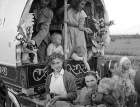
    Gypsy, Roma and Traveller people are the largest minority ethnic group in some communities (and therefore in some schools) in the UK. Yet the past of Gypsy, Roma, Traveller people may rarely be part of history lessons. The result is that pupils of Gypsy, Roma and Traveller heritage may not...

    Click to view
  • How to make a toy museum

    Article

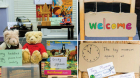
    Making a museum in your setting or classroom is easy and children can learn all kinds of historical skills as well as developing their mark making and writing. Tees Valley Museums are a consortium of seven venues across the Tees Valley. Together they have created online support to develop a museum...

    Click to view
  • Anniversary: Festival of Britain 1951

    Article

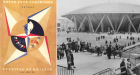
    The Festival of Britain was held 70 years ago. For many this provided a boost for the country after the deprivations of World War II and the economic struggles afterwards. It was designed to be educational and was held 100 years after the Great Exhibition. It was designed to show pride...

    Click to view
  • Changes in an aspect of social history from 1945 to 2000: youth culture

    Article

    A history-themed topic based around music is a popular choice among many teachers and children. Music is after all a thread which runs through all of history, and one through which we can explore many other aspects of life in different times. It can be an exciting avenue into exploring...

    Click to view
  • Fifty years ago we lost the need to know our twelve times tables

    Article

    In the first year of junior school, I was in Mrs Phillip’s class. She was one of those teachers who you remember, but, sadly not for good reasons. I was very frightened of Mrs Phillips and the worst part of every week was the tables test… forwards, backwards and questions...

    Click to view
  • Belmont’s evacuee children: a local history project

    Article

    Teaching about World War II, particularly the home front, continues to be popular in primary schools, despite the government deciding not to include it as a compulsory subject in the new National Curriculum introduced in 2014. Many primary schools still choose to organise an evacuee experience of some kind for pupils...

    Click to view
  • Take one day: undertaking an in-depth local enquiry

    Article

    Local history units of study provide teachers with valuable opportunities, but these can also seem daunting. Potential challenges for teachers include the perceived overwhelming scope of the topic, difficulties in developing subject knowledge and knowing where to find resources. However, none of these is insurmountable, if teachers identify a clear learning...

    Click to view
  • Scheme of work: Journeys - the story of migration to Britain

    Article

    This unit is designed as a thematic course looking at the big picture of migration to Britain over time. There are many ways that the course can be adapted to include different content which may be more relevant for the local community around your school. Most of the content described in...

    Click to view
  • Anniversaries: The Coventry Blitz and the Grave of the Unknown Soldier

    Article

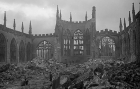
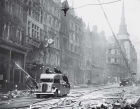
    This Autumn we remember two events related to the impact of war and how people have reacted to them.  The first anniversary remembers the Nazi devastation of Coventry 80 years ago on 14 November 1940 and the second event relates to the body of the ‘Unknown warrior’ who was laid...

    Click to view
  • Scheme of work: Local history – the story of our High Street

    Article

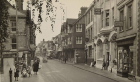
    Teaching a unit that considers ‘changes within living times’ requires a focus that provides clear evidence of those changes. Children need to be able to identify specific differences as well as recognise relevant similarities. While we all still undertake shopping on a daily or weekly basis the processes involved in...

    Click to view
  • ‘Come all ye fisher lassies’

    Article

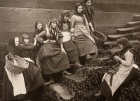
    When considering either ‘changes within living memory’ for Key Stage 1 or ‘an aspect or theme to develop children’s chronological understanding post 1066’ for Key Stage 2 it is important to focus on a clear observable change. This enables children to draw effective comparisons with their own experiences. Washday, bread...

    Click to view
  • VE Day: free home learning resource

    5th May 2020

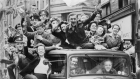
    The HA has created a free resource for schools suitable for primary and also Key Stage 3, with activities differentiated for different year groups (attached below). They provide a mixture of historical knowledge and activities to get into the VE Day spirit. Please also read the notes for teachers that accompany...

    Click to view
  • Using the back cover image: Communications

    Article

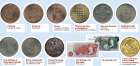
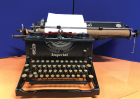
    Exploring the everyday objects that shaped our lives in the not too distant past can prove to be exciting historical challenges for primary age children. While we might remember or be familiar with the objects and their use, they can provide confusion for children. This is in part because of...

    Click to view
  • Teaching about the Kindertransport without the Kinder

    Article

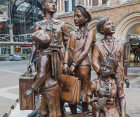
    The Kindertransport, literally ‘children’s transport’, was the rescue operation of almost 10,000 unaccompanied Jewish child refugees to Britain between December 1938 and the outbreak of the Second World War in September 1939.  Many of the Kinder (children) regularly share their experiences in primary schools, where their visit is regarded as...

    Click to view
  • The Phoney War: teaching WWII

    Article

    The term ‘phoney war’ refers to the period at the beginning of WWII between September 1939 and April 1940 when there was little fighting. It was brought to an abrupt end by the German invasion of Norway in April 1940. The term is thought to have been coined by an...

    Click to view
  • The Blitz: All we need to know about World War II?

    Article

    The Blitz of 1940 is certainly a significant event in Britain’s past, one which has repeatedly been drawn upon as a symbol of national consciousness. It was a time when most of Europe had been defeated by the Nazi regime in Germany, typically through ‘Blitzkrieg’ – or lightning war methods...

    Click to view
  • Ideas for assemblies: LGBT History Month

    Article

    LGBT History Month was established in 2004. It not only raises awareness of discrimination still faced by the LGBT+ community but also celebrates LGBT+ people and their achievements. February is LGBT History Month and its theme this year was ‘History: Peace, Reconciliation, and Activism’. 

    Click to view
  • Using the back cover image: Lest We Forget

    Article

    Over the past four years the nation has been commemorating the centenary of the First World War. From soldiers, women, animals, technology and much more… we researched, filmed, documented and preserved. On 11 November, 100 years since the agreement to end hostilities, we commemorated the Armistice. But what can we...

    Click to view
  • Women in parliament since 1918

    Article

    At the 1918 election just one woman, Constance Markievicz, won a seat, in Dublin, for Sinn Fein. She was in prison at the time. At the time, of course, the whole of Ireland was part of the United Kingdom. All 73 Sinn Fein MPs refused to take up their seats, and...

    Click to view
  • World War I: widening relevance in the modern world

    Article

    Hayyan Bhabha introduces a project that is using newly-discovered documents to show the contribution of Allied Muslim soldiers in the First World War, with the aim of developing empathy, mutual respect and religious understanding in young children of all ages. At a time of rising nationalism across the world, where Muslims are...

    Click to view