Society

How people group together, organise their rules and systems are all part of what create a society. In this section articles examine the nature of society how it interacts with other themes of culture, power, etc. and how societies have developed and changed over time. The structures of the ancient world are explored as are the complex feudal systems and the varied societies of Empire and modernity.

Sort by: Date (Newest first) | Title A-Z
  • The right to fight: women’s boxing in Britain

    Article

    In this article Matthew Taylor explores the history of women’s boxing in Britain from the early eighteenth century onwards, showing how prevailing gender norms have led to this activity being marginalised by historians. It is argued that the key women boxers he discusses should be celebrated as key figures, not just in the history of sport but...

    Click to view
  • Real Lives: Charlie Mitchell, Tuke's top model

    Article

    Our series ‘Real Lives’ seeks to put the story of the ordinary person into our great historical narrative. We are all part of the rich fabric of the communities in which we live and we are affected to greater and lesser degrees by the big events that happen on a daily...

    Click to view
  • Out and About: exploring Lancaster’s ‘glocal’ history online and on foot

    Article

    The city of Lancaster has many important historical landmarks from both the medieval period and the time of the Industrial Revolution. In this article Sunita Abraham and Christopher Donaldson describe the thinking behind a guided historical tour they have devised for the city. This involves engaging with modern technology, placing Lancaster within a...

    Click to view
  • Robert Branford: a faithful servant of Southwark

    Article

    Stephen Bourne explains how he pieced together the story of Robert Branford, the earliest known mixed-race officer in the Metropolitan Police, who faithfully served the people of Southwark in the Victorian era.

    Click to view
  • Forbidden friendships: taverns, nightclubs, bottle bars and emancipation

    Article

    The modern gay-rights movement has its origins in a 1960s New York ‘bottle bar’, but as Ben Jerrit explains, drinking establishments have been centres of gay culture and social resistance for centuries. 

    Click to view
  • In conversation with Nicholas Radburn

    Article

    The Historian sat down with historian Nicholas Radburn to discuss his latest book, Traders in Men, which examines the role of merchants in the expansion and transformation of the Transatlantic Slave Trade in the eighteenth century.

    Click to view
  • ‘A little bird told me’: spies and espionage in the early medieval world

    Article

    Spies were a common feature of political, diplomatic and courtly life in the period of early medieval Europe. In this article, Jenny Benham explores some interesting contemporary representations of spies, in both literature and art. These stories and images reveal key features of the culture and practices surrounding these so-called...

    Click to view
  • Slavery, child labour, or a grand day out? Hull’s agricultural hiring fairs, 1870–1950

    Article

    Agricultural hiring fairs – now largely forgotten –performed multiple social functions and were an intriguing aspect of rural life, writes Stephen Caunce. Over the last three decades, long-established British newspapers have endured a steady dwindling of staff, depth of reporting and public respect. Paradoxically, however, the digitalising of old content has...

    Click to view
  • Real Lives: Jessie Reid Crosbie

    Article

    Alyson Brown, Dan Copley and Jack Bennett uncover the life of a reforming Liverpool headmistress. Our series ‘Real Lives’ seeks to put the story of the ordinary person into our great historical narrative. We are all part of the rich fabric of the communities in which we live and we are...

    Click to view
  • Women and the French Revolution: the start of the modern feminist movement

    Article

    Luke Rimmo Loyi Lego explores the role of women in the French Revolution, and how their challenges to traditional gender roles laid the foundations for the modern feminist movement.  The study of the French Revolution is often restricted to its impact on the Enlightenment ideas of influential men such as Rousseau,...

    Click to view
  • Muddy Waters: from migrant to music icon

    Article

    Matt Jux-Blayney explores the impact of the blues singer Muddy Waters against a backdrop of significant social and racial change in the United States of the mid-twentieth century. On 3 July 1960, a man from Mississippi was introduced onto the stage of the Newport Jazz Festival in Rhode Island. He...

    Click to view
  • Real Lives: Beatrice Alexander

    Article

    Our series ‘Real Lives’ seeks to put the story of the ordinary person into our great historical narrative. We are all part of the rich fabric of the communities in which we live and we are affected to greater and lesser degrees by the big events that happen on a daily...

    Click to view
  • My Favourite History Place: The Tenement Museum, New York

    Article

    The Tenement Museum is not remotely like any museum I had previously visited. It is an old tenement building where generations of New York migrants lived and loved, worked and had families before moving both on and out. The Tenement Museum tells the story of the Lower East Side through the...

    Click to view
  • Film: Social & Cultural Change

    Article

    How did a new Germany rebuild itself from the legacy of the Second World War both physically, emotionally and culturally? Professor Stibbe explores the silences of many households and how that influenced the student rebellion of the late 1960s. He also puts into perspective the cultural impact that the war...

    Click to view
  • What Have Historians Been Arguing About... the consequences of the industrial revolution

    Article

    The British industrial revolution stands out as a pivotal moment in human history. Its timing, causes and consequences have all been major topics of historical enquiry for well over one hundred years. Many of the great Victorian commentators – Engels, Dickens, Blake to name a few – who lived through...

    Click to view
  • Jewish settlements in Medieval England

    Article

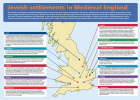
    The Jewish communities of medieval England lived in towns and cities directly connected to the crown, usually with a castle close at hand for protection. Due to the religious needs of the community, Jewish families stayed close to the key requirements of synagogue and butcher. However, they would live side by...

    Click to view
  • The Jews of Medieval England

    Article

    The diversity of the history of the British Isles continues to be a subject of discussion in academic circles and in popular culture. Some communities have been around for hundreds of years, while others have been part of our societies and then disappeared or been eroded. One of the communities...

    Click to view
  • Secular acts and sacred practices in the Italian Renaissance church interior

    Article

    Joanne Allen reveals a fundamental structural and architectural development in Italian churches in the Renaissance era, demonstrating that careful observation of structures and archives can substantially inform our appreciation of all church buildings.  In the opening to The Decameron (c. 1350), Boccaccio described how the ten young people who would become storytellers...

    Click to view
  • Film: Discussion: The post Civil Rights era

    Article

    Professor Tony Badger, Professor Joe Street and Professor Brian Ward discuss the African-American Civil Rights movement and examine different ways we might interpret the significance of key individuals, groups, institutions and events that played a role in its development and progress. In this final section the activities of the key individuals...

    Click to view
  • Film: Discussion: The significance of the federal government to the Civil Rights Movement

    Article

    Professor Tony Badger, Professor Joe Street and Professor Brian Ward discuss the African-American Civil Rights movement and examine different ways we might interpret the significance of key individuals, groups, institutions and events that played a role in its development and progress. Starting with the actions of the Supreme Court especially the...

    Click to view