Society

How people group together, organise their rules and systems are all part of what create a society. In this section articles examine the nature of society how it interacts with other themes of culture, power, etc. and how societies have developed and changed over time. The structures of the ancient world are explored as are the complex feudal systems and the varied societies of Empire and modernity.

Sort by: Date (Newest first) | Title A-Z
  • Uncomfortable secrets: uncovering family history and other stories

    Article

    Kate Brooks’ interest in her family history led her to trace the life of her great grandfather, Joseph Lowe. His life story provides insights into 19th-century life, disease, orphanages, and child labour, but she also reflects on the ways in which the past can sometimes resonate with the present in unexpected...

    Click to view
  • Doing history: Manorial Court Records

    Article

    Manorial records are often associated with the medieval period, and while they are a valuable resource for medieval historians, they actually span from the twelfth to the twentieth century. Sarah Pettyfer sheds light on these often-overlooked records, helping family and local historians explore them with confidence...

    Click to view
  • Doing history: The Old Poor Law in a Regency York Parish 1795–1847

    Article

    In this regular feature called Doing History, history enthusiasts describe a piece of research they have undertaken and how it sheds light on aspects of local and national history. Here Steve Barrett shows how his exploration of archives in York provided interesting insights into the controversial issue of poor relief, with a focus...

    Click to view
  • Recruiting volunteers to fight in the First World War

    Article

    ‘Your Country Needs You’ and other posters are still remembered today as a prominent vehicle by which men were encouraged to fight in the First World War. Virtually absent from the literature, however, is analysis of the impact of thousands of recruitment meetings and their speakers. Robert Bullard explores the contribution...

    Click to view
  • Connecting poetry, philosophy and landscapes in Ancient China

    Article

    It is unusual for historians to focus primarily on poetry to provide insights into the past societies they are studying. Here Nicholas Tyldesley explains the value of poetry to help us understand the ideas, values and some important historical events in Ancient China, with a particular focus on poets Li...

    Click to view
  • Archaeology on the edge

    Article

    Major archaeological projects can be complex affairs, in terms of their funding, governance and the wide range of historical and technological expertise they require. Here National Trust archaeologist Kathy Laws describes the intricacies and successes of a multi-organisational project at an Iron Age site in north Wales. The challenges of the...

    Click to view
  • Images of Ukraine through western lenses

    Article

    How has the understanding of what Ukraine is and, therefore, its image changed through the centuries? What did the word ‘Ukraine’ mean in the Middle Ages, the early modern times, or in the twentieth century? Even during the last four decades, this image has transformed dramatically, and the first association...

    Click to view
  • A cuisine fit for wartime: history and practices of Ukrainian cooking

    Article

    Olena Braichenko examines the most common dishes of Ukrainian cuisine, describing the culinary traditions of the indigenous people of Ukraine – the Crimean Tatars. She explains how the Soviet past influenced the gastronomic culture of Ukrainians and what peculiarities of Ukrainian culinary behaviour contribute to stability and survival in the...

    Click to view
  • The year that lost eleven days

    Article

    From its Roman origins to the dating of the tax year, David Fleming describes how the changes made to the British calendar in 1752 came about and their effect on everyday life, both at the time and since...

    Click to view
  • Update: Space, place and social constructs: the Spatial Turn in history

    Article

    Ryan Hampton explains how ‘things’ and people combine to make space an important consideration in human history. Focusing on the German Peasants’ War of 1524-26, he examines how advances in our understanding of space might affect our knowledge of this important conflict...

    Click to view
  • The Chinese National Anthem

    Article

    The history of the Chinese national anthem gives Derek Ying a new perspective on society and culture from the era of the Qing dynasty to the People’s Republic of China. It reveals the strengths and weaknesses of different regimes, and the power of song to unite and divide...

    Click to view
  • In conversation with Mark Nicholls

    Article

    The Historian sat down with Mark Nicholls to discuss his latest book, The Rise and Fall of Treason in English History, co-authored with Allen Boyer, which charts the history of the law of treason from its origins to the present day...

    Click to view
  • Out and About in ‘The most Loyal and Ancient City of Taunton’

    Article

    The Somerset town of Taunton featured prominently in the highly significant political and religious conflicts of the seventeenth century. Isabella Peach examines Taunton’s role in these events and the impact they had on the town. Her article is based on her winning entry in the 2023 Young Historian Post-16 Local...

    Click to view
  • Britain and the First World War: not just battles

    Article

    When the First World War started in the summer of 1914 it began a series of events that would change the world for ever; it also accelerated changes and ideas that were already underway. In some cases, big issues appeared to be put to one side while the immediate needs of...

    Click to view
  • My Favourite History Place: A Short History of Brill

    Article

    In this article Josephine Glover discusses the long history of her ‘favourite history place’, the Buckinghamshire village of Brill. She explains how there has been a human settlement there since Mesolithic times. Using various fragments of evidence, she pieces together the extent to which the village was important to early...

    Click to view
  • The Importance of Truth, Quality and Objectivity in the BBC German Service from 1938 to 1945

    Article

    Throughout the Second World War the BBC produced and transmitted regular broadcasts in German to Germany and other European countries occupied by the Germans. In this article Hattie Simpson evaluates the style and success of the BBC German Service. The article is based on her winning entry in the senior...

    Click to view
  • Opinion: Who was ‘the man of his time’?

    Article

    In this new, occasional section of The Historian, contributors share their thoughts on matters of public historical debate. We invite our readers to respond, either by writing to the editors at thehistorian@history.org.uk or by writing their own opinion piece. Here, Lorenzo Kamel shares his thoughts on why saying ‘he was a...

    Click to view
  • Writing Lilian Harrison into history

    Article

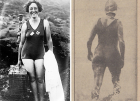
    In this article Matthew Brown and Pablo Scharagrodsky introduce us to the little-known story of Anglo-Argentinian swimmer Lilian Harrison, who in 1923 became the first person to swim the 42km from Uruguay to Argentina at the estuary of the Rio de la Plata. Her story shows how she had to battle against not only tides and...

    Click to view
  • Who only history know? Cricket, society, and the historical oversight of sport

    Article

    The early 2020s have seen various investigations and reports about discrimination in English cricket. As well as finding many examples of racial and gender prejudice, these investigations have unearthed a long history of social elitism in the sport. In this article, Duncan Stone explores some of the historical background to...

    Click to view
  • Political and social attitudes underpinning the 1924 Olympics

    Article

    The 1924 Olympics in Paris are best known to many British people through the ‘Chariots of Fire’ film from the early 1980s. The film touches on some of the political and social attitudes prevalent in the 1920s and Steve Illingworth explores these issues further in this article. It is argued...

    Click to view