Britain & Ireland

What was it about industrialisation that led to the emergence of a woman’s movement in Victorian Britain? Why do we see so many people fighting for so many rights and liberties in this period and what are the origins of some of the issues we still campaign on today? This section includes our major series on Social and Political Change in the UK from 1800 to the present day. There are also articles and podcasts on the often violent relationship between England and Ireland during this period and England’s changing relationship with Scotland and Wales. Read more

Sort by: Date (Newest first) | Title A-Z
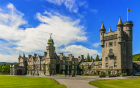
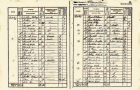
  • Landowners and their motives for change at the Suffolk village of Culford between 1793 and 1903

    Article

    Isabel Jones from Thomas Mills High School at Framlingham was the winner of the Young Historian Award for Local History [16-19] in 2006. The Director of the Young Historian Project, Trevor James, has edited her winning essay. It has been shortened and the footnotes removed, to enable it to fit...

    Click to view
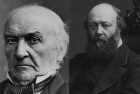
  • Lloyd George & Gladstone

    Article

    Lloyd George, who died sixty years ago on 26 March 1945, grew up and began his Parliamentary career in Queen Victoria's reign. In taking up a major Welsh issue, disestablishment of the Church of Wales, he memorably clashed with William Ewart Gladstone, perhaps the greatest of all Liberal Prime Ministers....

    Click to view
  • Local Authority Housing

    Article

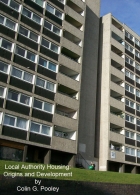
    Local authority housing has been a distinctive feature of the British housing system throughout the twentieth century. This pamphlet outlines the development of local authority housing in Britain from its origins in the late nineteenth century to the present day, focusing on the ways in which policy changes have affected...

    Click to view
  • Lord Palmerston

    Article

    Lord Palmerston (1784-1865) has long interested (and confused) historians. A man of contradictions and paradoxes, he seemed both to embody modern Victorian Britain, and yet at the same time stand as a potent symbol of what had been lost.

    Click to view
  • Louis, John, and William: the 'Dame Europa' pamphlets, 1870-1871

    Article

    The pamphlet printing industry in England received an unexpected boost in 1871 with the appearance of numerous works written, mainly, as commentaries, satires or allegories in Britain’s attitude regarding the Franco-Prussian War. The cause of this deluge was one particular tract, first issued on Salisbury in October 1870, whose purpose...

    Click to view
  • Magna Carta and the development of the British constitution

    Article

    Robert Blackburn explains why, 800 years on, Magna Carta still has relevance and meaning to us in Britain today. Magna Carta established the crucial idea that our rulers may not do whatever they like, but are subject to the law as agreed with the society over which they govern. In...

    Click to view
  • Marcus Morris and Eagle

    Article

    Marcus Morris and Eagle: Approved reading for boys in the 1950s & 1960s The National Art Library of the Victoria and Albert Museum in London's South Kensington held an exhibition in the first five months of 2012 devoted entirely to British adventure comics of the  1950s and 1960s, many taken...

    Click to view
  • Medical aspects of the battle of Waterloo

    Article

    Michael Crumplin explores the medical facilities of the British Army and asks how likely soldiers wounded at Waterloo were to survive. The road to Waterloo One of the very few benefits of conflict is the advancement of medical practice. The recent wars in Iraq and Afghanistanhave been dealing with relatively...

    Click to view
  • Memorial Oaks at Wolsingham School

    Article

    Our World War I commemorative series continues with Robert Hopkinson's introduction to what the Imperial War Museum believes is the oldest war memorial in Britain. Wolsingham School and Community College, in Weardale, County Durham, celebrated its 400th anniversary in 2014. As part of the celebrations, there was an exhibition, a...

    Click to view
  • Mountbatten in retirement: the abortive trip to rebel Rhodesia

    Article

    Adrian Smith investigates an abortive plan for the earl to intervene in Rhodesia's Unilateral Declaration of Independence. Earl Mountbatten of Burma boasted a unique CV: Chief of Combined Operations, Supreme Commander South-East Asia, Admiral of the Fleet and First Sea Lord, Chief of the Defence Staff, and Viceroy of India. Yet somehow...

    Click to view
  • My grandfather's recollections of the invasion of Normandy

    Article

    16-year-old Daisy Black of Newcastle-under-Lyme School in Staffordshire was the Senior Award winner in the Spirit of Normandy Trust Young Historian competition in 2007. Having been judged the winner by the Young Historian panel, the Spirit of Normandy Trsutees were so taken with her entry that they gave her an...

    Click to view
  • Navigating the ‘imperial history wars’

    Article

    Concerned by the growing tendency of politicians and press to revive the moral balance-sheet approach to British imperial history and by some evidence of its resurgence in schools, Alex Benger set about devising a framework which would keep pupils’ analysis rigorously historical, rather than moral and politicised. In this article,...

    Click to view
  • Neville Chamberlain: Villain or Hero?

    Article

    Perhaps no other British figure of the twentieth century has been as vilified or as celebrated as Neville Chamberlain, the British Prime Minister from 1937 to 1940. In 1999, a BBC Radio 4 poll of prominent historians, politicians and commentators rated Chamberlain as one of the worst Prime Ministers of...

    Click to view
  • Newcastle and the General Strike 1926

    Article

    The nine-day General Strike of May 1926 retains a totemic place in the nation's history nearly 100 years later. The Chancellor of the Exchequer Winston Churchill was among those who attempted to characterise it as anarchy and revolution, but this was hyperbole and largely inaccurate for, as Ellen Wilkinson (then...

    Click to view
  • Nineteenth Century African chiefs in Nuneaton: A local mystery uncovered

    Article

    In Nuneaton’s St. Nicolas Churchyard lies a sizeable, though not elaborate, flat gravestone. It commemorates Canon Robert Savage, Vicar of the parish 1845-71, his wife Emma and many of their children. This tombstone, like so many in our graveyards, reveals a wide range of historical information, recording significant detail about...

    Click to view
  • Obituaries: the first verdict in history

    Article

    Last year marked the deaths of two world-renowned historical figures - Margaret Thatcher and Nelson Mandela. Their obituaries reflected the marked contrast in the way the pair were viewed. Mandela ended up by being universally admired, while Thatcher was both adored and despised in seemingly equal measure. Writer Nigel Starck...

    Click to view
  • Opinion: the populist politics of Joseph Chamberlain and Donald Trump

    Article

    What are the pitfalls and pluses of comparing historical figures with contemporary politicians? Chris Godden argues that recent comparisons of Donald Trump with one of his predecessors may be wide of the mark, but that a more illuminating parallel may be found with one of Britain’s most controversial nineteenth-century politicians.

    Click to view
  • Oscar Wilde: the myth of martydom

    Article

    Over a century after his death, interest in Oscar Wilde and his work is at flood tide, with unprecedented levels of publication and research about Wilde and his work. Wildean studies proliferate, much in languages other than English. Recent translations of Wilde’s work have included Romanian, Hebrew, Swedish and Catalan,...

    Click to view
  • Out and About in Lyme Regis

    Article

    Explore Lyme Regis’ past as John Davis guides you on a historical trail through the iconic seaside town...

    Click to view
  • Out and About: Locating the Local Lockup

    Article

    If you are arrested for a crime today, you will very likely be taken to a police station and locked in a cell while officers decide if they have enough evidence to charge you. But have you ever wondered what happened to criminals and other disorderly folk – roughs, drunks...

    Click to view