
Britain & Ireland
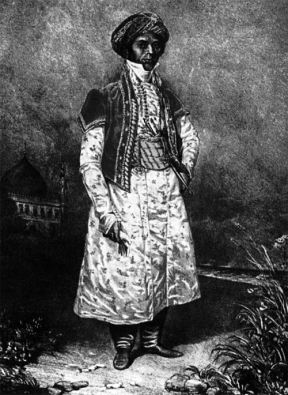
The National Portrait Gallery in London is home to many thousands of portraits, photographs and sculptures of the great and the good, as well as those who travelled on the darker side of history. In 2007 it hosted a small exhibition in the Porter Gallery entitled Between Worlds: Voyagers to...

Though people are still sometimes prosecuted for repeatedly marrying immigrants to rescue them from the attentions of the Home Office, while forgetting to get divorced between times, one uncovenanted result of the now common practice of living together without matrimony is the decline of that celebrated Victorian institution: bigamy. In...
Why is Henrietta Luxborough, who was born in 1699, of interest today? In the first place because of whom she was; in the second because of what happened to her; and in the third because of her courage which enabled her to overcome adversity and lead a life utterly different...
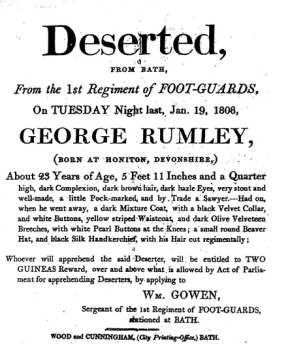
Wellington's Soldiers in the Napoleonic Wars The war with France, which began in 1793, had moved to the Iberian Peninsula by 1808. This year is therefore the two-hundredth anniversary of the commencement of the Peninsular War campaigns. War on the Peninsula demanded huge resources of manpower in order to defeat...
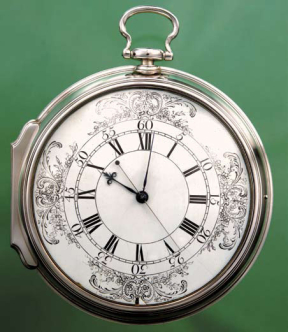
‘Poor England has lost so many men' On 22 October 2007 an unlikely group of people were to be seen casting wreaths upon the sea off the Scilly Isles. They comprised a Chief Executive, a Naval Commander, a Science journalist and the Fourteenth Astronomer Royal (this writer). A clue which...
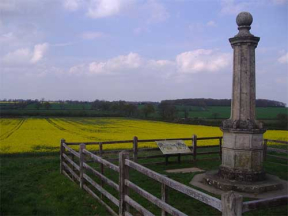
The summer of 2007 saw the completion of new visitor facilities on and near the battlefield of Naseby. The two locations are the first to be created since the Cromwell Monument was finished in 1936 and they stand more than 5km (3 miles) apart, one of them 2km south-east of...
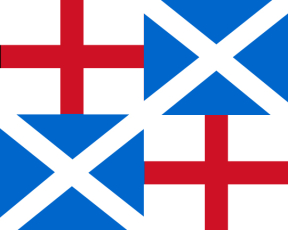
Why did both the parliaments of Scotland and England vote themselves out of existence in 1707 in order to create a new ‘United Kingdom of Great Britain’? From an English perspective, there was always a strong feeling that this union did not create a new kingdom and that it certainly...
In the 1780’s the British slave trade thrived. In that decade alone more than one thousand British and British colonial slave ships sailed for the slave coasts of Africa and transported more than 300,000 Africans. There was little evidence that here was a system uncertain about its economic future. If...
There is a view that the poetry of the eighteenth century began with moralising neo-classical satire, that this was followed by insipid pastoral, and that the century closed with the advent of the Romantic. This view is simplistic. While at particular times particular types of poetry might have predominated (and...
In September 1683 in the Cape Verde Islands William Dampier lay 'obscured' among the scrubby vegetation to do some bird watching. He was excited for he had just caught his first sight of flamingos. The detail and delicacy of his description would gladden any modern ornithologist. They were, he wrote,...
In the 1960s and 1970s, historians and sociologists who were not specialists in the Middle Ages constructed models of pre-industrial crowds and revolt to understand the distinctiveness of modern, post-French Revolutionary, Europe. Foremost among these scholars were George Rudé, a historian of eighteenth century England and France, and Charles Tilly,...
From the 1750s, after more than a century of intense political and religious disputes and of economic stagnation, Scotland began to enjoy several decades of almost unprecedented political stability, religious harmony, economic growth and cultural achievements. Jacobitism had been crushed and most propertied and influential Scots rallied to the Hanoverian...
George III has had no reason to complain of modern historians. He has been cleared of the 'taint' of madness (though I had never realised it was a taint) and instead suffered from porphyria, arsenic poisoning or both. Romney Sedgwick cleared him of the charge of being backward and Namier...
Early on the morning of 8 June 1758, British frigates unleashed their broadsides upon French shore defences at Gabarus Bay, on the foggy and surf-lashed island of Cape Breton. Under cover of the warships' guns, a motley flotilla of craft headed towards the land. Propelled by straining Royal Navy oarsmen,...
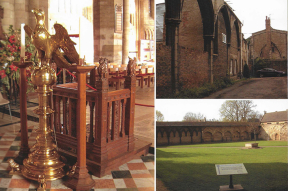
Although the reasons for and the process of dissolution in Peterborough Abbey compare closely to all other religious houses, the consequences were unique. Peterborough received favourable treatment and so emerged from the dissolution as one of six abbeys to be transformed into new cathedrals. The changes imposed on Peterborough were...
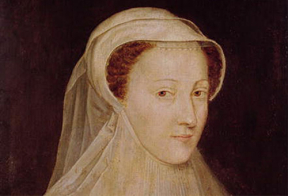
In May 1568 Mary Queen of Scots was riding in fear for her life to the wilds of Galloway. She crossed the Solway confident that she would receive the help which her cousin Queen Elizabeth had promised her, but instead found herself a prisoner. In the subsequent months a series...
Adams’ Grammar School, Newport, Shropshire, was founded during the Commonwealth in 1656 towards the end of the great impetus of founding such schools in the sixteenth and seventeenth centuries. Despite many setbacks and threats to its existence it continues in the twenty first century as one of the 164 surviving...
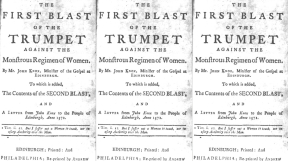
"To promote a woman to bear rule, superiority, dominion or empire above any realm, nation, or city is repugnant to nature, contumely to God, a thing most contrarious to his revealed will and approved ordinance, and finally it is the subversion of good order, and all equity and justice." John...
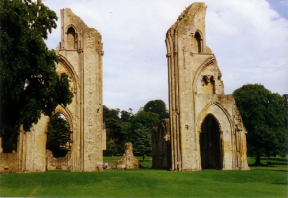
The dissolution of the monasteries was one of the most dramatic developments in English History. In 1536, the religious orders had owned about a fifth of the lands of England. Within four years the monasteries had been abolished and their possessions nationalised by Henry VIII. Within another ten years, most...
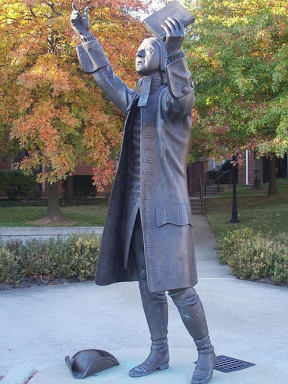
The tercentenary of John Wesley’s birth has been celebrated not just in his native country, but round the world – as widely, in fact, as the Methodism associated with him has spread. Over the years, in addition to innumerable biographies there have been many studies of particular aspects of his...