
Britain & Ireland
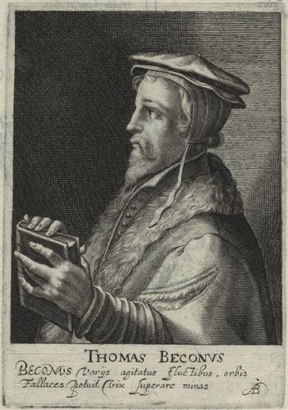
The Elizabethan Reformation in Staffordshire had a shallow seedbed. The radical reformers of the 1540s had greeted the conversion of the county with a mixture of high hopes and hyperbole. The East Anglian preacher and disciple of Latimer, Thomas Becon, wrote a treatise The Iewel of Ioye urging that itinerant...
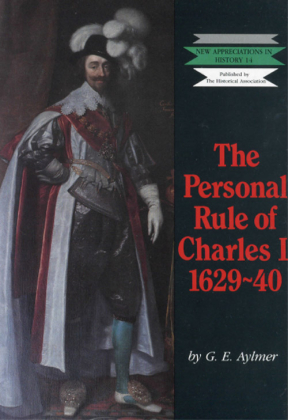
Historians are often accused of viewing the past with hindsight, or of being wise after the event. Not being prophets or soothsayers, we have to look backwards in time because we cannot look forwards. The real question is from what vantage point or perspective we view a particular part of...
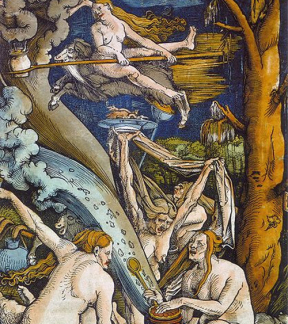
Occult and Witches: Some Dramatic and Real Practitioners of the Occult in the Elizabethan and Jacobean Periods One purpose of this paper is to show a correspondence between real-life Elizabethan and Jacobean practitioners of the occult and the depiction of their theatrical counterparts, with particular reference to perceived differences between,...
The late Frank Ellis was working on a full biography of John Wilmot, earl of Rochester, at the time of his death in 2007. He had contributed a life of Wilmot to the Oxford Dictionary of National Biography which appeared in 2004. In it he wrote that ‘on 21 November...
Tudor enclosures hold the attention of historians because of the fundamental changes which they wrought in our system of farming, and in the appearance of the English countryside. At the same time, the subject is continually being re-investigated, and as a result it is no longer presented in the simple...
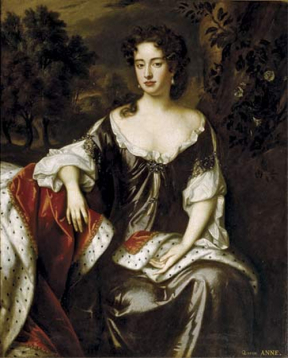
There was hardly anything in Great Britain which political thinkers on the continent of Europe in the eighteenth century admired more than its limited monarchy. But what were the limitations? Were they deliberate or not? Were they effected by acts of parliament or by the silent encroachments of usage? Did...
The pattern of overseas trade is always in movement: new commodities are constantly appearing, old ones fading into unimportance, different trading partners coming to the fore-front. But between the latter end of the sixteenth and the second half of the eighteenth century, change took specially far reaching forms. In 1570...
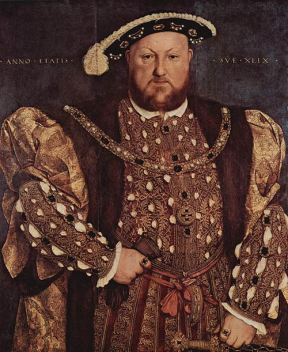
'This wicked Tower must be fed with blood' - W. S. Gilbert's dialogue sums up the popular myth of Tudor England. This pamphlet looks at the reality, a society and politics necessarily divided into rival factions by the pulls of patronage, local loyalty and the implications of personal monarchy, and...
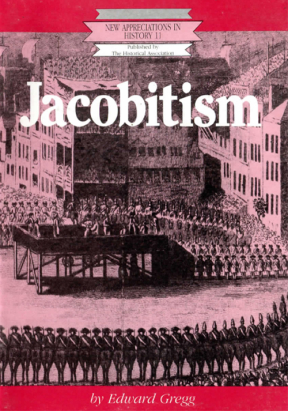
In recent years, the debate over the nature, extent, and influence of the Jacobite movement during the 70 years following the Glorious Revolution of 1688 has become one of the new growth industries among professional historians, spawning scholarly quarrels almost as ferocious as those which characterised ‘the Cause' itself.The term...
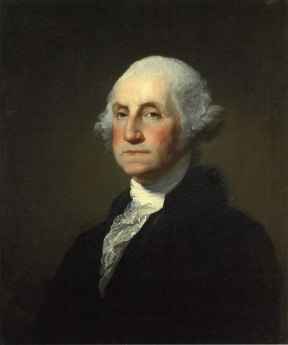
In the two-hundredth year of American Independence, it is proper to ask: why did it occur? It need not have happened; it was the act of men, not immutable forces. But once the tensions became acute, the three thousand miles of ocean were a difficult chasm to bridge. The War...
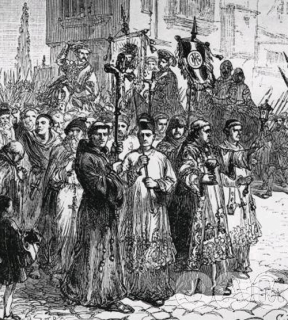
"The king, intending also the suppression of the greater Monasteries, which he effected in the 31st of his Reign for the preventing of future Dangers and keeping those Northern Counties in Quiet, raised a President and Council at York, and gave them his several Powers and Authorities, under one great...
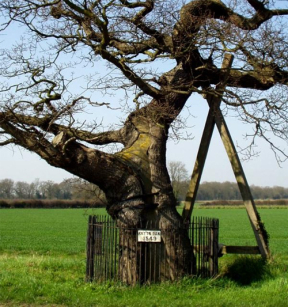
On 20 june, 1549, the men of the town of Attleborough and of the neighbouring hamlets of Eccles and Wilby, in South Norfolk, threw down the fences recently erected by John Green, lord of the manor of Beckhall in Wilby, round part of the common over which they all had...
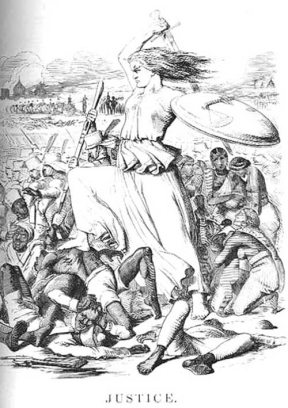
Many historical books contain cartoons, but in most cases these are little more than a relief from the text, and do not make any point of substance which is not made elsewhere. Political cartoons should be regarded as much more than that. They are an important historical source which often...
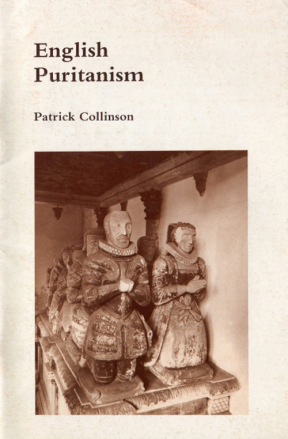
When the modern world was christened Puritanism appeared as a bad fairy and bestowed upon it certain dubious gifts: capitalism, democracy, America. This is a fairy story, but like all fairy stories it contains a small grain of truth. But what was Puritanism? Already in the seventeenth century a critic...
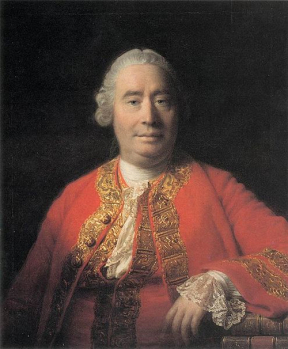
In recent decades, Scotland's distinctive contribution to the Enlightenment has been of increasing interest to scholars. Often very remarkable in an analytical view, such studies may nevertheless miss their sense of the story by treating Scottish insight in abstraction from Scottish life. Taking a more concrete approach, the present study...
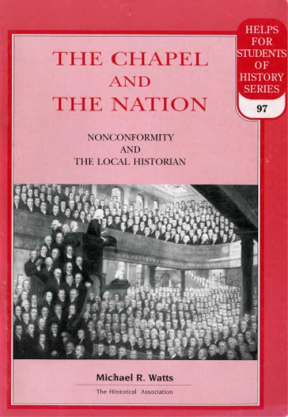
The Noncoformitst chapel has played a crucial role in the history of the English and Welsh nations. When the great French historian Elie Halevy sought to explain the contrast between the turbulent history of his own country and the peaceful evolution of England in the late eighteenth and nineteenth centuries...
The term 'Absolutism' was coined in France in the 1790s, but the concept which described it was familiar to many Englishmen in the late seventeenth century. They talked of 'absolute monarchy', 'tyranny', 'despotism' and above all 'arbitrary government'. Their use of such terns were pejorative: they described political regimes of...
The second English Revolution of the seventeenth century, the Revolution of 1688, ushered in during the next twenty-five years a series of changes which were to be profoundly important to the ultimate development of the country. Most conspicuously, the reigns of William III and Anne released Englishmen - though not...
Can a movement as varied and diffuse as the Enlightenment of the eighteenth century be contained within the covers of a short pamphlet? The problem would certainly have appealed to the intellectuals of that time. Generalists rather than specialists, citizens of the whole world of knowledge, they relished the challenge...
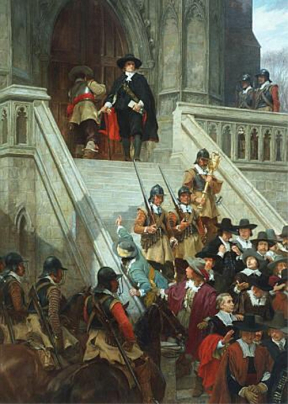
In the spring of 1643 William Lithgow, a Scot born in Lanark in 1582, who had spent most of his life travellingaround Europe, often on foot and having many fantastic adventures, decided to return to Britain. Having just turned sixty, he was obviously feeling pretty gloomy. ‘After long 40 years...