Europe 1901-present

While war seems to be a backdrop to events in Europe in this time period the articles collected here explore many of the wider impacts and elements to the war. Medicine and technology are explored alongside dramatic changes in social attitudes. The political events that disrupt and shape Europe of the 20th century are explored though a range of engaging articles that include Russia and the USSR, Fascism and European co-operation.

Sort by: Date (Newest first) | Title A-Z
Show: All | Articles | Podcasts | Multipage Articles
  • Film: The Weimar Republic

    Article

    Professor Tim Grady takes us back to the final days of the First World War to examine the developing splits in German society that turned into revolutionary chasms following the country’s defeat. From this he reassesses some of the factors that led to the Weimar Republic’s collapse while also allowing...

    Click to view
  • Franz Ferdinand

    Article

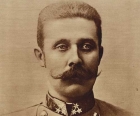
    The Kapuzinerkirche (Church of the Capuchins) in Vienna's Neue Markt is one of the more curious attractions of the city, housing as it does the Kaisergruft crypt in which the Habsburgs are entombed, or rather in which their bodies are entombed: the hearts are usually kept in the Loreto Chapel...

    Click to view
  • GCSE Podcasts: The League of Nations

    Multipage Article

    Aaron Wilkes and Katrina Shearman of Castle High School in Dudley discuss one of the key topics for modern world history students: The League of Nations. We have produced three podcasts with the first looking at the Origins, Structure and Limitations of the League of Nations, the second podcast examining the League of...

    Click to view
  • GCSE Podcasts: The Road to World War II

    Multipage Article

    Aaron Wilkes and Katrina Shearman of Castle High School in Dudley discuss one of the key topics for modern world history students: The Road to World War II.

    Click to view
  • GCSE Podcasts: The World War 1 Peace Treaties

    Multipage Article

    Aaron Wilkes and Katrina Shearman of Castle High School in Dudley discuss one of the key topics for modern world history students: The Peace Treaties of World War 1. We have produced four podcasts with the first looking at the The state of Europe after the War, the second podcast examining...

    Click to view
  • Germany 1914-1929: Discussion

    Article

    Professors Tim Grady and Matthew Stibbe consider changing interpretations of Germany in 1914-1929, from a negative continuum of authoritarianism culminating in Hitler's regime to a modern approach of seeing the Weimar Republic through a sociocultural lens. If you're unable to see the film below, please use the link for your Membership...

    Click to view
  • Gypsy, Roma and Traveller History Month

    30th June 2021

    In 1993 the writer, former dissident and first President of the Czech Republic Vaclav Havel described the situation of the Roma ‘as a litmus test for Europe’s civil society’. Nearly 30 years later the social questions of how the prejudice against the Gypsy, Roma and Traveller communities across Europe is...

    Click to view
  • Helping Year 9 debate the purposes of genocide education

    Article

    Connecting the dots: helping Year 9 to debate the purposes of Holocaust and genocide education Why do we teach about the Holocaust and about other genocides? The Holocaust has been a compulsory part of the English National Curriculum since 1991; however, curriculum documents say little about why pupils should learn...

    Click to view
  • Helping Year 9 evaluate explanations for the Holocaust

    Article

    ‘It made my brain hurt, but in a good way': helping Year 9 learn to make and to evaluate explanations for the Holocaust Why genocides occur is a perplexing and complex question. Leanne Judson reports a strategy designed to help students think about perpetration and evaluate and propose explanations for...

    Click to view
  • Helping Year 9 explore the cultural legacies of WW1

    Article

    A world turned molten: helping Year 9 to explore the cultural legacies of the First World War Rachel Foster shows how her own study of cultural history led to a new dimension in her planning. She wanted to show her students not only that historians are interested in many different...

    Click to view
  • Helping Year 9 to engage effectively with ‘other genocides’

    Article

    In this article, Andy Lawrence returns to arguments made in Teaching History 153 about the importance of teaching young people about other modern genocides in addition to the Holocaust. Building on those arguments with his own rationale, Lawrence also acknowledges the constraints on curriculum time that compel all departments to...

    Click to view
  • Imagining cities: exploring historical sites as contested spaces

    Article

    Geraint Brown and Matt Stanford share the daunting challenge and intriguing opportunities that are presented by leading a school history trip to a site as complex as Berlin. That the city is a palimpsest, layered with stories and tissued with conflicting identities, experiences and meanings, makes planning a trip extremely...

    Click to view
  • Integrating heritage education and public history at school

    Article

    As a busy teacher of history and part-time doctoral student exploring history, heritage and identity, Joris thought a lot about heritage, students’ understanding of heritage and how such ideas could best be brought into the history classroom. Meanwhile, he discovered that the buildings next to his school were about to...

    Click to view
  • Integrating the historical Holocaust

    Article

    How can we help students understand the Holocaust in its full historical complexity, particularly when they often come to class with misconceptions arising from the representation of the Holocaust in popular culture? Over a three-year period, Sam Ineson set out to integrate the historical Holocaust into his school’s formal and informal...

    Click to view
  • Investigating students' prior understandings of the Holocaust

    Article

    Students make sense of new learning on the basis of their prior understandings: we cannot move our students' thinking on unless we understand what they already know. In this article, Edwards and O'Dowd report how they set out to scope a group of Y ear 8  students' prior learning and...

    Click to view
  • Kristallnacht

    Article

    Why Reichskristallnacht? In The Third Reich Michael Burleigh writes: ‘We should be cautious in seeing spontaneity where frequency suggests instigation from a central source.' He comments on ‘a dialectic between "spontaneous" grassroot actions and "followup" state sponsored measures.' These remarks relate to 1935, the time of the Nuremberg Laws [the...

    Click to view
  • Learning and teaching about the history of Europe in the twentieth century

    Article

    In the first of our special, extra ‘Europages’, funded by the Council of Europe (CoE), Mark McLaughlin briefly outlines the purpose and outcomes of a CoE project on ‘learning and teaching about the history of Europe in the twentieth century’. His short article reminds all history teachers of the need...

    Click to view
  • Mentioning the War: does studying World War Two make any difference to pupils' sense of British achievement and identity?

    Article

    All of this edition is based on the assumption that the teaching of history can have a significant impact upon the values, views and attitudes of our pupils. But how much impact does it have and of what type? And do we ever examine that impact in order to rethink...

    Click to view
  • Moral dilemmas: history teaching and the Holocaust

    Article

    The new Holocaust Exhibition at the Imperial War Museum in London has been very favourably received by the general public, and by teachers and their students. Initially controversial - was a war museum the ideal site for such an exhibition, for example? - it has since been widely praised for...

    Click to view
  • Moving Year 9 towards more complex causal explanations of Holocaust perpetration

    Article

    Building on research by the UCL Centre for Holocaust Education, Matthew Duncan was concerned that his students were drawn to simplistic explanations of Holocaust perpetrators’ actions. As well as the UCL Centre’s research, Duncan drew on history education research from Canada and history teachers’ theorisation in England for inspiration in...

    Click to view