Europe 1901-present

While war seems to be a backdrop to events in Europe in this time period the articles collected here explore many of the wider impacts and elements to the war. Medicine and technology are explored alongside dramatic changes in social attitudes. The political events that disrupt and shape Europe of the 20th century are explored though a range of engaging articles that include Russia and the USSR, Fascism and European co-operation.

Sort by: Date (Newest first) | Title A-Z
Show: All | Articles | Podcasts | Multipage Articles
  • Curating the imagined past: world building in the history curriculum

    Article

    Mike Hill was concerned that his students were unable to genuinely inhabit the historical places they encountered in his lessons. Drawing on fields as varied as history-teacher research, philosophy, and literary and media theory, Hill identified ways to curate his students’ constructions of ‘secondary worlds’ in the historical past, including...

    Click to view
  • Decolonise, don’t diversify: enabling a paradigm shift in the KS3 history curriculum

    Article

    In this article, Dan Lyndon-Cohen makes the case that history departments should move from diversifying the curriculum to decolonising it. After reflecting on some examples of how he made the content of his lessons more representative, he explores how the influence of writers such as Michel-Rolph Trouillot and Emma Dabiri...

    Click to view
  • Deepening post-16 students' historical engagement with the Holocaust

    Article

    Peter Morgan represents what is best about the reflective practitioner - an experienced teacher of some 15 years' standing, he continues to challenge himself and to seek ways to improve and develop his classroom practice. Deeply influenced by the pedagogy and resources that he encountered on the CPD of the Institute...

    Click to view
  • Developing multiperspectivity through cartoon analysis

    Article

    Studying cartoons can be an engaging experience for students but it can also present students with considerable difficulties. Cartoons are typically highly complex texts that are often very hard to interpret and students need to develop appropriate reading strategies to interpret cartoons effectively. In this article Ulrich Schnakenberg explores ways...

    Click to view
  • Does the grammatical ‘release the conceptual’?

    Article

    Jim Carroll noticed basic literacy errors in his Year 13s’ writing, but on closer examination decided that these were not best addressed purely as literacy issues. Through an intervention based on clauses, Carroll managed to enable his students to write better, but he did this by teasing out principles of...

    Click to view
  • Drop the dead dictator: a Year 9 newsroom simulation

    Article

    Rosalind Stirzaker has big ambitions for her students. She wants them to do more than make a simple list of the key causes of the Second World War. Yes, she wants them to complete a piece of written work, but she wants – and gets – a great deal more...

    Click to view
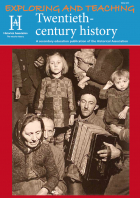
  • Exploring and Teaching Twentieth-Century History

    Article

    This resource is free to everyone. For access to our library of high-quality secondary history materials along with free or discounted CPD and membership of a thriving community of history teachers and subject leaders, join the Historical Association today  For a long time, history curricula on the 20th century prioritised...

    Click to view
  • Family stories and global (hi)stories

    Article

    Teaching in Greece, a country with extensive recent experience of immigration, Maria Vlachaki and Georgia Kouseri were interested to examine how they might use family history as a means of exploring the historical dimensions of this potentially sensitive topic. They hoped that encouraging pupils to explore their relatives’ stories would...

    Click to view
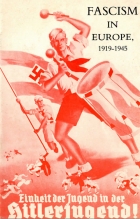
  • Fascism in Europe 1919-1945

    Article

    The importance of fascism in 20th Century Europe is beyond question. But what was - or is - fascism?It is synonymous with authoritarian rule or the totalitarian state, or with both? In political terms, is fascism ‘right-wing' or ‘left-wing', revolutionary or reactionary? Why did it develop? Was it truly only...

    Click to view
  • Film Series: Power and authority in Germany 1871-1991

    Article

    Log in below to preview the introductory film - available to all registered users of the website. This open access introductory film forms part of our nine-part filmed series on the development of power and authority in Germany 1871-1991 available through the Student Zone with corporate secondary membership.  In this introduction...

    Click to view
  • Film series: Power and authority in Germany, 1871-1991

    Article

    The rise and fall of Germany in the 20th Century is one of the major political arcs of the modern period, and one that many feel familiar with – from the unification of the Germanic states, the defeat of the Kaiser in 1918, revolution, a weak Weimar Republic all the...

    Click to view
  • Film: Blood and Iron

    Article

    Katya Hoyer recently gave a lecture for the HA Virtual Branch on Weltkrieg: the German home front during the First World War and the devastating effects of total war on a divided and insecure society. This talk provides an insight into the First World War that is often overlooked, reminding us that...

    Click to view
  • Film: Germany 1945-1991: Introduction

    Article

    Germany as a divided and defeated nation is explored through the lens of how the two new Germanys rebuilt their States politically and culturally. Professor Anna Saunders reflects on the different inequalities that existed between the two states and how stability was established between political leaders, even when political dissent...

    Click to view
  • Film: Ideas and Ideology

    Article

    Professor Matthew Stibbe assesses some of the contradictory factors at play in East Germany and how that related to the wider Soviet system. He contrasts this with the development of the capitalist system that was being developed in West Germany. If you're unable to see the film below, please use...

    Click to view
  • Film: Key Personalities and Opposition

    Article

    Professor Matthew Stibbe examines the key political leaders of West and East Germany and how their decisions and responses to political events shaped their international relationships and the lives of the divided German population under their control. He also looks at the opposition and resistance these governments faced domestically during...

    Click to view
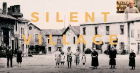
  • Film: Life and Death in Occupied France

    Article

    Robert Pike joined the HA Virtual Branch to discuss the research for his latest book Silent Village: Life and Death in Occupied France. This work explores life in the French village of Oradour-sur-Glane before, during and after the infamous massacre and destruction by Nazi Germany that took place on 10 June...

    Click to view
  • Film: Nazi Germany

    Article

    Dr Victoria Taylor provides an overview of the rise to power of Hitler from disillusioned veteran to political operator. She goes on to explore the messaging and state interventions that brought many Germans under Hitler and the Nazis spell as they enacted their ideas of what a powerful Germany should...

    Click to view
  • Film: Social & Cultural Change

    Article

    How did a new Germany rebuild itself from the legacy of the Second World War both physically, emotionally and culturally? Professor Stibbe explores the silences of many households and how that influenced the student rebellion of the late 1960s. He also puts into perspective the cultural impact that the war...

    Click to view
  • Film: The Partitions of Poland-Lithuania (1772-1795)

    Article

    Karin Friedrich recently joined the Virtual Branch to discuss aspects of its complex history in her talk on the partitions of Poland, their repercussions for German-Polish relations and their legacy. Professor Friedrich is chair in Early Modern European History at the University of Aberdeen, co-director of the Centre for Early Modern...

    Click to view
  • Film: The Two German Economies

    Article

    The speed at which both sides in Germany recovered economically is re-examined in this film. Professor Matthew Stibbe describes how the West Germany economy recovered and became a magnet for migrants as well as East Germans. However, he also examines how East Germany’s economy compared more successfully to some of...

    Click to view