Europe 1901-present

While war seems to be a backdrop to events in Europe in this time period the articles collected here explore many of the wider impacts and elements to the war. Medicine and technology are explored alongside dramatic changes in social attitudes. The political events that disrupt and shape Europe of the 20th century are explored though a range of engaging articles that include Russia and the USSR, Fascism and European co-operation.

Sort by: Date (Newest first) | Title A-Z
Show: All | Articles | Podcasts | Multipage Articles
  • Film: Nazi Germany

    Article

    Dr Victoria Taylor provides an overview of the rise to power of Hitler from disillusioned veteran to political operator. She goes on to explore the messaging and state interventions that brought many Germans under Hitler and the Nazis spell as they enacted their ideas of what a powerful Germany should...

    Click to view
  • Recorded Webinar: Ukraine and the Soviet Politics of Empire

    Article

    Dr Zbigniew Wojnowski is a historian based at the University of Oxford. He specialises in the history of the Cold War and is particularly interested in the history of Soviet social, cultural, and political interactions with Eastern Europe after 1945. In 2017, he published a book entitled The Near Abroad:...

    Click to view
  • Recorded webinar: Ordinary people - Holocaust Memorial Day 2023

    Article

    To choose to act, to have no choice to be who you are, to live an ordinary life in extraordinary times? These are all questions that the Holocaust raises. Millions of people became victims of the Nazis, millions more choose not to act to stop the events around them, felt...

    Click to view
  • Triumphs Show: ‘The Strands of Memory’

    Article

    In 2014, a group of French pupils from Lycée Léopold Sédar Senghor in Évreux was due to meet a British Second World War veteran, Eric Rackham, to hear him talk about his war experiences. Sadly, he passed away before the planned meeting. Paradoxically, this failed meeting led to the development...

    Click to view
  • Thinking about the ethical dimension

    Article

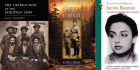
    Responding to concerns about Dutch students’ citizenship education, Tim Huijgen, Paul Holthuis, Roel Nijmeijer and Iris van den Brand set out to design online materials to help students understand the decisions and dilemmas faced by past actors. They focused on the life and actions of Rosie Glaser (1914–2000), a Dutch Holocaust survivor,...

    Click to view
  • Film Series: Power and authority in Germany 1871-1991

    Article

    Log in below to preview the introductory film - available to all registered users of the website. This open access introductory film forms part of our nine-part filmed series on the development of power and authority in Germany 1871-1991 available through the Student Zone with corporate secondary membership.  In this introduction...

    Click to view
  • Integrating the historical Holocaust

    Article

    How can we help students understand the Holocaust in its full historical complexity, particularly when they often come to class with misconceptions arising from the representation of the Holocaust in popular culture? Over a three-year period, Sam Ineson set out to integrate the historical Holocaust into his school’s formal and informal...

    Click to view
  • Helping Year 9 to engage effectively with ‘other genocides’

    Article

    In this article, Andy Lawrence returns to arguments made in Teaching History 153 about the importance of teaching young people about other modern genocides in addition to the Holocaust. Building on those arguments with his own rationale, Lawrence also acknowledges the constraints on curriculum time that compel all departments to...

    Click to view
  • Virtual Branch recording: Why has Monarchy survived in Europe?

    Article

    In the lead-up to the Queen's Platinum Jubilee, Dr Bob Morris joined the HA Virtual Branch in March 2022 to consider why the monarchy has survived in Europe.  Dr R. M. (Bob) Morris is a Senior Honorary Research Associate at the Constitution Unit, University College London. He was formerly a...

    Click to view
  • Teaching about the Russian invasion of Ukraine and events happening there

    Article

    The events of the last few days appear to have come out of nowhere to many people, especially children. While tensions have existed in the region for some time Russia’s decision to attack Ukraine was without provocation. To have war return in such a way to the edges of Europe...

    Click to view
  • Film: The Partitions of Poland-Lithuania (1772-1795)

    Article

    Karin Friedrich recently joined the Virtual Branch to discuss aspects of its complex history in her talk on the partitions of Poland, their repercussions for German-Polish relations and their legacy. Professor Friedrich is chair in Early Modern European History at the University of Aberdeen, co-director of the Centre for Early Modern...

    Click to view
  • Film: Life and Death in Occupied France

    Article

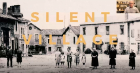
    Robert Pike joined the HA Virtual Branch to discuss the research for his latest book Silent Village: Life and Death in Occupied France. This work explores life in the French village of Oradour-sur-Glane before, during and after the infamous massacre and destruction by Nazi Germany that took place on 10 June...

    Click to view
  • Using the concept of place to help Year 9 students to visualise the complexities of the Holocaust

    Article

    Inspired by the work of the social and cultural historian Tim Cole, Stuart Farley decided to look again at the way he teaches the Holocaust. He wanted to focus on the geographical concept of place as a way of enabling his Year 9 students to build far more diverse narratives,...

    Click to view
  • Triumphs Show: Diversifying the curriculum at A-level

    Article

    There is a wealth of literature arguing for the importance of accommodating a wide range of perspectives and experiences in school history curricula. Many have contended that it is crucial to include the stories of those traditionally omitted from historical records in order to teach history well. Others have emphasised...

    Click to view
  • Decolonise, don’t diversify: enabling a paradigm shift in the KS3 history curriculum

    Article

    In this article, Dan Lyndon-Cohen makes the case that history departments should move from diversifying the curriculum to decolonising it. After reflecting on some examples of how he made the content of his lessons more representative, he explores how the influence of writers such as Michel-Rolph Trouillot and Emma Dabiri...

    Click to view
  • Gypsy, Roma and Traveller History Month

    30th June 2021

    In 1993 the writer, former dissident and first President of the Czech Republic Vaclav Havel described the situation of the Roma ‘as a litmus test for Europe’s civil society’. Nearly 30 years later the social questions of how the prejudice against the Gypsy, Roma and Traveller communities across Europe is...

    Click to view
  • Film: Blood and Iron

    Article

    Katya Hoyer recently gave a lecture for the HA Virtual Branch on Weltkrieg: the German home front during the First World War and the devastating effects of total war on a divided and insecure society. This talk provides an insight into the First World War that is often overlooked, reminding us that...

    Click to view
  • Curating the imagined past: world building in the history curriculum

    Article

    Mike Hill was concerned that his students were unable to genuinely inhabit the historical places they encountered in his lessons. Drawing on fields as varied as history-teacher research, philosophy, and literary and media theory, Hill identified ways to curate his students’ constructions of ‘secondary worlds’ in the historical past, including...

    Click to view
  • Year 9 use sources to explore contemporary meanings and understandings of appeasement

    Article

    After reflecting on the difference between his study of source extracts at university and how he was using source extracts in the classroom, Jonathan Sellin went in search of a new way to help his pupils to situate sources in context. Finding inspiration in the work of intellectual historian Quentin...

    Click to view
  • Moving Year 9 towards more complex causal explanations of Holocaust perpetration

    Article

    Building on research by the UCL Centre for Holocaust Education, Matthew Duncan was concerned that his students were drawn to simplistic explanations of Holocaust perpetrators’ actions. As well as the UCL Centre’s research, Duncan drew on history education research from Canada and history teachers’ theorisation in England for inspiration in...

    Click to view