Britain & Ireland 1509-1745

In this section you will find articles to help you unpick the truths from the myths of the Tudor period, examine how Cromwell took the country to war and explore how some the most important political thinkers began to shape the modern world. There is also guidance for teaching some of the information collected here to pupils and different age ranges.

Sort by: Date (Newest first) | Title A-Z
  • Film series: Power and Freedom in Britain and Ireland, 1714–2010

    30th October 2025

    From royal courts to radical protests, from industrial revolutions to global empires – this compelling new film series traces the dramatic evolution of power, rights, and freedom across three centuries of British and Irish history. We will trace Britain and Ireland’s transformation from 1714 to 2010, unpacking power struggles, social revolutions, and...

    Click to view
  • Witchcraft, Werewolves and Magic in European History: on-demand short course

    Multipage Article

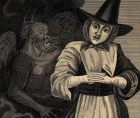
    This self-guided short course provides an introduction to European witchcraft history from the fifteenth century to the present. Using a range of primary sources, the course explores important themes and questions relating to witchcraft history, examining how witchcraft has been imagined and understood at different times and in different places, and why...

    Click to view
  • Virtual Branch Recording: The Fall of the English Republic

    Article

    Oliver Cromwell’s death in 1658 sparked a period of unrivalled turmoil and confusion in English history. In less than two years, there were close to ten changes of government; rival armies of Englishmen faced each other across the Scottish border; and the Long Parliament was finally dissolved after two decades.  Why...

    Click to view
  • Virtual Branch Recording: The cultural world of Elizabethan England

    Article

    In this Virtual Branch talk Professor Emma Smith provides a preview of her current research, which explores the lives and cultural undercurrents of Elizabethan England. What was influencing their cultural tastes and how much of it was new, or had it all been seen before? Emma Smith is Professor of Shakespeare...

    Click to view
  • What was Witchcraft in the Early Sixteenth Century?

    Article

    In this article, Dr Jonathan Durrant (Principal Lecturer in History, University of South Wales) argues that we know no more now than we did in the late 1980s about what witchcraft was as men and women of the early sixteenth century understood it. Dr Durrant looks at evidence from Henry VIII's Witchcraft Act of 1542 to explore British and European perceptions of witches...

    Click to view
  • Disembarking the religious rollercoaster

    Article

    Sarah Jackson-Buckley and Jessie Phillips found themselves perennially dissatisfied with the outcomes of their teaching of the Protestant Reformation. Determined that students should take away a sense of the momentous political and social consequences of the Reformation, they turned to historical scholarship, and to the work of other history teachers on...

    Click to view
  • Why history teachers should not be afraid to venture into the long eighteenth century

    Article

    As ardent advocates of eighteenth-century history, Rhian Fender and Stephen Ragdale were determined to ensure that the period found a secure place within their department’s Key Stage 3 curriculum. Given the extraordinary range of contrasts that epitomise the long eighteenth century, and only ten lessons within which to explore them,...

    Click to view
  • Exploring the relationship between historical significance and historical interpretation

    Article

    Jane Card’s previous work on the power of images in conveying particular interpretations and her advice about how to use visual material effectively in classrooms will be familiar to readers of Teaching History. In this article she focuses specifically on the capacity of visual representations to convey a compelling message about the...

    Click to view
  • Inclusive approaches to teaching Elizabeth I at GCSE

    Multipage Article

    The events of recent years led many to reflect upon the diversity of representation of their history curricula, what they teach and how they teach it. In the autumn of 2020 the Historical Association convened a diversity steering group of key stakeholders in history education. Over the course of the...

    Click to view
  • What Have Historians Been Arguing About... the impact of the English Reformation

    Article

    Since the first stirrings of religious reform in the sixteenth century, people have been writing the history of the Reformation, debating what happened and why it happened. John Foxe arguably became the first historian of the English Reformation when he published Actes and Monuments in 1563. Better known as ‘The...

    Click to view
  • Film: The ladies-in-waiting who served the six wives of Henry VIII

    Article

    Every queen had ladies-in-waiting. Her confidantes and chaperones, they are the forgotten agents of the Tudor court. Experts at survival, negotiating the competing demands of their families and their queen, the ladies-in-waiting of Henry VIII’s wives were far more than decorative ‘extras’: they were serious political players who changed the...

    Click to view
  • The British Empire on trial

    Article

    In the light of present-day concerns about the place, in a modern world, of statues commemorating figures whose roles in history are of debatable merit, Dr Gregory Gifford puts the British Empire on trial, presenting a balanced case both for and against. In June 2020 when the statue of slave-trader Edward Colston...

    Click to view
  • What Have Historians Been Arguing About... the impact of the British Empire on Britain?

    Article

    The murder of George Floyd during the summer of 2020 and the ongoing ‘culture war’ in Britain over the legacy of the British Empire have reignited interest in imperial history. This focuses, in particular, on the question of the empire’s impact on Britain itself: on how the act of conquering...

    Click to view
  • Move Me On 183: sees no reason to include Black or Asian British history

    Article

    Move Me On is designed to build critical, informed debate about the character of teacher training, teacher education and professional development. It is also designed to offer practical help to all involved in training new history teachers. Each issue presents a situation in initial teacher education/training with an emphasis upon...

    Click to view
  • Cunning Plan 183: Teaching a broader Britain, 1625–1714

    Article

    ‘Gruesome!’ was how we decided to describe our teaching of seventeenth-century British history, although ‘inadequate’ was probably more accurate. Oh, how much was wrong!  We had… Incoherence. The Civil War and Protectorate years plonked in between the Elizabethan Age and the origins of the industrial revolution. We had lost years! A...

    Click to view
  • Putting black into the Union Jack: weaving Black history into the Year 7 to 9 curriculum

    Article

    Making a passionate case for teaching Black British history in the secondary school curriculum, Hannah shares here the personal journey she has travelled in planning for Black British history in her curriculum. She cites her inspirations and offers striking examples to illustrate her rationale and approach to teaching this history....

    Click to view
  • Inventing race? Using primary sources to investigate the origins of racial thinking in the past

    Article

    Having been given some additional curriculum time, Kerry Apps and her department made decisions about what had been missing in the previous curriculum diet. Building on an existing enquiry (in TH 176), Apps decided to focus on how and when the idea of race in its modern sense developed in early modern...

    Click to view
  • Film: Henry VIII and Tudor Royal Authority

    Article

    In this film, Tracy Borman, discusses the life and career of Henry VIII. Tracy examines how Henry VIII evolved from a pleasure loving prince, raised as Henry VII's 'spare heir', to becoming a king who would come to redefine England as a nation.

    Click to view
  • Unpicking the threads of interpretations

    Article

    Determined to do justice to the complexity of the seventeenth century, as a messy but crucial period in British history, and to develop their pupils’ disciplinary understanding of how and why interpretations of the past are constructed, Dan Keates and his department set out to exploit the rich seam of...

    Click to view
  • Film: Personality and Tudor Royal Authority – discussion

    Article

    In this film Professor Sue Doran, Jesus College, University of Oxford and Professor Steven Gunn, Merton College, University of Oxford discuss the role and significance of 'personality' to Tudor Royal Authority. If you're unable to see the film below, please use the link for your Membership type:Historian members | Primary members |...

    Click to view