Significance

The focus around this concept is on recognizing why a person of event is of importance. Children are encouraged to evaluate the relevance of the contribution of different individuals or how an event came to affect future generations. Children can apply a number of criteria to evaluate significance such as those of Partington (1980) who suggested they consider: Read more

Sort by: Date (Newest first) | Title A-Z
Show: All | Articles | Podcasts | Multipage Articles
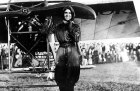
  • KS1: Teaching about significant individuals

    Article

    Teaching about significant individuals at Key Stage 1. Workshop by Professor Penelope Hartnett, University of the West of England The history programme of study for Key Stage 1 requires pupils to be taught about: The lives of significant individuals in the past who have contributed to national and international achievements, some...

    Click to view
  • Learning to engage with documents through role play

    Article

    Please note: this article pre-dates the 2014 National Curriculum and some content may be outdated. First let me say that I did not research the materials used or plan this lesson. For this I must acknowledge, with thanks, that this is the work of my colleague, Mike Huggins, and the senior...

    Click to view
  • Little coins, big histories

    Article

    In this article, Damienne Clarke examines how coins can be used as a focus for history teaching and learning in Key Stage One. She describes the emergence of coins from older systems of bartering, as well as their role as tokens of commemoration for significant people and events. This article provides...

    Click to view
  • Local significant individuals

    Multipage Article

    The National Curriculum specifies a local study both at Key Stages 1 and 2. Basing your local study around an individual is a great way to bring the heritage of your locality to life. Many of these individuals are part of larger national events and changes and seeing these changes at...

    Click to view
  • Making the most of a census

    Article

    This article looks at how children can utilise and manipulate mathematical data to make sense of a historic past. The focus is on helping children see the numbers as a resource for understanding the experiences of those that lived in this place. Aim: Understand historical concepts such as continuity and...

    Click to view
  • Making the most of a visit to the Museum of London Docklands

    Article

    In this article Susie Townsend explores one of her favourite museums, the Museum of London Docklands, and explains why it has a real value and interest far beyond the locality. As well as covering the benefits of a visit, she also provides ideas for teaching activities across the primary age range....

    Click to view
  • One of my favourite history places: Fulham Palace

    Article

    In the south-west corner of London, nestled up against the Thames, lies Fulham Palace. This is a palace that was not for kings and queens but bishops, the princes of the church. This was the summer palace for the bishops of London which they retreated to when the heat and stench of the...

    Click to view
  • Primary History and planning for teaching the Olympics - four curricular models

    Article

    Please note: this article pre-dates the 2014 National Curriculum and some content may be outdated. Three curricular editions of Primary History, PH 50, Autumn 2008 , PH 53, Autumn 2009 and PH 57, Spring 2011 are directly relevant to teaching the Olympics. PH 50, Autumn 2008 History Education in the 21st...

    Click to view
  • Remembering Agincourt: Bilingual Enquiry

    Multipage Article

    Do they learn about Agincourt in France? 2015 was a year of anniversaries. As part of our funded commemoration projects surrounding the 600th anniversary of the Battle of Agincourt, we have commissioned an enquiry looking at the battle and how it has been remembered, particularly aimed at pupils in years...

    Click to view
  • She sells seashells by the seashore: teaching Mary Anning at Key Stage 1

    Article

    Mary Anning was a fascinating individual who would be a purposeful addition to a history curriculum. This article outlines the rationale behind including her as a significant individual but also offers ideas for developing young children’s understanding of historical interpretations.

    Click to view
  • Significance

    Article

    What makes a person or event significant? When looking at the past, some people or events stand out in our minds. Individuals such as Florence Nightingale or Walter Tull at Key Stage 1 or events such as the Blitz at Key Stage 2 may have particular resonance. However, if we...

    Click to view
  • Significance and interpretation in primary history

    Article

    The terms ‘significance’ and ‘interpretation’ often go hand in hand with one another, but what do each of them mean and why is it that they fit together? Understanding both terms separately and how historians use interpretation to identify what is significant in history, and why historians cast their interpretations as to what...

    Click to view
  • Significant anniversaries: the infamous Beeching Report 1963

    Article

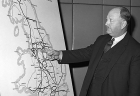
    March 2023 sees the anniversary of a report that had profound significance on social history and which affected many parts of the United Kingdom. There is every chance that it had an effect close to your school especially if you are in a more rural or coastal area. The Beeching...

    Click to view
  • Teaching famous people at key stage one

    Article

    The draft English NC for history highlights the study of ‘significant individuals and people'. Michelle Dexter provides an insight on how to approach this biographical requirement; it also opens up biography as a major genre for pupils to master - augmenting their development of literacy...

    Click to view
  • The Brontë sisters: teaching local history through a focus on one remarkable family

    Article

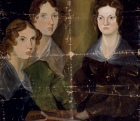
    Lorna Spencer’s focus on the Brontë sisters as a significant local family provides an insight into both their lives and their challenges, and how far these can be compared with those of different classes of people in the locality. Their experiences can also be related to wider issues, such as...

    Click to view
  • The Great Exhibition of 1851: teaching a significant event at Key Stage 1

    Article

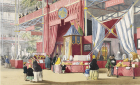
    The Great Exhibition allows pupils to consider the impact of a particular event. The exhibition provides a means to look at Britain’s wider role in the world and social and technical developments such as the impact of the railways. Pupils can explore a variety of sources, consider the substantive concepts...

    Click to view
  • The Great Fire of London and the National Curriculum

    Article

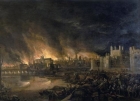
    The Great Fire of London is a favourite National Curriculum teaching topic. This paper draws on the latest resources and teaching ideas to suggest how you can meet both the NC history requirements and the wider ones of the National Curriculum, particularly in integrated programmes that include teaching about the Great...

    Click to view
  • The Maya: a 4,000-year-old civilisation in the Americas

    Article

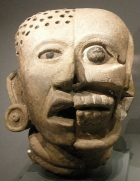
    Obscured by the fame of the Aztec empire or shrouded by a veil of mystery, the cultural history of the Maya has generally been misunderstood by the British public. Maya civilisation developed in a territory the size of Germany and Denmark together (nearly 400,000 km2). This vast territory shows three...

    Click to view
  • The Stone Age conundrum

    Article

    History – the very word makes the primary teacher in me feel excited. There are simply so many variables, so many dark nooks and crannies of history to explore and so many different angles through which to draw in a class of eager young minds. Thanks to a wellexecuted history...

    Click to view
  • Using classic fiction to support the study of childhood in Victorian times

    Article

    Please note: This article pre-dates the current National Curriculum and some content and references may be outdated. Classic fiction provides useful sources of information for investigating the lives, beliefs and values of people in the past. In this article Ann Cowling describes activities undertaken with student teachers which may also serve as models...

    Click to view