Britain & Ireland

The Tudors continue to fascinate and some of their story is told here along with the other dynasty of the period the Stuarts. Alongside those resources are the podcasts on the ideas that transformed British society during that period and created a United Kingdom for the first time. The industrial revolution is explored through poetry as well as technology. Religious collapse, change and diversity are all themes explored in this section. Read more

Sort by: Date (Newest first) | Title A-Z
  • The Exclusion Crisis (1679–81)

    Article

    The Exclusion Crisis in the reign of King Charles II was a fierce struggle over the issue of whether the King’s Catholic brother James should be the heir to the throne. At the same time, circumstances promoted an outpouring of polemical pamphlets on a massive scale. Here Gregory Gifford examines...

    Click to view
  • Virtual Branch Recording: The cultural world of Elizabethan England

    Article

    In this Virtual Branch talk Professor Emma Smith provides a preview of her current research, which explores the lives and cultural undercurrents of Elizabethan England. What was influencing their cultural tastes and how much of it was new, or had it all been seen before? Emma Smith is Professor of Shakespeare...

    Click to view
  • Out and About: Newcastle’s 1650 Witch Trial

    Article

    A.D. Bergin’s research for a work of historical fiction led him to Newcastle, where one of the largest witch trials in English history took place in 1650. Despite the scale of the proceedings, the event remains much less well known than the infamous Pendle trials or Matthew Hopkins’ East Anglian witch hunts.

    Click to view
  • The year that lost eleven days

    Article

    From its Roman origins to the dating of the tax year, David Fleming describes how the changes made to the British calendar in 1752 came about and their effect on everyday life, both at the time and since...

    Click to view
  • In search of Alice Molland: an English witchcraft will o’ the wisp

    Article

    As the Historical Association runs its short course on Witchcraft, Werewolves and Magic in European History, Mark Stoyle investigates an apparent turning point in the history of English witchcraft: the case of a woman accused of witchcraft in seventeenth-century Devon.  We also include Mark Stoyle's 'Doing History' companion piece to his...

    Click to view
  • What was Witchcraft in the Early Sixteenth Century?

    Article

    In this article, Dr Jonathan Durrant (Principal Lecturer in History, University of South Wales) argues that we know no more now than we did in the late 1980s about what witchcraft was as men and women of the early sixteenth century understood it. Dr Durrant looks at evidence from Henry VIII's Witchcraft Act of 1542 to explore British and European perceptions of witches...

    Click to view
  • Art and ecology

    Article

    Artworks and objects from the past provide us with a compelling record of human interaction with the natural world. In this article, art historians Carla Benzan and Samuel Shaw explain how they are using collections from galleries and museums to bring environmental history to new audiences and to increase awareness...

    Click to view
  • In conversation with Mark Nicholls

    Article

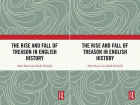
    The Historian sat down with Mark Nicholls to discuss his latest book, The Rise and Fall of Treason in English History, co-authored with Allen Boyer, which charts the history of the law of treason from its origins to the present day...

    Click to view
  • My Favourite History Place: A Short History of Brill

    Article

    In this article Josephine Glover discusses the long history of her ‘favourite history place’, the Buckinghamshire village of Brill. She explains how there has been a human settlement there since Mesolithic times. Using various fragments of evidence, she pieces together the extent to which the village was important to early...

    Click to view
  • Opinion: Who was ‘the man of his time’?

    Article

    In this new, occasional section of The Historian, contributors share their thoughts on matters of public historical debate. We invite our readers to respond, either by writing to the editors at thehistorian@history.org.uk or by writing their own opinion piece. Here, Lorenzo Kamel shares his thoughts on why saying ‘he was a...

    Click to view
  • Out and About in ‘The most Loyal and Ancient City of Taunton’

    Article

    The Somerset town of Taunton featured prominently in the highly significant political and religious conflicts of the seventeenth century. Isabella Peach examines Taunton’s role in these events and the impact they had on the town. Her article is based on her winning entry in the 2023 Young Historian Post-16 Local...

    Click to view
  • In conversation with Nicholas Radburn

    Article

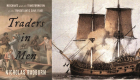
    The Historian sat down with historian Nicholas Radburn to discuss his latest book, Traders in Men, which examines the role of merchants in the expansion and transformation of the Transatlantic Slave Trade in the eighteenth century.

    Click to view
  • My Favourite History Place: The Holburne Museum

    Article

    Jane A. Mills describes in this article how the fascination of Holburne Museum in Bath comes partly from the historical objects on display but also from the varied history of the building itself. She explains how the recent development of the museum illustrates the ongoing issue of trying to resolve...

    Click to view
  • Out and About: exploring Lancaster’s ‘glocal’ history online and on foot

    Article

    The city of Lancaster has many important historical landmarks from both the medieval period and the time of the Industrial Revolution. In this article Sunita Abraham and Christopher Donaldson describe the thinking behind a guided historical tour they have devised for the city. This involves engaging with modern technology, placing Lancaster within a...

    Click to view
  • A history of Choral Evensong: the birth of an English tradition

    Article

    The apogee of the native church music tradition, Evensong is a jewel born of the English Reformation, but how did it come to be, asks Tom Coxhead? Evensong is a miraculous success-story for the Anglican Church in an increasingly secular society. Midweek attendance at cathedrals, collegiate chapels, and larger churches...

    Click to view
  • My Favourite History Place: Burton Agnes Hall

    Article

    David Hockney’s landscape paintings of the Yorkshire Wolds in the 1990s alerted people to the peculiar beauty of the East Riding but the region remains strangely unknown and unvisited, especially the small, scattered villages inland from the coast. Yet the village of Burton Agnes, on the road between Driffield and Bridlington,...

    Click to view
  • ‘Since singing is so good a thing’: William Byrd on the benefits of singing

    Article

    As the value of music education is again a topic of societal debate, Tudor composer William Byrd, the four hundredth anniversary of whose death is celebrated this year, was a powerful advocate of singing in early modern England, writes Katherine Butler. Tudor composer William Byrd (c.1540–1623) is recognised today not only...

    Click to view
  • The Coronation of King Charles III

    Article

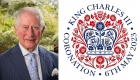
    2023 will see the first coronation of a British monarch for 70 years. Only those now in their 70s or above will remember the last one. The UK is the only country in Europe still to carry out a coronation, a ceremony that has its roots in traditions over a...

    Click to view
  • Joan Vaux: a remarkable Tudor lady

    Article

    Joanna Hickson is a hugely successful novelist, specialising in historical fiction, and she describes herself as feeling that she actually lives in the fifteenth century. For readers of The Historian she explores and explains how she developed her understanding and knowledge of a highly significant Tudor woman who is a central figure in two of...

    Click to view
  • Elizabeth I: ‘less than a woman’?

    Article

    Tracy Borman examines the femininity of the Virgin Queen. Elizabeth I is often hailed as a feminist icon. Despite being the younger, forgotten daughter of Henry VIII with little hope of ever inheriting the throne, she became his longest-reigning and most successful heir by a country mile. In an age when...

    Click to view