
World
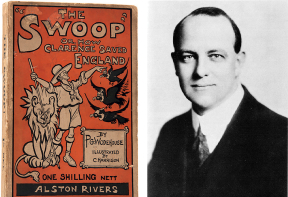
The writer P.G. Wodehouse is best remembered for his comic portrayals of the exploits of wealthy, young ‘men about town’ during the interwar years, but his writing often contained a multi-layered commentary on British society and politics, the extent of which has not yet been fully appreciated. In this article,...
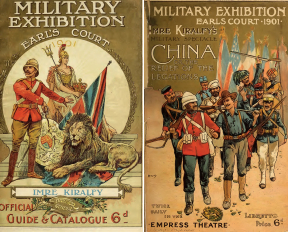
In 1901, at the height of empire, public shock at the vulnerability of British colonial interests was accompanied by public appetite for spectacular re-enactments of British battlefield victories. Robert Brown shows how one performance of the ‘Relief of the Legations’ at the Military Exhibition in Earl’s Court, London, was reshaped...
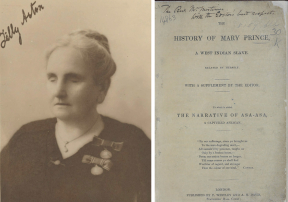
Disabled peoples could be found across the British Empire; at the same time, the process of colonisation could create forms of disability, while the concept of ‘disability’ became embedded in discourses of race and gender. In this article, Esme Cleall demonstrates how thinking about disability is essential to understanding the...

In this article Folusho Alabi reveals a relatively unknown story from the history of the British Empire. She analyses the issues and strategic manoeuvres in an ongoing struggle between Nigerian market women and the British colonial authorities in the early twentieth century. Despite an innate imbalance of power in this...
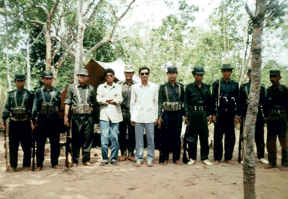
How did groups resisting the creation of new borders after 1947 use shadow state structures? Luke Rimmo Lego, Abigail Tamang and Sneha Singh with Laishram Bullion and Chinglai Ngamba Moirangthem explore the history of these structures and their development over the past half century.
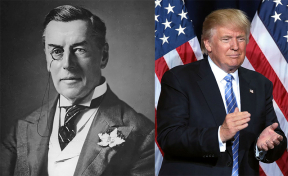
What are the pitfalls and pluses of comparing historical figures with contemporary politicians? Chris Godden argues that recent comparisons of Donald Trump with one of his predecessors may be wide of the mark, but that a more illuminating parallel may be found with one of Britain’s most controversial nineteenth-century politicians.
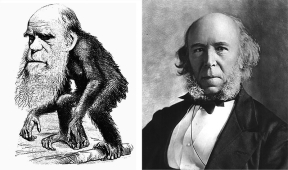
‘Social Darwinism’ has been associated in academia and popular consciousness with negative concepts such as hyper-nationalism and eugenics. Geoffrey M. Hodgson challenges the notion that Social Darwinism or its proponents were ever well-defined. By tracing the use of ‘Social Darwinism’ across academic disciplines and globally over a long period, Hodgson...

The HA and the Economic History Society are developing a new partnership. Affiliates of the EHS contributed to our Teacher Fellowship programme: Teaching the economic history of colonialism in Africa and Asia. As part of the development of closer links, we are delighted to support the dissemination of The History...
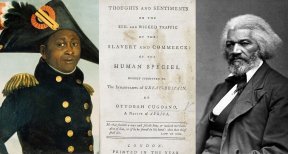
This talk explored the struggle for liberation from the perspective of the enslaved, wherever possible in their own words. Dr Sudhir Hazareesingh shines a light on the lives of revolutionaries like Toussaint Louverture, José Antonio Aponte, Nat Turner, and the pregnant rebel Solitude; touching on the stories of the freed...
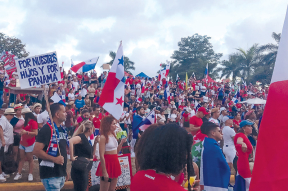
In his work on the local history of his hometown in Panama, Miguel Elias Escobar Cornejo highlights the importance of understanding the geography of the historical sites we study. Here, he explains how a defensive route from the coast to the rugged mountain interior developed into one of the most...
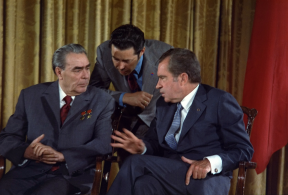
Log in below to preview the introductory film - available to all registered users of the website. This open access introductory film forms part of our ongoing film series on Power and authority in Russia and the Soviet Union. All the films are available through the Student Zone with corporate...
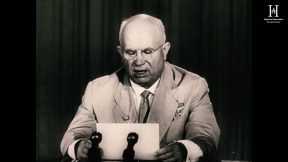
In this film Dr Edwin Bacon reflects upon the instability of the Khrushchev era and how Brezhnev positioned himself as the perfect replacement for a Soviet Communist party desperate for stability in the wake of the Cuban missile crisis. Brezhnev would be the first amongst equals looking to move forward...
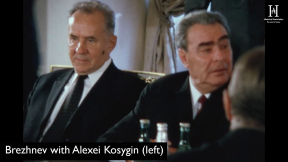
In this film Dr Edwin Bacon talks about Brezhnev’s change in direction and approach after Khruschev, making collective leadership work and the Kosygin reforms. Whilst there were changes from the era of Khruschev, Brezhnev’s response to the Prague Spring in 1968 showed that some things had not changed. The events...
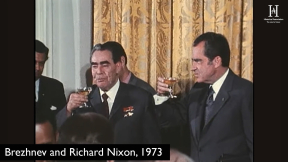
In this film Dr Edwin Bacon blanks about the modernisation of the soviet union in the 1960s and 70s under Brezhnev, with some scholars predicting that as the East and West evolved, they would eventually converge as modern developed industrialised societies. The problem with convergence theory is that it didn’t...
In this film Dr Edwin Bacon looks back at Brezhnev’s 18 years and how is has been described as an era of stagnation, producing an appetite for change from younger leaders such as Mikail Gorbachev. Dr Bacon reflects that this was a period of relative peace, stability and predictability which...
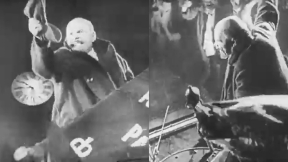
(Student and corporate secondary members can view these films in our Student Zone) Two men – Trotsky and Lenin – symbolise the Russian Revolution for most people. While Trotsky came to an icy end in Mexico, Lenin remains an enduring figure in the history of Russia and the history of...
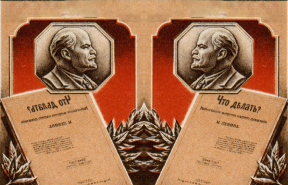
As Lenin’s own political outlook and beliefs developed so did the European movements of Socialism and Communism. Groups emerged that wanted to radically change society and social structures. Lenin positioned himself as one of the leaders and crucially one of the thinkers behind these new ideas and movements. Dr Lara...
The founders of Communism, Marx and Engels, had created a set of social structures and industrial developments that were believed necessary for Communism to be achieved. Imperial Russia did not fit these conditions and yet at the start of the twentieth century Russian revolutionaries were some of the most active...
You wait a lifetime for a revolution and then two come along at once! Such was 1917 in Russia. As the world seemed in chaos and Russia and the Russian people began to collapse, Lenin and the Bolsheviks saw their opportunity and overthrew the government to create the first communist...
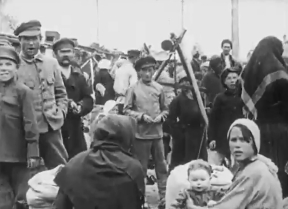
Having changed the course of Russian society Lenin now needed to secure his Bolshevik survival. Unlike his predecessor he saw no need to continue with the Imperialist policies of a war in Europe. Territory could be sacrificed for control, but would promises and rhetoric be enough to govern among people...