
World
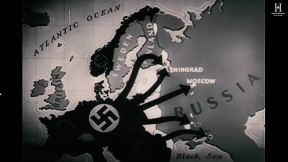
In this film, Professor James Harris (University of Leeds) examines Stalin and the Soviet preparations for global war. The reasons why Stalin agreed the Nazi-Soviet pact are explored as are Stalin’s response to invasion in 1941. Professor Harris addresses the impact the war had on the USSR and how that...
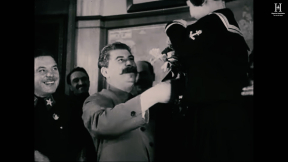
In this film, Professor James Harris (University of Leeds) reflects upon how historical interpretations of Stalin have changed over time. Stalin’s legacy and influence continues to materialise in all subsequent Soviet and Russian administrations. The Man of Steel is used by politicians when they are looking for arguments to open...
Emeritus Professor Archie Brown explains how Mikhail Gorbachev became the leader of the Soviet Union in 1985 and describes the domestic and international situation the USSR found itself in at this point of the Cold War. He discusses Gorbachev's political and economic agenda and priorities, looks at the support and...
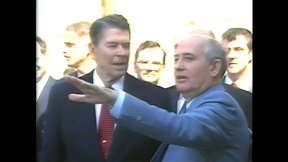
Professor Archie Brown discusses how Gorbachev fundamentally reformed Soviet foreign policy, redefined relations with the West, fostered closer personal relationships with former adversaries and how he transformed the Cold War world. He examines Gorbachev's policy towards Eastern Europe and the fall of the Iron Curtain, and looks at how his...
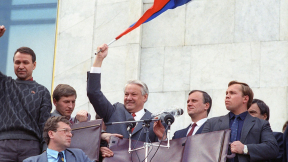
Professor Archie Brown looks at the forces that led to Gorbachev's eventual downfall. He also examines the coup in 1991, the rise of Boris Yeltsin and the subsequent breakup of the Soviet Union. This film is part of our film series that looks at Russian history through the lens of...
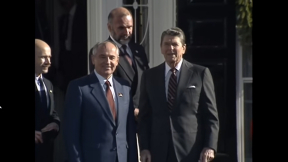
Mikhail Gorbachev’s leadership and period in office is remembered differently in different parts of the world. Professor Archie Brown discusses the different interpretations the have developed in the West and in Russia to Gorbachev and his legacy. He describes the impact and development of Post-Soviet Russia and how this has...

The Tenement Museum is not remotely like any museum I had previously visited. It is an old tenement building where generations of New York migrants lived and loved, worked and had families before moving both on and out. The Tenement Museum tells the story of the Lower East Side through...
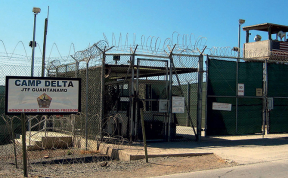
History Abridged: In this feature we take a person, time, theme or event and tell you the vast rich history in small space. A long dip into history in a shortened form. See all History Abridged articles The ‘Monroe Doctrine’ in 1825 provided a cornerstone for future United States foreign...
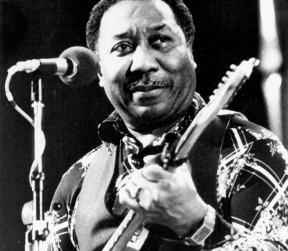
Matt Jux-Blayney explores the impact of the blues singer Muddy Waters against a backdrop of significant social and racial change in the United States of the mid-twentieth century. On 3 July 1960, a man from Mississippi was introduced onto the stage of the Newport Jazz Festival in Rhode Island. He...
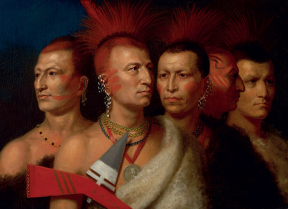
The American Revolution presented all who lived through it with difficult choices about allegiance, identity, and self-interest. The responses of American loyalists, enslaved people, and Native Americans reveal much about the country’s revolutionary foundation and the United States of today. The American Revolution was at once universal and narrowly nationalistic....
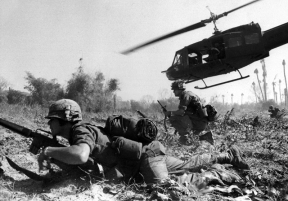
Why did American military involvement in Vietnam fail? In this article, David McGill explains why the United States never had a realistic chance of defeating the North Vietnamese and their Viet Cong allies. The decision by the United States government to become involved in supporting the South Vietnamese government against...
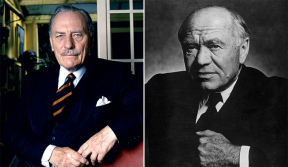
The Second World War saw the development of significant anti-Americanism in Britain. This article locates the centre of wartime anti-Americanism in the politics of Conservative imperialists, who believed the USA was trying to deliberately dismantle the British Empire in order to fulfil its own imperial ambitions. The Second World War...
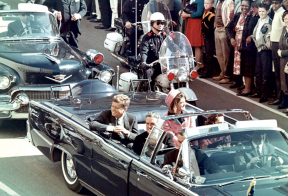
The murder of America’s thirty-fifth president is often regarded as one of the key events in the recent history of the United States. Numerous conspiracy theories have made it appear more complex, and more mysterious, than was in fact the case. No event in recent American history has been more...
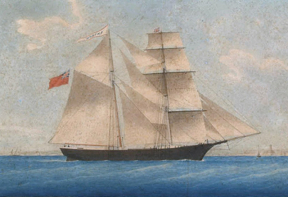
Graham Faiella guides us through the historical evidence and literary speculation surrounding one of the ultimately unresolved incidents of recent times. One hundred and fifty years ago, sometime between 25 November and 4 December 1872, the brigantine Mary Celeste was abandoned at sea somewhere between the Azores and the coast...
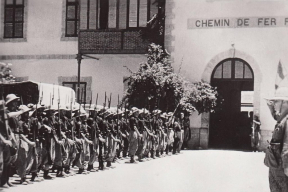
Philip Woods discusses Evelyn Waugh’s contribution to understanding the nature of journalism before the Second World War. This article compares the value to historians of the two books Evelyn Waugh wrote based on his experiences as a war correspondent covering the Italo-Ethiopian war of 1935–36. The popular satiric novel Scoop...
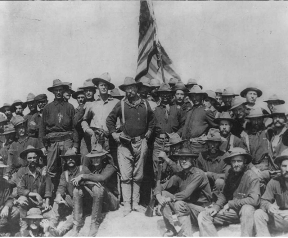
Anthony Ruggiero reveals how United States foreign policy evolved from its effective adherence to the Monroe Doctrine of 1823 into securing its own overseas ‘empire’. The Spanish-American War of 1898 was pivotal in launching the United States into recognition as an empire. Following the war, the United Sates accepted its...
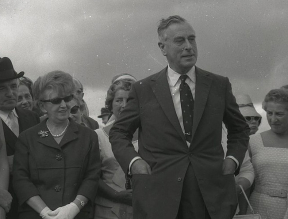
Adrian Smith investigates an abortive plan for the earl to intervene in Rhodesia's Unilateral Declaration of Independence. Earl Mountbatten of Burma boasted a unique CV: Chief of Combined Operations, Supreme Commander South-East Asia, Admiral of the Fleet and First Sea Lord, Chief of the Defence Staff, and Viceroy of India....
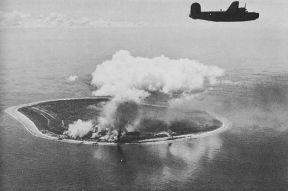
Aadam Patel offers an insight into the complexities of the recent economic history of a remote Pacific island. Nauru is an isolated island located in the Pacific Ocean approximately 4,400km north-east from Australia and 1,300km north-east from the Solomon Islands. With an area of just below 21 squared kilometres, it...

Patrick J Pead writes about a truly remarkable woman whose contribution to advances in medicine deserves far wider recognition. Our series ‘Real Lives’ seeks to put the story of the ordinary person into our great historical narrative. We are all part of the rich fabric of the communities in which...
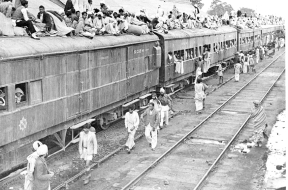
August 2022 marks 75 years since British India was divided at independence into two separate states: India and Pakistan (the latter including today’s Bangladesh). As with the 70th commemoration in 2017, this anniversary will trigger a great deal of collective remembering in Britain just as in South Asia itself. Freedom...