Britain & Ireland

What was it about industrialisation that led to the emergence of a woman’s movement in Victorian Britain? Why do we see so many people fighting for so many rights and liberties in this period and what are the origins of some of the issues we still campaign on today? This section includes our major series on Social and Political Change in the UK from 1800 to the present day. There are also articles and podcasts on the often violent relationship between England and Ireland during this period and England’s changing relationship with Scotland and Wales. Read more

Sort by: Date (Newest first) | Title A-Z
  • Bertrand Russell's Role in the Cuban Missile Crisis

    Article

    'An attack on the United States with 10,000 megatons would lead to the death of essentially all of the American people and to the destruction of the nation.’ ‘In 1960 President Kennedy mentioned 30,000 megatons as the size of the world’s stockpile of nuclear weapons.’ In the autumn of 1962...

    Click to view
  • Joseph Priestley's American Dream

    Article

    Joseph Priestley ended his days in Northumberland, Pennsylvania. This is one of the most delightful spots in the eastern United States. It is situated at the confluence of the North Western and North Eastern branches of the Susquehanna, one of the great rivers of North America, which winds its way...

    Click to view
  • Heritage and History

    Article

    Moves to protect and record the historic environment began at the turn of the 20th century with the establishment of the National Trust in 1895, the Victoria County History in 1899, and the Royal Commission on Historical Monuments for England in 1908. The VCH took the antiquarians’ task onto a...

    Click to view
  • The Origins of the Local Government Service

    Article

    The concept ‘local government’ dates only from the middle of the nineteenth century. ‘Local government service’ emerged later still. In 1903 Redlich and Hirst1 wrote of ‘municipal officers’, while in 1922 Robson2 preferred ‘the municipal civil service’. ‘Local government service’ perhaps derives its pedigree from its use in the final...

    Click to view
  • 'Spy Fever' in Britain, 1900 to 1914

    Article

    The decade and a half prior to the First World War saw Britain experience a virulent, some might say sordid phenomenon that has been referred to as ‘spy fever.’ This article traces the roots of spy fever, and examines its nature, before assessing its effects on Britain between 1900 and...

    Click to view
  • Two Babies That Could Have Changed World History

    Article

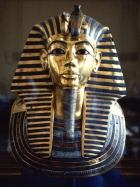
    'At last have made wonderful discovery in Valley; a magnificent tomb with seals intact; re-covered same for your arrival. Congratulations.’ This telegram was sent from Luxor on the 6th November 1922 by Howard Carter to his coarchaeologist Lord Carnarvon in Britain. It started the Tut·ankh·Amen story which led to a...

    Click to view
  • The Rainbow Circle and the New Liberalism

    Article

    The publication of the first volume of Paddy Ashdown’s Diaries in 2000 has focused renewed attention on the relationship between the Liberal Democrats and the Labour Party. From the first meeting between Ashdown and Tony Blair at the latter’s house on 4 September 1994, less than seven weeks after his...

    Click to view
  • The Gallipoli Memorial, Eltham

    Article

    On April 13 2000 the Bishop of Oxford, the Right Reverend Richard Harris, gave the final Gallipoli Memorial Lecture in the Gallipoli Memorial Chapel at Holy Trinity Church, Eltham. The National Gallipoli Memorial was established there due to the effort and enthusiasm of Holy Trinity’s Vicar, the Reverend Henry Hall,...

    Click to view
  • A Social History of the Welsh Language

    Article

    When the historian Peter Burke wrote in 1987 ‘It is high time for a social history of language’, he could scarcely have imagined that the first to meet the challenge would be the Welsh. In November 2000 the University of Wales Centre for Advanced Welsh and Celtic Studies, a research...

    Click to view
  • Eighteenth-century Britain and its Empire

    Article

    The concept of an ‘English’ or even of a ‘British’ empire has been in use at least from the sixteenth century. What the term then conveyed was of course very different from what it was to convey in modern times. By the mid-eighteenth century, however, contemporaries were beginning to envisage...

    Click to view
  • William Morris, Art and the Rise of the British Labour Movement

    Article

    Commenting in early 1934 at the University College, Hull, at the time of the centenary of William Morris’ birth and of a large exhibition at the Victoria and Albert Museum, the historian and active socialist, G.D.H. Cole commented, William Morris’ influence is very much alive today: but let us not...

    Click to view
  • Cholera and the Fight for Public Health Reform in Mid-Victorian England

    Article

    Of the many social changes that occurred during the Victorian age, public health reform is widely agreed to be one of the most significant. In the early Victorian era the vast majority of Britons drank water from murky ponds and rivers, carried to their dwellings in buckets; and their excrement...

    Click to view
  • 'Wanted, The Elusive Charlie Peace': A Sheffield Killer Of The 1870s As Popular Hero

    Article

    On 28 November 1876, William and John Habron, Irish brothers habitually in trouble with the police, were tried at Manchester Assizes for the murder three months before of Police Constable Nicholas Cock (on the basis of ‘scientific’ footprint evidence at the scene of the crime). The jury found 19 year-old...

    Click to view
  • Cooling Memories? Why We Still Remember Scott And Shackleton

    Article

    Just along from the grand lobby of the new British Library, on the left up a broad staircase, there is a half concealed doorway. Walk through the doors and you enter a low gallery, dimly lit and filled with expansive display cases. There is always a hush in this room...

    Click to view
  • Louis, John, and William: the 'Dame Europa' pamphlets, 1870-1871

    Article

    The pamphlet printing industry in England received an unexpected boost in 1871 with the appearance of numerous works written, mainly, as commentaries, satires or allegories in Britain’s attitude regarding the Franco-Prussian War. The cause of this deluge was one particular tract, first issued on Salisbury in October 1870, whose purpose...

    Click to view
  • What's New About New Labour?

    Article

    In the 1980s it was often argued that the Labour party was finished as a major force in British politics. Yet on 1st May 1997 it won a landslide victory, securing an overall majority of 179 in parliament. Two years into its term of office, it retains a strong lead...

    Click to view
  • 1939 After Sixty Years

    Article

    Historians view major anniversaries with a measure of ambivalence. We know that they are artificial, that it is merely a convenient fiction to think that the passage of a round number of years provides a privileged vantage point from which to review the significance of a given event. Yet we...

    Click to view
  • Britain and the Formation of NATO

    Article

    Carl Watts outlines the shift in British security policy and examines the role played by the Foreign Office during the post-War period. April 1999 marks the 50th anniversary of the signature of the North Atlantic Treaty, which came into effect in August 1949. The Cold War is over, but NATO...

    Click to view
  • The Press and the Public during the Boer War 1899-1902

    Article

    Dr Jacqueline Beaumont Hughes considers some aspects of the role of the Press during the Boer War. The conflict between Great Britain and the Republics of the Transvaal and Orange Free State which slipped into war in October 1899 was to become the most significant since the Crimean war. It...

    Click to view
  • The Pilgrimage of Grace: Reactions, Responses and Revisions

    Article

    Dr Michael Bush investigates the interpretations of the pilgrimage of grace. Our perception of the pilgrimage of grace has been largely created by Madeleine and Ruth Dodds and their magnificent book The Pilgrimage of Grace, 1536-7, and the Exeter Conspiracy, 1538 (Cambridge). Published in 1915, it has dominated the subject...

    Click to view