
Search results
Found 51 results matching “2025” in Secondary
Not found what you’re looking for? Try using double quote marks to search for a specific whole word or phrase, try different search filters, or see our search tips.
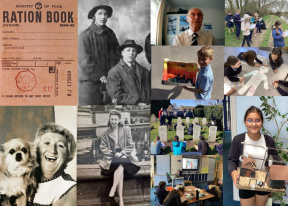
Spirit of Normandy Trust SeniorAvani De Santis [Guildford Grammar School, Western Australia]Kyle Luk [Loughborough Grammar School] Caspar Wright [Wells Cathedral School] Spirit of Normandy Trust Key Stage 3 Anne Andrews [St Mary’s Menston Catholic Voluntary Academy, Leeds]Rafferty Ludlow-Maisey [Crypt Grammar School, Gloucester]Robert Moczynski [Queen Elizabeth Grammar School, Wakefield] Spirit of...

The Historical Association's Medlicott Medal 2025 was awarded to Dr Christine Counsell. The award seeks to recognise individuals from a diversity of backgrounds in their service to history. Read more about Christine, her work and her award here. As is the custom, Dr Christine Counsell received her award and presented...
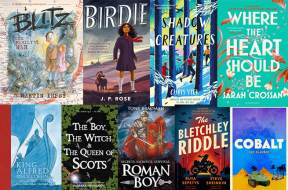
Each year, the Historical Association runs the Young Quills, a competition for published historical fiction for children and young adults (14+). The Young Quills books for each year must be published for the first time in English in the year preceding the competition – so 2024 for this year’s selection....
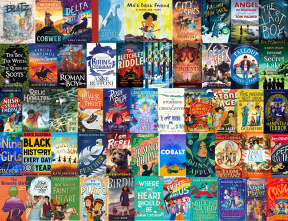
The Young Quills books for each year must be published for the first time in English in the year preceding the competition – so 2024 for this year’s selection. Divided by age suitability the books are given to schools on the condition that the children and young people there write...
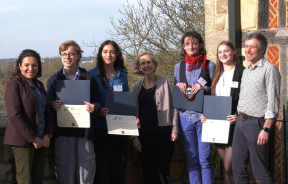
The final was held at the Vicar’s Hall at Windsor Castle on 29 March 2025, and attended by 20 finalists from across the UK. This year, each finalist needed to have taken part in a regional competition and one of three semi-final stages. The competition question for this year was:...
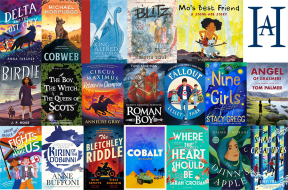
Each year, the Historical Association runs ‘Young Quills’, a competition for published historical fiction for children and young adults (14+). The Young Quills books for each year must be published for the first time in English in the year preceding the competition – so 2024 for this year’s selection. Our...
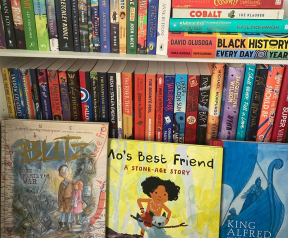
Each year, the Historical Association runs Young Quills, a competition for published historical fiction for children and young adults (14+). The Young Quills books for each year must be published for the first time in English in the year preceding the competition – so 2024 for this year’s selection. Our...
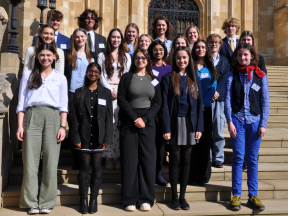
Winner: Quinn Scott – Chesterton Community College, Cambridge Runners up: Anya Bensouiah – Kendrick School, Reading Fred Bosley – The King’s School, Canterbury Aimee Nelson – Bablake School, Coventry Finalists: Emily Tweddle, Earlston High School, Scottish Borders Hannah Brearton, Upton Hall, Oxford Rosie Thomson, The Maynard School, Exeter Isabella Passarelli,...

Take time, a place and a character or two, and you can create some of the most exciting stories ever told – and by telling a story you unleash a desire to seek knowledge, to entertain, to inform and to enrich the lives of others. Storytelling is one of the...
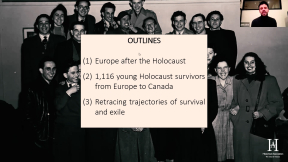
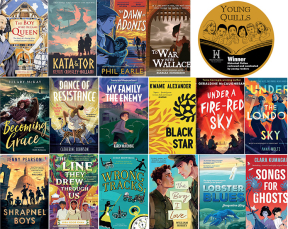
Each year, the Historical Association runs ‘Young Quills’, a competition for published historical fiction for children and young adults (14+). The Young Quills books for each year must be published for the first time in English in the year preceding the competition – so 2025 for this year’s selection. Our...
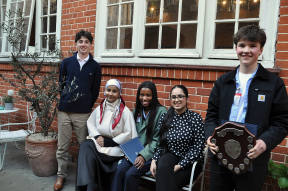
The Great Debate concluded on 21 March 2026 in Central London following a thrilling day. The competition started in the autumn of 2025 with heats running across the UK and online until February 2026. The three semi-finals held online led to the 21 finalists who were invited to London for...
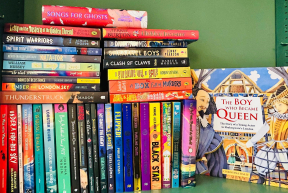
Each year, the Historical Association runs Young Quills, a competition for published historical fiction for children and young adults (14+). The Young Quills books for each year must be published for the first time in English in the year preceding the competition, which was 2025 for the 2026 competition. Our...
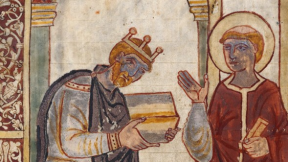
Æthelstan was the early medieval king whose territorial conquests and shrewd statesmanship united the peoples, languages, and cultures that would come to be known as the 'Kingdom of the English.' In this panoramic talk, David Woodman draws on his research and recent book to create a portrait of this immensely...
M
Member Resource
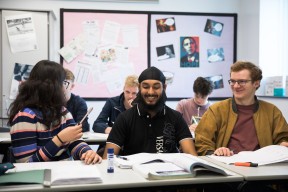
What does this series cover? This webinar series will help you to support your A-level students to gain detailed knowledge of particular periods and to engage in rigorous historical thinking. The topics covered will include building students’ knowledge, developing students’ disciplinary understanding in order to help them construct arguments in...
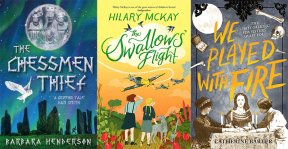
Each year the Historical Association runs the Young Quills, a competition for published historical fiction for children and young adults. The Young Quills books for each year must be published for the first time in English in the year preceding the competition. Divided by age suitability, the books are given...

What does this series cover and why should I attend? In recent years, the UK’s SEND system has been under the spotlight. As numbers of students with identified special educational needs increase, attention has been given to how to best embed inclusive practice, enabling teachers to support all students to...
Embracing messiness: teaching disciplinary thinking in history Session 1: Embracing messiness: the case for returning to disciplinary thinking in history classrooms In recent years, disciplinary thinking has been somewhat overlooked as the 'what' of curriculum has taken the front seat for many schools. This introductory session will explain the rationale...
M
Member Resource
Embracing messiness: teaching disciplinary thinking in history Session 2: Keeping sources messy This session looks into how source work has often been too tidy in the classroom setting and the reasons behind this. It will explore a different approach to working with sources and evidence and give practical approaches to...
Embracing messiness: teaching disciplinary thinking in history Session 3: Interpretations: complexity without confusions This session delves into interpretations. It analyses how we can be both too simplistic and too complex with our approach. It will explore a different approach to interpretations and give practical approaches to exemplify what this could...
Embracing messiness: teaching disciplinary thinking in history Session 4: Historical writing This session focuses on how we can support our students to write like historians. We will explain why PEE models and other simplistic frameworks actually limit our students and instead we should look to the work of historians as...
Embracing messiness: teaching disciplinary thinking in history Session 5: Helping the past take shape with historical enquiry This session focuses into enquiry and on second order concepts. It offers practical advice to how second order concepts can be introduced in a way that is historically rigorous. We will explicitly address...

Mentoring beginning and early career history teachers in the secondary school Session 1: Developing subject knowledge This first webinar will begin with the question: What do beginning and early career history teachers need to know about history? It will explore the substantive and disciplinary subject knowledge that is essential for...
Mentoring beginning and early career history teachers in the secondary school Session 2: Supporting planning In this second webinar, Victoria and Laura model how they get beginning and early career teachers planning with a strong sense of coherence, direction and historical purpose over a sequence of lessons. Release date: Tuesday...
Mentoring beginning and early career history teachers in the secondary school Session 3: Observation and feedback In this third webinar, Laura and Victoria explore strategies for dialogic and history-specific observation and post-lesson reflection. This session will focus on how mentors can forefront historical learning in the observation cycle. Release date:...