

Refugee Week 2026
15–21 June 2026
Refugee Week 2026: Courage
There are over 29 million refugees around the world, and more than 100 million people have been displaced. The majority are children.
These are just some of the current facts about refugees. Yet historically, refugee movements are nothing new. In times of war, famine and climate crisis, people have long been forced to leave their homes, villages, towns and nations. Sometimes there is time to gather belongings; at other times, people leave with only what they can carry, travelling with those beside them.
From some of the earliest stone steles depicting the movement of people, to religious and folkloric stories expressing a longing to return home – even when that home no longer exists – displacement has always been part of human history. While the numbers may change, the profile often does not: refugees are typically families, many of them children, forced to flee rather than choosing to move.
Refugees do not choose their status. For many, survival is the only priority. In time, they may face further difficult decisions – whether to return and rebuild, to establish a life in a new place, or to wait in uncertainty. Making any choice when stability has been lost requires immense courage. That is why ‘courage’ is the theme for Refugee Week 2026.
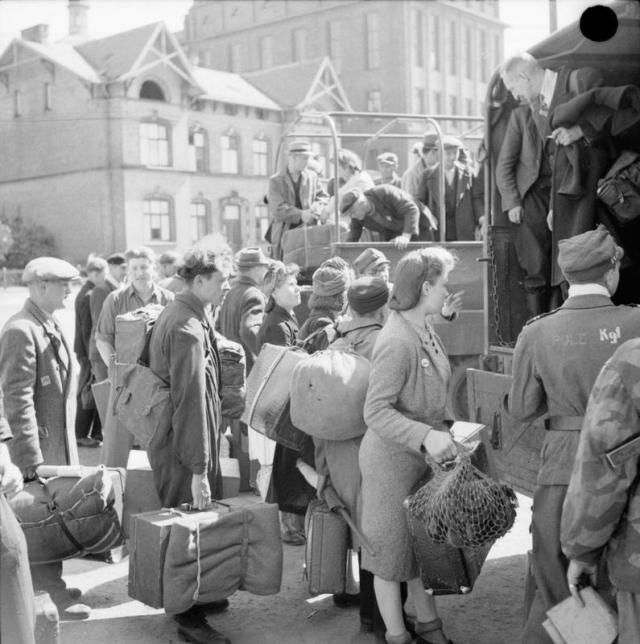
Throughout history, that courage has taken many forms. For those displaced by the conflicts of the 20th century, it meant rebuilding lives and communities after war. In the medieval period, displacement often followed environmental crises, requiring people to adapt to new landscapes and livelihoods. In the 16th and 17th centuries, Huguenots fleeing religious persecution showed courage in maintaining their beliefs under threat. None chose to become refugees, yet all were shaped by it.
If history teaches us anything, it is that displacement is an age-old experience. Those affected – especially the children who make up the largest group – would far rather have remained in stable lives than be forced to find the courage to rebuild them.
General resources
- Recorded webinar: Researching the history of migration and refugees in Europe
- Recorded webinar: Natural disasters in medieval Britain
- Podcast: The Huguenots in Britain & Ireland
Primary resources
- Teaching about the Russian invasion of Ukraine and events happening there (open acess)
- Ideas for Assemblies: The life stories of refugees - Judith Kerr
- Scheme of work: Journeys - the story of migration
- Migration to Britain through time
Secondary resources
- Teaching about the Russian invasion of Ukraine and events happening there (open acess)
- From The Holocaust To Recent Mass Murders And Refugees (open acess)
- Cunning Plan: Exploring the Migration experience
- Recorded Webinar: Teaching Jewish histories (open acess)
- Recorded Webinar: ‘Drawing the Line’: the 1947 Partition of India