World 1901-present

Some of the most profound and influential changes in world history take place from 1901 to today and covered here are many of the important and well known ones as well as some of the smaller stories. In terms of reach this section covers huge themes on diplomacy, post imperialism and economics. The articles cover the time period right up into recent events such as the State of the Union address by the US President Barrack Obama.

Sort by: Date (Newest first) | Title A-Z
Show: All | Articles | Podcasts | Multipage Articles
  • Using Google Docs to develop Year 9 pupils’ essay-writing skills

    Article

    Lucy Moonen set out to explore whether collaborative writing in small groups, facilitated by the use of Google Docs, would help to sustain students’ focus on essay writing as the development of an historical argument. She explains how she set up an essay on the League of Nationals as a...

    Click to view
  • The Sykes-Picot agreement and lines in the sand

    Article

    Paula Kitching reveals how a secret diplomatic negotiation 100 years ago provides an insight into the political complexities of the modern-day Middle East. The Middle East is an area frequently in the news. Over the last ten years the national and religious tensions appear to have exploded with whole regions...

    Click to view
  • WWI and the flu pandemic

    Article

    In our continuing Aspects of War series Hugh Gault reveals that the flu pandemic, which began during the First World War, presented another danger that challenged people’s lives and relationships. Wounded in the neck on the first day of the battle of the Somme, 1 July 1916, Arthur Conan Doyle’s son Kingsley...

    Click to view
  • Podcast Series: The British Empire 1800-Present

    Multipage Article

    An HA Podcasted History of the British Empire 1800-Present featuring Dr Seán Lang of Anglia Ruskin University, Dr John Stuart of Kingston University London, Professor A. J. Stockwell and Dr Larry Butler of the University of East Anglia.

    Click to view
  • Using databases to explore the real depth in the data

    Article

    Is it a good thing to have a lot of evidence? Surely the historian would answer that yes, it is: the more evidence that can be used, the better. The problem with this approach, though, is that too much data can be overwhelming for the history student - and, in...

    Click to view
  • The Harkness Method: achieving higher-order thinking with sixth-form

    Article

    Hark the herald tables sing! Achieving higher-order thinking with a chorus of sixth-form pupils On 9 April 1930, a philanthropist called Edward Harkness donated millions of dollars to the Phillips Exeter Academy in the USA. He hoped that his donation could be used to find a new way for students to sit around a table...

    Click to view
  • Lions of the Great War: How are Sikh soldiers of the First World War seen today?

    Multipage Article

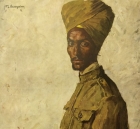
    This Key Stage Three History scheme of work focuses in depth on the contribution of Sikh soldiers from the Indian subcontinent fighting on behalf of the UK between 1914 and 1918. It is designed to follow on from a focus on the First World War, probably in Year Nine and...

    Click to view
  • Transforming Year 11's conceptual understanding of change

    Article

    For all that history teachers appreciate the need to build substantive knowledge and conceptual understanding systematically over time, they are also likely to have experienced that sickening moment when they realise that a Year 11 pupil has somehow missed something fundamental. In Anna Fielding's case, her pupil's misconception was related to...

    Click to view
  • Finding the place of substantive knowledge in history

    Article

    ‘What exactly is parliament?' finding the place of substantive knowledge in history The relationship between knowledge and literacy is a central concern for all teachers. In his teaching, Palek noted that his students were struggling to understand complex substantive concepts such as ‘parliament' and decided to explore the relationship between students'...

    Click to view
  • Developing transferable knowledge at A-level

    Article

    From a compartmentalised to a complicated past: developing transferable knowledge at A-level Students find it difficult to join up the different things they study into a complex account of the past. Examination specifications do not necessarily help with this because of the way in which history is divided up into...

    Click to view
  • Podcast Series: Modern China

    Multipage Article

    An HA Podcasted History of Modern China  featuring Dr Yangwen Zeng of the University of Manchester, Professor Rana Mitter and Professor Patricia Thornton of the University of Oxford and Professor Arne Westad of the London School of Economics. 

    Click to view
  • Podcast Series: Canadian Confederation

    Multipage Article

    In this podcast Professor Edward MacDonald of the University of Prince Edward Island discusses the origins of the Charlottetown Conference of 1864, Canadian Confederation and the development of Canada over the 20th Century.

    Click to view
  • Podcast Series: Russia and the USSR

    Multipage Article

    An HA Podcasted History of Russia and the USSR featuring Dr Beryl Williams, Dr Jonathan Davis of Anglia Ruskin University, Dr Edwin Bacon of Birkbeck University of London and Professor Peter Waldron of the University of East Anglia.

    Click to view
  • The shortest war in history: The Anglo-Zanzibar War of 1896

    Article

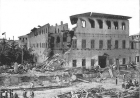
    At 9am on 27 August 1896, following an ultimatum, five ships of the Royal Navy began a bombardment of the Royal Palace and Harem in Zanzibar. Thirty-eight, or 40, or 43 minutes later, depending on which source you believe, the bombardment stopped when the white flag of surrender was raised...

    Click to view
  • Polychronicon 156: The transnational history of the First World War

    Article

    With the publication in 2014 of the Cambridge History of the  First World War, we enter a new transnational phase in the historical understanding of the conflict. The reasons why this change has come about are evident. The first is that there are more transnational historians writing the history of...

    Click to view
  • Triumphs Show 156: Fresh perspectives on the First World War

    Article

    Year 9 think they know a lot about the First World War. After all, they read Michael Morpurgo's novel Private Peaceful in their English lessons all the way back in Year 7, they've seen Blackadder so many times they can recite it, and in the centenary year of the war's...

    Click to view
  • 'But why then?' Chronological context and historical interpretations

    Article

    When Michael Fordham was introduced to Dr Seuss's Butter Battle Book he immediately recognised its potential value in the classroom as a popular interpretation of the Cold War. Wanting his Year 9 pupils to explain how and why the past has been interpreted in different ways he shows the potential pitfalls...

    Click to view
  • Afghanistan in the 1950s - Films

    Article

    We are used to Afghanistan, and especially Helmand Province, being in the news recently. Afghanistan is seen as a source of conflict and terror. But here are some recently rediscovered films of the area in the 1950s that paint rather a different picture of the country - a picture of...

    Click to view
  • We Remember Rwanda

    Article

    As an IOE Beacon School, St John's explored how learning about the Holocaust can improve understanding about other genocides and help strengthen efforts towards genocide prevention. ‘We Remember Rwanda' One important outcome is the impact on students, aged 13-17, who - in the 20th anniversary year of the genocide in...

    Click to view
  • India in 1914

    Article

    Rather as Queen Victoria was never as ‘Victorian' as we tend to assume, so British India in the years leading up to 1914 does not present the cliched spectacle of colonists in pith helmets and shorts lording it over subservient natives that we might assume. Certainly that sort of relationship...

    Click to view