Power

The accumulation of, the acceptance of, and the use of power are all explored in this section. The individual reigns of some monarchs are looked at such as those from the Tudor period, but so are other leaders, despotic and revolutionary. Contemporary issues of the use of power in a democracy are explored are more complex ideas around power through individual actions and movements in history.

Sort by: Date (Newest first) | Title A-Z
Show: All | Articles | Podcasts | Multipage Articles
  • (Un)exceptional women: queenship and power in medieval Europe

    Article

    How was the power of a Queen described and how far did It extend? In this article some of the most important queens of the Medieval period are examined for the authority they were able to wield. When we think of queens, the idea that they are extraordinary women, elevated to the highest status...

    Click to view
  • Agincourt 1415-2015

    Article

    Agincourt has become one of a small number of iconic events in our collective memory. Anne Curry explores how succeeding generations have exploited its significance. In his budget statement of 18 March 2015 the Chancellor of the Exchequer, George Osborne, announced £1m had been awarded to commemorate the 600th anniversary...

    Click to view
  • An English Absolutism?

    Article

    The term 'Absolutism' was coined in France in the 1790s, but the concept which described it was familiar to many Englishmen in the late seventeenth century. They talked of 'absolute monarchy', 'tyranny', 'despotism' and above all 'arbitrary government'. Their use of such terns were pejorative: they described political regimes of...

    Click to view
  • Between the Revolutions: Russia 1905 to 1917

    Article

    "The key question is this - is the peaceful renovation of the country possible? Or is it possible only by internal revolution?"This quotation succintly expresses the problem that faced both contemporaries and subsequant generations of historians confronting the development of Russia between the revolutions of 1905 and 1917. The upheavals...

    Click to view
  • CARGO Classroom: digital resources for diverse histories

    17th March 2021

    To address the urgent need for digital learning resources, and to address the imbalance of perspectives in the History curriculum, CARGO Classroom is now providing multimedia learning tools for Key Stage 3 History via a freely accessible, interactive website: cargomovement.org/classroom “CARGO is about doing. We talk a lot. We talk about...

    Click to view
  • Cavour and Italian Unification

    Article

    It may seem a little perverse to write a pamphlet on Cavour in 1972, the centenary year of the death of Mazzini, but no doubt there will be more than one publication on Mazzini to mark the occasion. To pretend that the two men had much in common would be...

    Click to view
  • Cunning Plan 177: teaching about life in Elizabethan England by looking at death

    Article

    ‘We already did the Tudors in primary school’ was the most frequent comment made by students about our Year 7 scheme of learning in our annual review. Students reported covering the Tudors at least once, sometimes twice, before reaching secondary school and they had clearly not faced extensive further study...

    Click to view
  • Czech Uranium and Stalin's Bomb

    Article

    Z.A.B. Zeman uncovers a fateful link between Czechoslovakia’s brief monopoly of uranium in Europe and the country’s subordination to the USSR. The great uranium rush started in 1943 and lasted for about seven years. Unlike the gold rushes of the past, uranium did not promise untold riches to individuals but...

    Click to view
  • Decolonise, don’t diversify: enabling a paradigm shift in the KS3 history curriculum

    Article

    In this article, Dan Lyndon-Cohen makes the case that history departments should move from diversifying the curriculum to decolonising it. After reflecting on some examples of how he made the content of his lessons more representative, he explores how the influence of writers such as Michel-Rolph Trouillot and Emma Dabiri...

    Click to view
  • Diversifying the curriculum: one department’s holistic approach

    Article

    In this article, Theo Woods shares the experience of one history department as they embarked on a substantial process of curriculum review and development. The department sought to address concerns that the range of history taught in their school, across the full seven years of students’ secondary experience, was too ‘traditional,...

    Click to view
  • Faction in Tudor England

    Article

    'This wicked Tower must be fed with blood' - W. S. Gilbert's dialogue sums up the popular myth of Tudor England. This pamphlet looks at the reality, a society and politics necessarily divided into rival factions by the pulls of patronage, local loyalty and the implications of personal monarchy, and...

    Click to view
  • Ffilm: Grym a Phrotest yng Nghymru – 1714 i 1785

    Article

    Ym Mhennod 9, mae Dr Eryn White (Prifysgol Aberystwyth) yn trafod pwy oedd mewn grym yng Nghymru ym 1714, y berthynas newidiol rhwng Cymru a'r Deyrnas Unedig ehangach a'r datblygiadau allweddol a ddigwyddodd yng Nghymru rhwng 1714-1785. Mae Dr White yn myfyrio ar ehangu cyflym print a llythrennedd yng Nghymru...

    Click to view
  • Film series: Power and Freedom in Britain and Ireland, 1714–2010

    30th October 2025

    From royal courts to radical protests, from industrial revolutions to global empires – this compelling new film series traces the dramatic evolution of power, rights, and freedom across three centuries of British and Irish history. We will trace Britain and Ireland’s transformation from 1714 to 2010, unpacking power struggles, social revolutions, and...

    Click to view
  • Film series: The African-American Civil Rights Movement

    Article

    The US civil rights battles of the latter half of the twentieth century are a common part of popular culture - and yet the detail is often overlooked in favour of the headlines. It is a positive step that so many of us now know the names of Rosa Parks...

    Click to view
  • Film series: Tudor Royal Authority

    Article

    In this film, Professor Sue Doran, Jesus College, University of Oxford, discusses provides an overview of how Tudor Royal Authority developed and evolved from the first Tudor King, Henry VII, to the final Tudor Queen, Elizabeth I.

    Click to view
  • Film: Edward VI and Tudor Royal Authority

    Article

    In this film Professor Steven Gunn, Merton College, University of Oxford, looks at the reign of Edward VI and examines the impact his youth had to his authority, the importance of advisers in shaping his rule and the significance of religion and foreign relations in defining his legacy. If you're unable to...

    Click to view
  • Film: Elizabeth I and Tudor Royal Authority

    Article

    In this film, Professor Sue Doran, Jesus College, University of Oxford, looks at the two main challenges to Elizabeth I's authority: gender and religion. Professor Doran looks at the power of Elizabeth's personality, her relationship with her advisers plus the significance of religion and domestics politics to shaping her reign and...

    Click to view
  • Film: Germany 1945-1991: Introduction

    Article

    Germany as a divided and defeated nation is explored through the lens of how the two new Germanys rebuilt their States politically and culturally. Professor Anna Saunders reflects on the different inequalities that existed between the two states and how stability was established between political leaders, even when political dissent...

    Click to view
  • Film: Henry VII and Tudor Royal Authority

    Article

    In this film Professor Steven Gunn, Merton College, University of Oxford, looks at the life and reign of Henry VII and examines the role and significance of religion, foreign relations, domestic politics and the nobility on Henry's establishment of the Tudor dynasty. If you're unable to see the film below, please use...

    Click to view
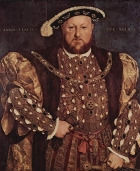
  • Film: Henry VIII and Tudor Royal Authority

    Article

    In this film, Tracy Borman, discusses the life and career of Henry VIII. Tracy examines how Henry VIII evolved from a pleasure loving prince, raised as Henry VII's 'spare heir', to becoming a king who would come to redefine England as a nation.

    Click to view