
Independent Learning
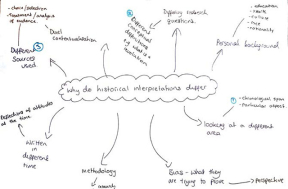
Holly Hiscox was concerned that many of her A-level students – asked to evaluate three different historical interpretations for their non-examined assessment task – still tended to hold unhelpful misconceptions about the nature of interpretations. In this article she explains how she created an introductory scheme of work to help...
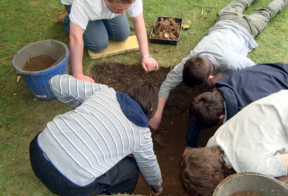
In March 2020, when Covid-19’s lockdown restrictions saw schools closed to the majority of children, Carenza Lewis quickly began thinking of ways to help both teachers and parents. Drawing on extensive experience of enabling children and young people to learn from practical engagement in archaeology, she came up with a...

Inspired by the growing number of history teachers who have sought to introduce younger pupils to academic historical scholarship in the classroom, Tim Jenner wanted to bring about his own reading revolution at Key Stage 3. But rather than simply develop one-off lessons or enquiries based on scholarship his goal...
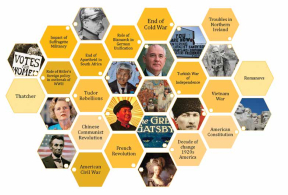
Faced with the introduction of the new A-levels in 2015 and with a move to a new school, Eleanor Thomas took the opportunity to embrace yet another challenge: giving her students a complete free choice about the focus of their non-examined assessment (NEA). This article presents the rationale for her...
Frustrated that her A-level students were being overly dismissive when asked to judge the convincingness of academic historians’ arguments, Paula Worth drew on previous history-teacher research and theories of history for inspiration. After noting that her students would unjustly reject esteemed historians’ accounts for lack of comprehensiveness, Worth explains here...
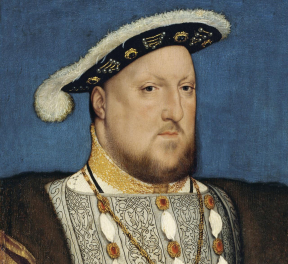
Warren Valentine was dissatisfied with his Year 7 students’ accounts of change across the Tudor period. Fixated with Henry VIII’s wives, they failed to reflect on or analyse the bigger picture of the whole Tudor narrative. In order to overcome this problem, his department created a ‘thought-map’ exercise in which...

Connecting Classrooms: bringing together Bradford and Peshawar, primary and secondary schools, history and English In this article, Dianne Excell shares her experience of a crossphase, collaborative project funded by the British Council that brought together teachers and pupils from three schools in Bradford and five schools in Peshawar, Pakistan. Although...

Jaya Carrier’s decision to focus on developing a more independent approach to learning in history at Key Stage 3 was prompted by concerns about her A-level students. In seeking to establish secure foundations for students’ own historical research, Carrier first examined the assumptions of her colleagues and her students. She...
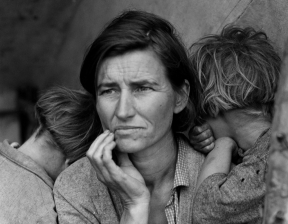
Focusing on students’ attempts to explain the relative significance of different factors in Hitler’s rise to power, Catherine McCrory explores the vexed question of why students who seem able to express necessary historical knowledge on one occasion cannot effectively reproduce it on another. Drawing on a detailed analysis of what...
‘Much to learn you still have!' An attempt to make Year 9 Masters of Learning How can history teachers structure learning pathways through historical content in ways that engage and challenge all pupils, that enable them to work at an appropriate pace and that also encourage pupils to self-assess and...

What is independent learning? Independent learning is a strategy whereby students are encouraged to develop the skills and dispositions to be able to think and study for themselves.
Please note: this article pre-dates the 2014 National Curriculum and some content may be outdated Mike Gorman uses the language of the National Curriculum Order to describe and analyse his practice. Yet he throws down a challenge to those who use it uncritically rather than interpreting it to make their...