Using Sources

It is important to use a wide range of sources such as pictures, artefacts, music and sights. Children will use these to build up their enquiry thought and processes and to build up their understanding of past.

Sort by: Date (Newest first) | Title A-Z
Show: All | Articles | Podcasts | Multipage Articles
  • Place-names and the National Curriculum for History

    Article

    Place-names, such as house or school names, are infinite in number and all around us. Every place-name may convey a message about the place. Often place-names record and celebrate local and national people, events and incidents, define what a place looked like in the past and how we used to...

    Click to view
  • Victorians

    Article

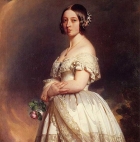
    The Victorians is a much-loved unit of work in many schools and some teachers were disappointed to see it had been removed but there are still ways to continue to teach it under the 2014 National Curriculum. In many localities there will be a huge variety of Victorian buildings - including...

    Click to view
  • Why stories?

    Article

    Please note: this article was written before the 2014 National Curriculum and some content and references may no longer be relevant. During the Early Years and Foundation Stage children should listen to stories, ask how and why and talk about the past (DfE 2012). Young children are comfortable with stories. Through...

    Click to view
  • Curriculum Planning: which non-European society might we offer at school?

    Article

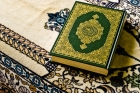
    A non-European society that provides contrasts with British history - one study. chosen from: early Islamic civilization, including a study of Baghdad c. AD 900; Mayan civilization c. AD 900; Benin (West Africa) c. AD 900-1300. That's quite clear then - there's a choice between early Islam, Central America or...

    Click to view
  • Eweka's story: Benin and Big Picture History

    Article

    The prospect of teaching Benin as a non-European Study within the time frame 900-1300 AD is challenging! Traditional oral evidence  suggests that the critical event during this period in Benin's past was a transition from the Ogiso to the Eweka Dynasty, named after its first Oba, which resulted in it...

    Click to view
  • The Great Fire of London and the National Curriculum

    Article

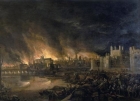
    The Great Fire of London is a favourite National Curriculum teaching topic. This paper draws on the latest resources and teaching ideas to suggest how you can meet both the NC history requirements and the wider ones of the National Curriculum, particularly in integrated programmes that include teaching about the Great...

    Click to view
  • Stone Age to Iron Age - overview and depth

    Article

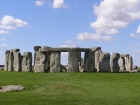
    Stone Age to Iron Age covers around 10,000 years, between the last Ice Age and the coming of the Romans. Such a long period is difficult for children to imagine, but putting the children into a living time-line across the classroom might help. In one sense not a lot happens...

    Click to view
  • Churches as a local historical source

    Article

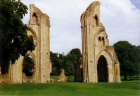
    At Key Stage 1 children should learn about significant events, (e.g. the Great Fire of London) and about people and places in their locality. At Key Stage 2 they should learn about British settlement by Anglo-Saxons and Scots (e.g. Anglo-Saxon art and culture) and do a local history study (e.g....

    Click to view
  • Using the back cover image: Windmill Hill

    Article

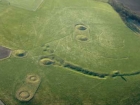
    The back cover image is a reconstruction of prehistoric life based on the English Heritage site Windmill Hill. Such images are of great value to the teacher in bringing the distant past to life, and in deepening pupil understanding of its historical significance. Using these sorts of illustrations can help...

    Click to view
  • Slavery in Britain

    Article

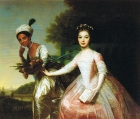
    Images reflect the social customs and attitudes of the society in which they are produced, and we may nowdisapprove of these attitudes. Conversely, our own ideas of what is right and wrong may well have been unacceptable in the past. Among these are the rights accorded to children, the disabled,...

    Click to view
  • The world on the wall: exploring diversity on Hadrian's Wall

    Article

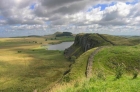
    Built in AD 122 by the order of the Emperor Hadrian, the 73 mile (80 Roman miles) long frontier goes from Bownesson-Solway in Cumbria to Wallsend on the River Tyne. Since 1987, the area has been inscribed as a United Nations Educational, Scientific and Cultural Organisation (UNESCO) World Heritage Site....

    Click to view
  • Teaching famous people at key stage one

    Article

    The draft English NC for history highlights the study of ‘significant individuals and people'. Michelle Dexter provides an insight on how to approach this biographical requirement; it also opens up biography as a major genre for pupils to master - augmenting their development of literacy...

    Click to view
  • A History of the World: 100 objects that tell a story

    Article

    ‘A History of the World in 100 Objects' was the most creative, imaginative and dynamic development in primary History Education for thirty years. It ties in perfectly with and supports the government's draft NC for History...

    Click to view
  • Museums, schools and creativity: How learning can be enhanced

    Article

    What do we mean by creativity?In the last few years there has been an emphasis on the ‘creative curriculum', ‘creativity' and ‘creative teaching and learning', but there has not always been a shared understanding of what this means. This article uses the definition from ‘Creativity - find it, promote it'...

    Click to view
  • Creating the 'creative history' website

    Article

    Editorial note: The role of ICT in the Digital Age is a major, perhaps even, the major factor, in enhancing creativity in the learning and teaching of history. This paper illuminates another dimension of ICT in the Digital Age and creativity. It shows how a teacher's creativity  has produced a...

    Click to view
  • In My View: Creativity & History

    Article

    Introduction A great deal has been written recently defining what is meant by creativity in primary education. And much has been written urging us to ‘teach creatively'. Yet there had been no exploration of what teaching creatively means in terms of teaching history until a group of colleagues and I...

    Click to view
  • A creative Egyptian project

    Article

    Ideally when teaching history, teachers will look to deliver projects that will engage and motivate, hopefully making the hard work of being creative stimulating and rewarding, based upon questioning, enquiry, investigation of sources and reaching conclusions grounded in the evidence.Ancient Egypt is one of those history topics which, because it...

    Click to view
  • OFSTED, primary history and creativity

    Article

    Co-ordinators concerns: OFSTED, primary history and creativity I'm told the emphasis in schools now is for a rigorous approach to history where the children are taught the main facts and features of history. I recall a time not so long ago when the whole curriculum was about creativity but surely...

    Click to view
  • Case Study: Creative chronological thinking

    Article

    Personal biographies I often ask groups to collect and record their own personal chronologies. They are asked to bring in evidence to tell the stories of their own lives or of the life of a relative, which they will then weave into a ‘photo book' story. The photo books become...

    Click to view
  • Geosong: a transition project

    Article

    How do we engage young people with their Heritage, answer curriculum needs and make that big leap of transition from primary to secondary school that bit easier? English Heritage's Geosong treasure hunt website went some way to providing answers. What does the website do? Using handheld GPS devices, groups must...

    Click to view