Significance

The focus around this concept is on recognizing why a person of event is of importance. Children are encouraged to evaluate the relevance of the contribution of different individuals or how an event came to affect future generations. Children can apply a number of criteria to evaluate significance such as those of Partington (1980) who suggested they consider: Read more

Sort by: Date (Newest first) | Title A-Z
Show: All | Articles | Podcasts | Multipage Articles
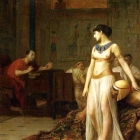
  • What made Cleopatra so special?

    Article

    Ancient Egyptian civilisation is rich and mysterious with distinctive visual imagery and strange animal-headed gods. The exotic differences of the society have always intrigued the western imagination and so they continue to ensure that this is a popular unit with both teachers and children. There are plentiful resources with new...

    Click to view
  • The Stone Age conundrum

    Article

    History – the very word makes the primary teacher in me feel excited. There are simply so many variables, so many dark nooks and crannies of history to explore and so many different angles through which to draw in a class of eager young minds. Thanks to a wellexecuted history...

    Click to view
  • Beyond compare a study of Beatrix Potter and Benjamin Zephaniah

    Article

    The Key Stage 1 National Curriculum encourages teachers to teach their pupils about ‘the lives of significant individuals in the past who have contributed to national and international achievements.’ (DfE, 2014, p. 205). Some teachers have begun to move away from the old favourite subject of Florence Nightingale and as...

    Click to view
  • Remembering Agincourt: Bilingual Enquiry

    Multipage Article

    Do they learn about Agincourt in France? 2015 was a year of anniversaries. As part of our funded commemoration projects surrounding the 600th anniversary of the Battle of Agincourt, we have commissioned an enquiry looking at the battle and how it has been remembered, particularly aimed at pupils in years...

    Click to view
  • KS1: Teaching about significant individuals

    Article

    Teaching about significant individuals at Key Stage 1. Workshop by Professor Penelope Hartnett, University of the West of England The history programme of study for Key Stage 1 requires pupils to be taught about: The lives of significant individuals in the past who have contributed to national and international achievements, some...

    Click to view
  • Ancient Sumer

    Article

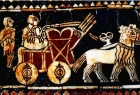
    For many teachers and children alike, Ancient Sumer will be completely new. Although Sumer has always been an option for teaching about Early Civilisations, the fame of Ancient Egypt, as well as being a tried-and-tested topic, has meant that Sumer has perhaps been overlooked. There is little danger of failing...

    Click to view
  • From Home to the Front: World War I

    Article

    Events which encapsulate family, community, national and global history provide rich opportunities for engaging children. Some of these draw on positive memories associated with past events: the coronation of Queen Elizabeth II, how people responded to the first flight to the moon, the Millennium celebrations. Yet it is perhaps gruelling...

    Click to view
  • Early Islamic civilisation

    Article

    The Primary National Curriculum pinpoints Early Islamic Civilisation as Baghdad c. AD 900 - yet it was so much more. For approximately a thousand years after AD 700 there was an extraordinary amount of activity that radiated out from Baghdad and along a glittering crescent through North Africa and into...

    Click to view
  • Viking and Anglo-Saxon struggle for the kingdom of England

    Article

    The Vikings will be familiar territory to many primary teachers. For many, therefore, this section of the history curriculum should cause fewer headaches than others. This does not mean, however, that it is all straightforward. This article contains a number of elements that teachers might welcome including a timeline of...

    Click to view
  • Assessment and Progression without levels

    Article

    The new (2014) Primary History National Curriculum is finally upon us. The first thing you might notice is that the level descriptions have gone. These were first introduced in 1995 and became the mainstay for assessing pupil progression and attainment in Key Stages 1, 2 and 3 across schools in...

    Click to view
  • The Maya: a 4,000-year-old civilisation in the Americas

    Article

    Obscured by the fame of the Aztec empire or shrouded by a veil of mystery, the cultural history of the Maya has generally been misunderstood by the British public. Maya civilisation developed in a territory the size of Germany and Denmark together (nearly 400,000 km2). This vast territory shows three...

    Click to view
  • Investigating the Indus Valley (2600-1900 B.C.)

    Article

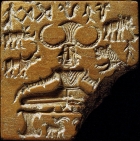
    In 1924 The Illustrated London News broke the story of a sensational discovery in the Indian subcontinent. Ruined mounds at Mohenjodaro and Harappa, 600 km apart, were forgotten cities of a lost civilisation. Nearly all we know about the Indus Civilisation comes from archaeology. What survives leaves many unanswered questions,...

    Click to view
  • Implementing the 2014 curriculum in Year 2

    Article

    The chance to pilot the new National Curriculum presented me with the opportunity I was looking for to revamp a tired Year 2 curriculum. I began teaching in Year 2 two years ago, having previously spent five years working in Key Stage 2. As in many other schools across the...

    Click to view
  • Using the back cover image: Sandbach Crosses - an Anglo-Saxon market cross

    Article

    This image is a reconstruction, or interpretation, by Peter Dunn, an artist, of what Sandbach Crosses might have looked like in the ninth century. They are one of the few remaining Anglo-Saxon stone crosses in the country. They stand in the market place in Sandbach, Cheshire. You can find a...

    Click to view
  • Eweka's story: Benin and Big Picture History

    Article

    The prospect of teaching Benin as a non-European Study within the time frame 900-1300 AD is challenging! Traditional oral evidence  suggests that the critical event during this period in Benin's past was a transition from the Ogiso to the Eweka Dynasty, named after its first Oba, which resulted in it...

    Click to view
  • The Great Fire of London and the National Curriculum

    Article

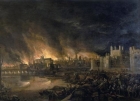
    The Great Fire of London is a favourite National Curriculum teaching topic. This paper draws on the latest resources and teaching ideas to suggest how you can meet both the NC history requirements and the wider ones of the National Curriculum, particularly in integrated programmes that include teaching about the Great...

    Click to view
  • Teaching famous people at key stage one

    Article

    The draft English NC for history highlights the study of ‘significant individuals and people'. Michelle Dexter provides an insight on how to approach this biographical requirement; it also opens up biography as a major genre for pupils to master - augmenting their development of literacy...

    Click to view
  • An Olympic Great? Dorando Pietri

    Article

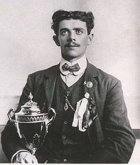
    Please note: this article pre-dates the 2014 National Curriculum and some content may be outdated. The Italian confectioner Dorando Pietri is one of the most famous figures from the 1908 Olympics - famous for not winning. His story raises issues of sportsmanship suitable for class discussion. There are detailed accounts readily...

    Click to view
  • From Champion to Hero: Engaging Pupils in a study of significant Olympians

    Article

    Please note: this article pre-dates the 2014 National Curriculum and some content may be outdated. Allocated the task of researching and presenting ideas for teaching about significant Olympians, I thought: ‘Brilliant, this is the easy one'. How wrong can one be! I expected to be able to access a plethora of...

    Click to view
  • Primary History and planning for teaching the Olympics - four curricular models

    Article

    Please note: this article pre-dates the 2014 National Curriculum and some content may be outdated. Three curricular editions of Primary History, PH 50, Autumn 2008 , PH 53, Autumn 2009 and PH 57, Spring 2011 are directly relevant to teaching the Olympics. PH 50, Autumn 2008 History Education in the 21st...

    Click to view