Individuals & Events

Of course, individuals and events permeate history. However, the Key Stage 1 units of study particularly require the study of significant individuals and events. What makes an individual significant? What might be considered a significant event? The emphasis is upon a comparison of individuals and events that can be used to make links across time, themes and geographical space. In this section you will find resources and articles to help you to plan innovative units of work based around individuals and events that can either be used to reveal a local, national and international picture, or that can be used to illustrate themes over time or geographical space.

Sort by: Date (Newest first) | Title A-Z
Show: All | Articles | Podcasts | Multipage Articles
  • M&S brings over 130 years of archives into your classroom

    Article

    There is something really magical about making your own discoveries. Investigating something sparked by your own curiosity and using your own skills of observation and deduction to find out more is exciting. Human beings have always wanted to find out about our history and our place in the world –...

    Click to view
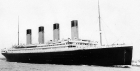
  • ‘It’s a great big ship!’: Teaching the Titanic at Key Stage 1

    Article

    Edith Haisman, a 15-year-old passenger on the Titanic, exclaimed, ‘It’s a great big ship!’ when she first caught sight of it. Similar excitement could be generated among your pupils by incorporating a study of the Titanic into your curriculum. If you are tired of teaching about the Great Fire of...

    Click to view
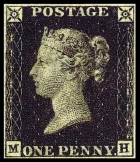
  • Overground, underground and across the sea

    Article

    Communication is at the heart of what it is to be human, and the British postal service has helped to shape the modern world as we know it today. From cryptic Victorian Valentine cards to a lion encountered on Salisbury Plain, there is nothing ordinary about the story of the post! The British postal service...

    Click to view
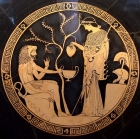
  • Did all Ancient Greek women stay at home and weave?

    Article

    We tend to focus on the bigger picture in teaching on the Ancient Greeks – democracy; Olympic Games; architecture; theatre; myths and legends – but children love the minutiae of everyday life. And half of the population of Ancient Greece was female. So just what part in life did women play? And how different was it to that of men?...

    Click to view
  • Ideas for Assemblies: Refugee stories

    Article

    Please note: this piece was written before Sir Mo Farah’s 2022 disclosure that he was trafficked to the UK as a child, so some of its content is no longer accurate. An assembly could focus on the achievements of their lives, experiences as child refugees and migrants, and how they overcame...

    Click to view
  • Podcast Series: The Women's Movement

    Multipage Article

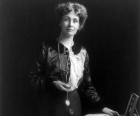
    In Part 2 of our series on Social and Political Change in the UK 1800-present we look at the Women's Movement in the UK from its early origins through to the end of the 20th century Part 2 features Dr Anne Logan, Professor June Hannam and Ms Jean Spence. Also...

    Click to view
  • Significant Individuals: Charles Darwin

    Article

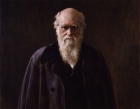
    Charles Darwin: exploring the man behind the beard – studying the lives of significant individuals in the past Studying the life of Charles Darwin is an exciting way to meet the requirement in Key Stage 1 to teach significant individuals. But what do we actually know about him, beyond the...

    Click to view
  • Why is diversity so important and how can we approach it?

    Article

    Imagine what the following scenarios tell you about the past – a Tudor role-play of Queen Elizabeth visiting Kenilworth Castle; a photograph of London during the Blitz; a picture of Viking warriors attacking Lindisfarne monastery. The first of the images can perhaps draw on a family visit to an event...

    Click to view
  • Scheme of Work: Walter Tull

    Article

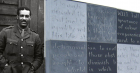
    Pupils will look at the childhood and football career of Walter Tull, what happened to him when he fought in World War I and why he was different from most people of his time. They will compare his experiences to issues and people still relevant today including the double Olympian...

    Click to view
  • Local history and a sense of identity

    Article

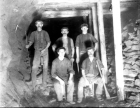
    The history co-ordinator often finds some real challenges as well as opportunities in addressing local history in primary schools. The advantages are well rehearsed – making history relevant to the lives of the children and giving them an improved sense of identity and place through engagement with the ‘real thing’....

    Click to view
  • What made Cleopatra so special?

    Article

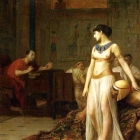
    Ancient Egyptian civilisation is rich and mysterious with distinctive visual imagery and strange animal-headed gods. The exotic differences of the society have always intrigued the western imagination and so they continue to ensure that this is a popular unit with both teachers and children. There are plentiful resources with new...

    Click to view
  • Using shoes as an historical source

    Article

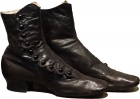
    There is something fascinating about what people wore in the past. From corsets to clogs, the evolution of clothing and footwear can give an insight into different periods of history, an excellent way of engaging with the past. Shoes, in some form or another, have been around from the earliest...

    Click to view
  • Beyond compare: a study of Beatrix Potter and Benjamin Zephaniah

    Article

    The Key Stage 1 National Curriculum encourages teachers to teach their pupils about ‘the lives of significant individuals in the past who have contributed to national and international achievements.’ (DfE, 2014, p. 205). Some teachers have begun to move away from the old favourite subject of Florence Nightingale and as...

    Click to view
  • Sarah Forbes Bonetta: Scheme of Work

    Article

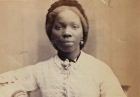
    Children are introduced to the idea of significance, and how this might change over time. Sarah Forbes Bonetta – we don't even know her real name – was an African princess, a slave in West Africa, a god-daughter of Queen Victoria, a wife, mother and missionary teacher. Does that make her...

    Click to view
  • KS1: Teaching about significant individuals

    Article

    Teaching about significant individuals at Key Stage 1. Workshop by Professor Penelope Hartnett, University of the West of England The history programme of study for Key Stage 1 requires pupils to be taught about: The lives of significant individuals in the past who have contributed to national and international achievements, some...

    Click to view
  • Ideas for Assemblies - Remembrance

    Article

    A debt of honour... During the months of September to November 2015, assemblies in my school will focus on remembrance relating to the First World War culminating in a special Armistice Day assembly. In conjunction with this focus a possible approach could be to introduce the children to the growth...

    Click to view
  • From Home to the Front: World War I

    Article

    Events which encapsulate family, community, national and global history provide rich opportunities for engaging children. Some of these draw on positive memories associated with past events: the coronation of Queen Elizabeth II, how people responded to the first flight to the moon, the Millennium celebrations. Yet it is perhaps gruelling...

    Click to view
  • Scheme of Work: Brunel

    Article

    At Key Stage 1, pupils are asked to examine the lives of significant individuals who have also contributed to national achievements. A study of Isambard Kingdom Brunel provides a fascinating example of an individual whose technological and engineering advances have helped to shape the face of Britain.  Children can identify...

    Click to view
  • Siegfried Sassoon Diaries Online

    Article

    Siegfried Sassoon, soldier and poet of the First World War who controversially began to oppose the war after winning awards for bravery, has his entire war diaries digitised and published online by Cambridge University:

    Click to view
  • Victorians

    Article

    The Victorians is a much-loved unit of work in many schools and some teachers were disappointed to see it had been removed but there are still ways to continue to teach it under the 2014 National Curriculum. In many localities there will be a huge variety of Victorian buildings - including...

    Click to view