Individuals & Events

Of course, individuals and events permeate history. However, the Key Stage 1 units of study particularly require the study of significant individuals and events. What makes an individual significant? What might be considered a significant event? The emphasis is upon a comparison of individuals and events that can be used to make links across time, themes and geographical space. In this section you will find resources and articles to help you to plan innovative units of work based around individuals and events that can either be used to reveal a local, national and international picture, or that can be used to illustrate themes over time or geographical space.

Sort by: Date (Newest first) | Title A-Z
Show: All | Articles | Podcasts | Multipage Articles
  • Take one day: undertaking an in-depth local enquiry

    Article

    Local history units of study provide teachers with valuable opportunities, but these can also seem daunting. Potential challenges for teachers include the perceived overwhelming scope of the topic, difficulties in developing subject knowledge and knowing where to find resources. However, none of these is insurmountable, if teachers identify a clear learning...

    Click to view
  • One of my favourite history places: Eyam

    Article

    Imagine……… walking down the street and crossing the road to avoid having to talk to a friend……. declining a friend’s invitation to enter her house…... feeling angry and trapped that you cannot travel away from your home….  Are such feelings familiar to you during the coronavirus crisis?  Maybe they are – but I am...

    Click to view
  • Scheme of work: Journeys - the story of migration to Britain

    Article

    This unit is designed as a thematic course looking at the big picture of migration to Britain over time. There are many ways that the course can be adapted to include different content which may be more relevant for the local community around your school. Most of the content described in...

    Click to view
  • Scheme of Work: Significant Individuals at Key Stage 1: Ibn Battuta

    Article

    The history programme of study for Key Stage 1 requires pupils to be taught about: 'The lives of significant individuals in the past who have contributed to national and international achievements, some of whom should be used to compare aspects of life in different periods.' In this unit, children are...

    Click to view
  • The back cover image: Malachite Urn

    Article

    This large green urn was given as a gift to Queen Victoria in 1839 by Emperor Nicholas I, to thank her for the way in which his son Alexander had been welcomed in England the previous year. It was placed in the Grand Reception Room of Windsor Castle, and has...

    Click to view
  • Anniversaries: The Coventry Blitz and the Grave of the Unknown Soldier

    Article

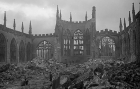
    This Autumn we remember two events related to the impact of war and how people have reacted to them.  The first anniversary remembers the Nazi devastation of Coventry 80 years ago on 14 November 1940 and the second event relates to the body of the ‘Unknown warrior’ who was laid...

    Click to view
  • One of my favourite history places: Studland Village

    Article

    Studland village is situated in the Isle of Purbeck in Dorset. Purbeck is not an island in the normal sense of being surrounded by sea. However, it is surrounded by large hills to its north and has a coastline to its south, both of which cut it off from the...

    Click to view
  • Storytelling the past

    Article

    This article will demonstrate how to engage children through storytelling and how it can be used to develop their critical understanding of the past. Why story? Despite their common derivation, the words ‘history’ and ‘story’ suggest very different kinds of knowledge, the former carrying overtones of detached understanding of the...

    Click to view
  • Local significant individuals

    Multipage Article

    The National Curriculum specifies a local study both at Key Stages 1 and 2. Basing your local study around an individual is a great way to bring the heritage of your locality to life. Many of these individuals are part of larger national events and changes and seeing these changes at...

    Click to view
  • Using different sources to bring a topic to life: The Rebecca Riots

    Article

    For primary school pupils a key aim of the National Curriculum for history is to understand the method of historical enquiry. Working with original sources is of course central to the whole process and provides a great way to inspire pupils’ experience of the subject. Young pupils, once they have...

    Click to view
  • One of my favourite history places: Conwy

    Article

    The medieval walled town of Conwy, situated by the River Conwy and surrounded by the stunning and rugged Welsh countryside, is well deserving of its status as a World Heritage Site and is also my favourite history place. Approach the town from the east side and the first thing you...

    Click to view
  • Happy 200th birthday Florence Nightingale!

    Article

    2020 is undoubtedly going to be an important year in the nursing world and is a significant historical anniversary. The World Health Organisation has declared it the ‘Year of the Nurse and Midwife’ in part because Florence Nightingale, the famous ‘Lady with the Lamp’, will be celebrating her 200th birthday...

    Click to view
  • Teaching about the Kindertransport without the Kinder

    Article

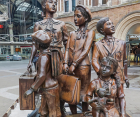
    The Kindertransport, literally ‘children’s transport’, was the rescue operation of almost 10,000 unaccompanied Jewish child refugees to Britain between December 1938 and the outbreak of the Second World War in September 1939.  Many of the Kinder (children) regularly share their experiences in primary schools, where their visit is regarded as...

    Click to view
  • Scheme of Work: Grace O'Malley

    Article

    This unit encourages pupils to explore the past by examining their ideas about pirates, with particular reference to Grace O’Malley. The key question leads children to consider what are the characteristics of a pirate and to challenge stereotypes in the light of historical enquiry. The key question also leads to...

    Click to view
  • Teaching sensitive subjects: slavery and Britain’s role in the trade

    Article

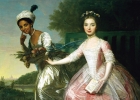
    See also: Teaching Slavery - HA guide Slavery in Britain Sarah Forbes Bonetta - scheme of work Teaching Emotive and Controversial History Diversity guidance for primary teachers and subject leaders Slavery is a part of our history, and its impact can be seen in the statues of influential men, the...

    Click to view
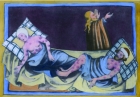
  • The history of medicine – warts and all – for Key Stage 2

    Article

    The story of the history of medicine is HUGE! In fact, it’s a story within story within a story… You only have to note the substantial amounts that have been written on the subject in the past, to realise that this is a story that could baffle and perplex even...

    Click to view
  • Up Pompeii: studying a significant event at Key Stage 1

    Article

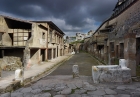
    ‘The ashes now began to fall upon us, though in no great quantity. I looked back; a dense dark mist seemed to be following us, spreading itself over the country like a cloud … We had scarcely sat down when night came upon us not such as we have when...

    Click to view
  • Three first-class ladies – teaching significant individuals in Key Stage 1

    Article

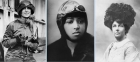
    The turn of the 20th century was in many ways a golden age of aviation. In 1903 the Wright brothers conquered heavier-than-air flight. From that time onward there were many other visionaries who wanted to be part of the dream of flying. The topic of early aviation history is an...

    Click to view
  • Pull-out Posters: Primary History 81

    Article

    1. What was it like to be a child in World War II? 2. Three female pilots - can you use the words in the box to talk about each pilot?

    Click to view
  • Ideas for Assemblies: A slightly different view of remembrance

    Article

    The principle of this assembly is to show that positive events and developments can occur in the worst times and events of human history. To begin with, it is vital to ensure that the children (and staff!) know and understand that the First World War was not a good thing for...

    Click to view