Individuals & Events

Of course, individuals and events permeate history. However, the Key Stage 1 units of study particularly require the study of significant individuals and events. What makes an individual significant? What might be considered a significant event? The emphasis is upon a comparison of individuals and events that can be used to make links across time, themes and geographical space. In this section you will find resources and articles to help you to plan innovative units of work based around individuals and events that can either be used to reveal a local, national and international picture, or that can be used to illustrate themes over time or geographical space.

Sort by: Date (Newest first) | Title A-Z
Show: All | Articles | Podcasts | Multipage Articles
  • Ideas for Assemblies: Refugee stories

    Article

    Please note: this piece was written before Sir Mo Farah’s 2022 disclosure that he was trafficked to the UK as a child, so some of its content is no longer accurate. An assembly could focus on the achievements of their lives, experiences as child refugees and migrants, and how they overcame...

    Click to view
  • Ideas for Assemblies: Women in parliament

    Article

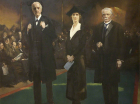
    A fundamental part of British values is our democracy. The system theoretically gives people equal rights because everyone is entitled to one vote that has the same value when placed in the ballot box. The progress made with regards to equal suffrage is an important aspect of teaching about democracy...

    Click to view
  • Isambard Kingdom Brunel: A Significant Victorian

    Article

    Please note: this article pre-dates the current National Curriculum and some content, references and links may be outdated. For more recent content see our Brunel scheme of work and George Stephenson scheme of work. The Qualifications and Curriculum Authority (QCA) have recently published new Schemes of Work for all subjects. Included within these...

    Click to view
  • Jubilee medals: celebration and creation

    Article

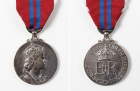
    The Queen’s jubilee is a great opportunity to explore a huge range of concepts with EYFS children, and what better way to celebrate the experience than by creating your own celebration medals and to wear them in your own celebrations, as a continuation of the celebrations of so many years past....

    Click to view
  • KS1: Teaching about significant individuals

    Article

    Teaching about significant individuals at Key Stage 1. Workshop by Professor Penelope Hartnett, University of the West of England The history programme of study for Key Stage 1 requires pupils to be taught about: The lives of significant individuals in the past who have contributed to national and international achievements, some...

    Click to view
  • Learning to engage with documents through role play

    Article

    Please note: this article pre-dates the 2014 National Curriculum and some content may be outdated. First let me say that I did not research the materials used or plan this lesson. For this I must acknowledge, with thanks, that this is the work of my colleague, Mike Huggins, and the senior...

    Click to view
  • Local history and a sense of identity

    Article

    The history co-ordinator often finds some real challenges as well as opportunities in addressing local history in primary schools. The advantages are well rehearsed – making history relevant to the lives of the children and giving them an improved sense of identity and place through engagement with the ‘real thing’....

    Click to view
  • Local significant individuals

    Multipage Article

    The National Curriculum specifies a local study both at Key Stages 1 and 2. Basing your local study around an individual is a great way to bring the heritage of your locality to life. Many of these individuals are part of larger national events and changes and seeing these changes at...

    Click to view
  • M&S brings over 130 years of archives into your classroom

    Article

    There is something really magical about making your own discoveries. Investigating something sparked by your own curiosity and using your own skills of observation and deduction to find out more is exciting. Human beings have always wanted to find out about our history and our place in the world –...

    Click to view
  • Making the most of a visit to the Museum of London Docklands

    Article

    In this article Susie Townsend explores one of her favourite museums, the Museum of London Docklands, and explains why it has a real value and interest far beyond the locality. As well as covering the benefits of a visit, she also provides ideas for teaching activities across the primary age range....

    Click to view
  • Musings and misconceptions about Remembrance Day

    Article

    Very few primary schools do not address Remembrance Day in some form or another.  We assume a broad awareness of what it stands for but Susie Townsend suggests that this may not always have been the case. We may be making assumptions about children’s awareness that are not justified. This...

    Click to view
  • My favourite place: Lyme Regis, Dorset

    Article

    Claire Bradshaw describes why Lyme Regis is a very special place not just for its stunning scenery but for its educational value. It probably has a history dating back to earlier than any other article in the ‘My Favourite Place’ series – this one running into millions of years.   ...

    Click to view
  • Northamptonshire in a Global Context

    Article

    Produced by the Northamptonshire Black History Association and originally published in 2008, this is one of a set of resources for schools offering a more inclusive map of the past that includes an appreciation of Black History within the local, national and global context. The resources provide a range of opportunities to promote diversity within the curriculum....

    Click to view
  • One of my favourite history places: Conwy

    Article

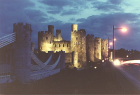
    The medieval walled town of Conwy, situated by the River Conwy and surrounded by the stunning and rugged Welsh countryside, is well deserving of its status as a World Heritage Site and is also my favourite history place. Approach the town from the east side and the first thing you...

    Click to view
  • One of my favourite history places: Eyam

    Article

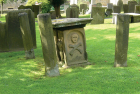
    Imagine……… walking down the street and crossing the road to avoid having to talk to a friend……. declining a friend’s invitation to enter her house…... feeling angry and trapped that you cannot travel away from your home….  Are such feelings familiar to you during the coronavirus crisis?  Maybe they are – but I am...

    Click to view
  • One of my favourite history places: Neuschwanstein Castle

    Article

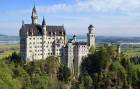
    Visiting Neuschwanstein Castle is a dramatic if seemingly unreal experience and for this reason it is one of my favourite historical sites. The castle is situated on the slopes of the Alps in Bavaria, close to the village of Hohenschwangau, overlooking low-lying plains to the north. The ornate turrets, Romanesque windows...

    Click to view
  • One of my favourite history places: Studland Village

    Article

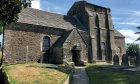
    Studland village is situated in the Isle of Purbeck in Dorset. Purbeck is not an island in the normal sense of being surrounded by sea. However, it is surrounded by large hills to its north and has a coastline to its south, both of which cut it off from the...

    Click to view
  • Overground, underground and across the sea

    Article

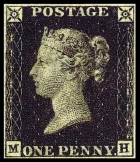
    Communication is at the heart of what it is to be human, and the British postal service has helped to shape the modern world as we know it today. From cryptic Victorian Valentine cards to a lion encountered on Salisbury Plain, there is nothing ordinary about the story of the post! The British postal service...

    Click to view
  • Podcast Series: Charles Darwin

    Multipage Article

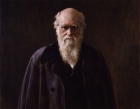
    In this set of podcasts Project Director Professor Jim Secord and Associate Director Dr Alison Pearn of the Darwin Correspondence Project discuss the life, work and legacy of Charles Darwin.

    Click to view
  • Podcast Series: The Women's Movement

    Multipage Article

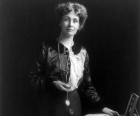
    In Part 2 of our series on Social and Political Change in the UK 1800-present we look at the Women's Movement in the UK from its early origins through to the end of the 20th century Part 2 features Dr Anne Logan, Professor June Hannam and Ms Jean Spence. Also...

    Click to view