
Chronological Understanding
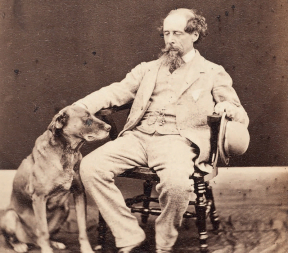
In this article Karin Doull looks at the 165th anniversary of Battersea Dogs and Cats Home. Our treatment of our most popular pets is reflective of society in a given time and Karin highlights several ways in which the history of Battersea can be used to spotlight different aspects of...

The requirement in National Curriculum rubric at Key Stage 2 for a study or theme in British history that extends pupils’ chronological knowledge beyond 1066 can appear intimidatingly broad at first sight, but Andrew Wrenn is here to help! Drawing on non-statutory examples provided in the National Curriculum – such...
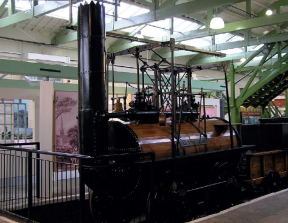
This article is free to everyone. For access to hundreds of other high-quality resources by primary history experts along with free or discounted CPD and membership of a thriving community of teachers and subject leaders, join the Historical Association today In a celebration of the 200-year anniversary of the Stockton...
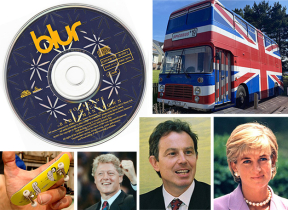
This article is free to everyone. For access to hundreds of other high-quality resources by primary history experts along with free or discounted CPD and membership of a thriving community of teachers and subject leaders, join the Historical Association today Susie Townsend explores the theme of life in the 1990s,...
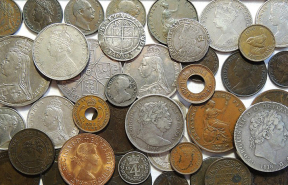
In this article, Damienne Clarke examines how coins can be used as a focus for history teaching and learning in Key Stage One. She describes the emergence of coins from older systems of bartering, as well as their role as tokens of commemoration for significant people and events. This article...
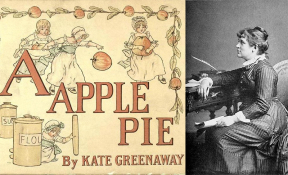
The EYFS framework places a key emphasis on the value of giving children rich encounters with stories and picture books. With World Book Day just around the corner, this article suggests how a focus on children’s illustrators could be used to develop children’s understanding of ‘past and present’...
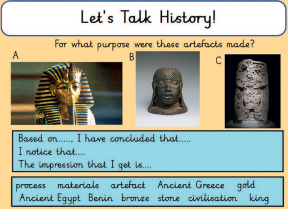
East-the-Water is a primary school in Bideford, Devon. It has recently been awarded a Gold Award Quality Mark. Among many strong features, one was the emphasis on using oracy effectively in history. In this article, Kelly Bridle outlines its role, especially in connecting periods and events across the history curriculum...

In this article Susie Townsend explores one of her favourite museums, the Museum of London Docklands, and explains why it has a real value and interest far beyond the locality. As well as covering the benefits of a visit, she also provides ideas for teaching activities across the primary age...
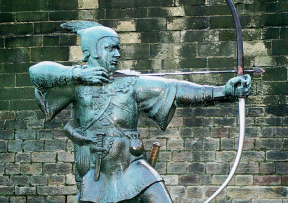
The stories of Robin Hood, which date from the Middle Ages, are integral to an understanding of British history. Although historians have not been able to identify a single historical figure that can be called Robin Hood, rooted in evidence, the myth or legend of Robin Hood has had a...
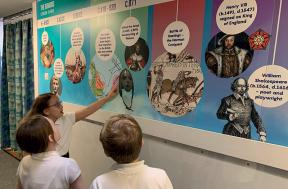
‘History is about time, it subsists in time, time is the medium by which it happens’ (John Fines, Primary History 59, 2011). Yet the fact that time is fundamental to the study of history does not make it any easier to teach (Hoodless, 2008). The abstract nature of time as...
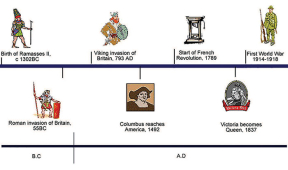
No teacher ever wants to claim that their history curriculum is incoherent. All schools want to have a curriculum that is logically ordered and consistent, that has clarity and that holds together. It is easy to assume that how we see this coherence as adults must also translate to the...
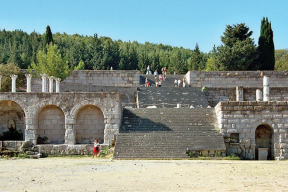
The National Curriculum asks us to help our children to study ‘Greek life and achievements and their influence on the western world’ [DfE 2013]. Lots of books explore the ancient Greeks [see, for example, Ancient Greece by Alf Wilkinson, Collins Primary Histories, published in 2019]. It is a familiar topic....
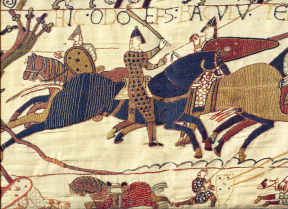
Webinar series: Teaching British history that extends chronological knowledge beyond 1066 How and why has warfare changed from the Battle of Hastings in 1066, fought with armed with swords and shields, to the weapons of mass destruction of today? This webinar with Andrew Wrenn considers significant turning points such as...
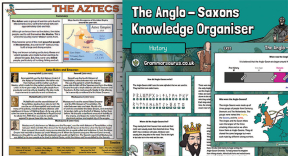
There has been much emphasis on pupils having a rich knowledge and this has led to many schools devising knowledge lists and knowledge organisers. This article argues that is a valuable element in a good history curriculum in primary schools but that it is important that this is properly thought...
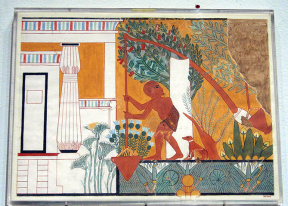
Ancient Egypt is one of the most popular societies taught in primary schools. In this article Karin Doull argues the importance of having a coherent approach to the content. Much of the article focuses on the key areas that teachers may wish to consider if they are to achieve a...
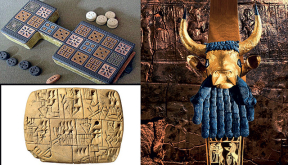
In 1936 the next eagerly awaited Agatha Christie novel had just been published and readers were transported to a region that, from 1922 had been named Iraq, but through history had been part of Mesopotamia. The plot focuses on an archaeological dig that was taking place there, the victim is...

A new Early Years Foundation Stage framework will become statutory from September 2021. Around three thousand primary schools in England are already implementing this revised framework – these settings have been deemed early adopter schools. The actual curriculum for EYFS is not changing. There will still be seven areas of...
Developing secure chronological understanding is an essential aspect of effective history learning. Chronological understanding develops over time and children’s progress in this can be most effectively secured if schools plan for development in this area and provide opportunities for children to build upon their understanding throughout their time in school....
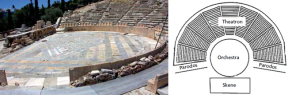
Sometimes it is not easy to understand how the different units of the Key Stage 2 National Curriculum were selected, but this is not true for the Ancient Greek unit. Since the renaissance period, knowledge of ‘the classics’ has been a central element for an educated man or woman. Ancient...
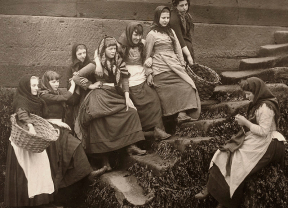
When considering either ‘changes within living memory’ for Key Stage 1 or ‘an aspect or theme to develop children’s chronological understanding post 1066’ for Key Stage 2 it is important to focus on a clear observable change. This enables children to draw effective comparisons with their own experiences. Washday, bread...