Chronological Understanding

Sequencing, events, stories, pictures and periods over time to show how different times relate to each other and contribute to a coherent understanding of the past. You don’t have to teach topics in chronological order but need to relate the topics you teach to their chronological context.

Sort by: Date (Newest first) | Title A-Z
Show: All | Articles | Podcasts | Multipage Articles
  • Pull-out Posters: Primary History 69

    Article

    Click to view
  • Viking and Anglo-Saxon struggle for the kingdom of England

    Article

    The Vikings will be familiar territory to many primary teachers. For many, therefore, this section of the history curriculum should cause fewer headaches than others. This does not mean, however, that it is all straightforward. This article contains a number of elements that teachers might welcome including a timeline of...

    Click to view
  • Assessment and Progression without levels

    Article

    The new (2014) Primary History National Curriculum is finally upon us. The first thing you might notice is that the level descriptions have gone. These were first introduced in 1995 and became the mainstay for assessing pupil progression and attainment in Key Stages 1, 2 and 3 across schools in...

    Click to view
  • Britain's settlement by Anglo-Saxons and Scots

    Article

    Anglo-Saxons have been a part of the primary national curriculum from the onset so they may not be as unfamiliar to teachers as some themes. Many teachers also report that pupils enjoy studying them so there is clearly much in their favour. That does not mean, however, that all is...

    Click to view
  • The Maya: a 4,000-year-old civilisation in the Americas

    Article

    Obscured by the fame of the Aztec empire or shrouded by a veil of mystery, the cultural history of the Maya has generally been misunderstood by the British public. Maya civilisation developed in a territory the size of Germany and Denmark together (nearly 400,000 km2). This vast territory shows three...

    Click to view
  • Investigating the Indus Valley (2600-1900 B.C.)

    Article

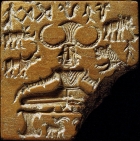
    In 1924 The Illustrated London News broke the story of a sensational discovery in the Indian subcontinent. Ruined mounds at Mohenjodaro and Harappa, 600 km apart, were forgotten cities of a lost civilisation. Nearly all we know about the Indus Civilisation comes from archaeology. What survives leaves many unanswered questions,...

    Click to view
  • What do we mean by Big Picture History?

    Article

    Perhaps the best way to start thinking about Big Picture history is to say what it is not - it is not about rote learning dates or remembering ‘famous people and events' - Alfred the Great, The Battle of Hastings, Henry VIII, Florence Nightingale ....and so on! This factual knowledge...

    Click to view
  • Place-names and the National Curriculum for History

    Article

    Place-names, such as house or school names, are infinite in number and all around us. Every place-name may convey a message about the place. Often place-names record and celebrate local and national people, events and incidents, define what a place looked like in the past and how we used to...

    Click to view
  • Pull-out Posters: Primary History 68

    Article

    Click to view
  • Britain from the Iron Age to Robin Hood

    Article

    ‘...if children are to ever fully appreciate history the development of historical time has to be central to our teaching methodologies' This lesson aims to provide an overview of this period, developing pupils' sense of chronology and their understanding of cause and consequence. The context for these ideas comes from...

    Click to view
  • Victorians

    Article

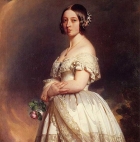
    The Victorians is a much-loved unit of work in many schools and some teachers were disappointed to see it had been removed but there are still ways to continue to teach it under the 2014 National Curriculum. In many localities there will be a huge variety of Victorian buildings - including...

    Click to view
  • Eweka's story: Benin and Big Picture History

    Article

    The prospect of teaching Benin as a non-European Study within the time frame 900-1300 AD is challenging! Traditional oral evidence  suggests that the critical event during this period in Benin's past was a transition from the Ogiso to the Eweka Dynasty, named after its first Oba, which resulted in it...

    Click to view
  • Teaching Ancient Egypt

    Article

    Editorial note: This paper has two sections: first, a background briefing about Ancient Egypt with a timeline and map that introduces the second section's three teaching activities on: building the Great Pyramid of Giza; Hatshepsut, Egypt's great woman pharaoh; and Akhenaten and his attempt to revolutionise Egyptian religion. ‘Hail to thee, O...

    Click to view
  • Why stories?

    Article

    Please note: this article was written before the 2014 National Curriculum and some content and references may no longer be relevant. During the Early Years and Foundation Stage children should listen to stories, ask how and why and talk about the past (DfE 2012). Young children are comfortable with stories. Through...

    Click to view
  • The Great Fire of London and the National Curriculum

    Article

    The Great Fire of London is a favourite National Curriculum teaching topic. This paper draws on the latest resources and teaching ideas to suggest how you can meet both the NC history requirements and the wider ones of the National Curriculum, particularly in integrated programmes that include teaching about the Great...

    Click to view
  • Stone Age to Iron Age - overview and depth

    Article

    Stone Age to Iron Age covers around 10,000 years, between the last Ice Age and the coming of the Romans. Such a long period is difficult for children to imagine, but putting the children into a living time-line across the classroom might help. In one sense not a lot happens...

    Click to view
  • The Early Years Foundation Stage Curriculum

    Article

    At this stage children should listen to stories, ask how and why; use the past, present and future tense; talk about the past and present in their own lives and the lives of family members; recognise similarities and differences between families and traditions, objects and materials; and role play and...

    Click to view
  • Churches as a local historical source

    Article

    At Key Stage 1 children should learn about significant events, (e.g. the Great Fire of London) and about people and places in their locality. At Key Stage 2 they should learn about British settlement by Anglo-Saxons and Scots (e.g. Anglo-Saxon art and culture) and do a local history study (e.g....

    Click to view
  • Ideas for Assemblies: historical events

    Article

    Here are a few suggestions for assemblies over the next few months (March-June); each idea is linked to a specific historical event from that month...

    Click to view
  • Constructivist chronology and Horrible Histories

    Article

    Hilary Cooper illuminates how Horrible Histories can be effectively used to develop an understanding of chronology. She researched two topics: children and law and order. You can download her full paper: it is included in Primary History 59 on Teaching Chronology.

    Click to view