Women

The role and input of women is undeniably central to human existence and to the story of human society. They are generally 50% of the population but rarely the centre of a story; women have often been pushed to the side lines for historical content. The role of women through history and the pressures and behaviours that have pushed their input aside are all explored within this theme. Powerful, influential and significant female characters are explored in detail across the time periods, including queens, and campaigners, while the stories of ordinary women are also explored through themes such as social change, war and religion.

Sort by: Date (Newest first) | Title A-Z
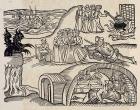
  • To see the witch: understanding the European witch craze through visual art

    Article

    During the European witch craze, visual art played a powerful role in shaping belief in witches. The printing press allowed images of witchcraft to circulate widely, amplifying fear and suspicion. In this article, Natasha Brockman explores how such imagery did more than illustrate witchcraft: it helped create it, teaching people what witches...

    Click to view
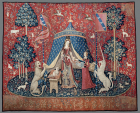
  • The Lady and the Unicorn

    Article

    As well as being admired for their aesthetic beauty, medieval and early modern tapestries often conveyed deeper symbolic meanings. Here Damien Dessane examines a famous sixteenth century tapestry and reveals the insights it provides into Anglo-French relations in that period and into the increasing agency of some important women...

    Click to view
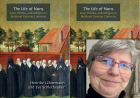
  • In conversation with Henrike Lähnemann

    Article

    In The Life of Nuns: love, politics, and religion in medieval German convents (Open Book Publishers, 2024), Henrike Lähnemann and Eva Schlotheuber explore female religious communities from the late medieval and early Reformation-era in northern Germany, revealing them to be vibrant centres of learning, administration, devotion, friendship, and negotiation. The book challenges...

    Click to view
  • Female protagonists in early East India Company history

    Article

    Traditional histories of the East India Company have had a focus on the largely male characters who were involved as merchants, politicians and soldiers. Here Karin Doull considers the significance of the women who were part of the company’s story, discussing some of the issues encountered in researching and retelling...

    Click to view
  • Witchcraft, Werewolves and Magic in European History: on-demand short course

    Multipage Article

    This self-guided short course provides an introduction to European witchcraft history from the fifteenth century to the present. Using a range of primary sources, the course explores important themes and questions relating to witchcraft history, examining how witchcraft has been imagined and understood at different times and in different places, and why...

    Click to view
  • Recorded webinar: Indian Suffragettes: women's activism in South Asia and beyond

    Article

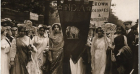
    Between 1917 and 1947, women in the Indian subcontinent were engaged in active debates and noteworthy demonstrations for the vote, building up a national suffrage movement. In this talk Professor Sumita Mukherjee discusses the activities of Indian suffragettes in this period, showing how they were connected with British and other...

    Click to view
  • Finding Bad Bridget: the lives and crimes of Irish immigrant women in America

    Article

    From the early nineteenth century until the First World War, millions of Irish women emigrated to North America in search of better lives. Elaine Farrell and Leanne McCormick, co-leads for the AHRC-funded Bad Bridget research project, tell us how poverty, discrimination, isolation from family as well as greed and opportunism...

    Click to view
  • Real Lives: Mrs Annabel Dott (1868–1937)

    Article

    Our series ‘Real Lives’ seeks to put the story of the ordinary person into our great historical narrative. We are all part of the rich fabric of the communities in which we live and we are affected sto greater and lesser degrees by the big events that happen on a daily...

    Click to view
  • Caroline Court Women, 1625–1669

    Article

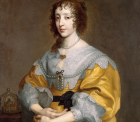
    Aristocratic women at the court of Queen Henrietta Maria from 1625–69 were integral to court life and actively involved in royal service; in court family networks; in dispensing and seeking patronage; and, in political and religious politics. As Sara J. Wolfson shows, it is important to study women at the apex of power...

    Click to view
  • In conversation with Mineke Schipper

    Article

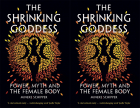
    Rosalind Crone from The Historian talks to Mineke Schipper about her new book, The Shrinking Goddess, a re-examination of the rise of patriarchy through myths, proverbs, stories, images and understandings of the female body.

    Click to view
  • In search of Alice Molland: an English witchcraft will o’ the wisp

    Article

    As the Historical Association runs its short course on Witchcraft, Werewolves and Magic in European History, Mark Stoyle investigates an apparent turning point in the history of English witchcraft: the case of a woman accused of witchcraft in seventeenth-century Devon.  We also include Mark Stoyle's 'Doing History' companion piece to his...

    Click to view
  • Out and About: Newcastle’s 1650 Witch Trial

    Article

    A.D. Bergin’s research for a work of historical fiction led him to Newcastle, where one of the largest witch trials in English history took place in 1650. Despite the scale of the proceedings, the event remains much less well known than the infamous Pendle trials or Matthew Hopkins’ East Anglian witch hunts.

    Click to view
  • Real Lives: Cecily Cook

    Article

    Our series ‘Real Lives’ seeks to put the story of the ordinary person into our great historical narrative. We are all part of the rich fabric of the communities in which we live and we are affected to greater and lesser degrees by the big events that happen on a daily...

    Click to view
  • Real Lives: Miss F.M.G. Lorimer (1883–1967)

    Article

    Our series ‘Real Lives’ seeks to put the story of the ordinary person into our great historical narrative. We are all part of the rich fabric of the communities in which we live and we are affected to greater and lesser degrees by the big events that happen on a daily...

    Click to view
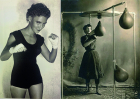
  • The right to fight: women’s boxing in Britain

    Article

    In this article Matthew Taylor explores the history of women’s boxing in Britain from the early eighteenth century onwards, showing how prevailing gender norms have led to this activity being marginalised by historians. It is argued that the key women boxers he discusses should be celebrated as key figures, not just in the history of sport but...

    Click to view
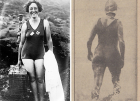
  • Writing Lilian Harrison into history

    Article

    In this article Matthew Brown and Pablo Scharagrodsky introduce us to the little-known story of Anglo-Argentinian swimmer Lilian Harrison, who in 1923 became the first person to swim the 42km from Uruguay to Argentina at the estuary of the Rio de la Plata. Her story shows how she had to battle against not only tides and...

    Click to view
  • Real Lives: Jessie Reid Crosbie

    Article

    Alyson Brown, Dan Copley and Jack Bennett uncover the life of a reforming Liverpool headmistress. Our series ‘Real Lives’ seeks to put the story of the ordinary person into our great historical narrative. We are all part of the rich fabric of the communities in which we live and we are...

    Click to view
  • Real Lives: Beatrice Alexander

    Article

    Our series ‘Real Lives’ seeks to put the story of the ordinary person into our great historical narrative. We are all part of the rich fabric of the communities in which we live and we are affected to greater and lesser degrees by the big events that happen on a daily...

    Click to view
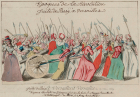
  • Women and the French Revolution: the start of the modern feminist movement

    Article

    Luke Rimmo Loyi Lego explores the role of women in the French Revolution, and how their challenges to traditional gender roles laid the foundations for the modern feminist movement.  The study of the French Revolution is often restricted to its impact on the Enlightenment ideas of influential men such as Rousseau,...

    Click to view
  • Recorded Webinar: Female slave-ownership in 18th- and 19th-century Britain

    Article

    There is a great deal of discussion at the moment about how we engage with and confront the history and legacies of slavery in twenty-first century Britain. A lot of attention has been placed on men like slave trader Edward Colston or merchant and slave-owner Robert Milligan, both of whom were memorialised...

    Click to view