Science

The exploration of the world we live in has raised fundamental questions and led to elaborate explanations across time and across societies and continents. In this theme ideas put forward in the pursuit of organised science are explored, the impact of those ideas and the changes they may have led to are discussed. Key individuals in the development of scientific thought are studied and ideas around how science has affected history and human development are addressed.

Sort by: Date (Newest first) | Title A-Z
  • Real Lives: Eduard Friedrich Kärger

    Article

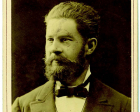
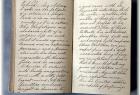
    In this article, Alex van der Ham and Ling-Hua Huang explain how a casual browse through a nineteenth century journal led to an intriguing research journey into the author of a scientific dissertation. Here they discovered interesting insights into Prussian society in the years leading to the Unification of Germany,...

    Click to view
  • Making and breaking Britain’s national energy order

    Article

    British history flows through energy. Changes to fuel sources, technologies, workplace organisation and power along with government policy and ownership have been defining turning points in British economic history. In this article Ewan Gibbs traces the making, development and subsequent breaking of a national British energy order across the second half of...

    Click to view
  • In conversation with Ayoush Lazikani

    Article

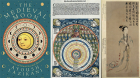
    Ayoush Lazikani’s The Medieval Moon follows the moon between roughly 700 and 1600, tracing how it became a meeting-place for prophecy, medicine, devotion, and art across a globally conceived Middle Ages. Carolin Gluchowski met with Ayoush Lazikani to explore the many moons of the Middle Ages...

    Click to view
  • Doing history: reconstructing the life of physician, psychiatrist and anthropologist James Cowles Prichard

    Article

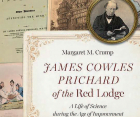
    Margaret Crump’s Doing History explains how she went about researching the life of a Victorian scientist, gathering material about the man himself from a variety of sources including newspapers, genealogical databases, and archives, supplemented by contextual knowledge of the period.

    Click to view
  • Social Darwinism: the myth and its reinvention

    Article

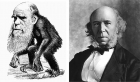
    ‘Social Darwinism’ has been associated in academia and popular consciousness with negative concepts such as hyper-nationalism and eugenics. Geoffrey M. Hodgson challenges the notion that Social Darwinism or its proponents were ever well-defined. By tracing the use of ‘Social Darwinism’ across academic disciplines and globally over a long period, Hodgson...

    Click to view
  • White heat or hot air? The politics of science in 1960s Britain

    Article

    Britain in the 1960s was captivated by scientific advancements. The public interest in ‘science’ was reflected in popular culture during this period. This zeitgeist for scientific revolution also captured aspects of British politics. The government of Harold Wilson sought to encourage scientific progress. Yet the difference between political aims and...

    Click to view
  • More than skin deep: unmasking the history of cold cream

    Article

    From the ancient Mediterranean to the shelves of twenty-first century pharmacies and cosmetic counters, cold cream has a long history. In this article, Farhana Qayoom Shaikh explores how Galen’s simple formula for treating skin complaints transitioned over the centuries into a luxury beauty product.

    Click to view
  • Out and About: The historical significance of the Botanic Garden in Oxford

    Article

    The Oxford Botanic Garden was Britain’s first botanic garden and is world-renowned. Mia Andreasen, who knows it well, explores why they have been so successful and how they reflect not only plant life but also the global history of the past 400 years.

    Click to view
  • The year that lost eleven days

    Article

    From its Roman origins to the dating of the tax year, David Fleming describes how the changes made to the British calendar in 1752 came about and their effect on everyday life, both at the time and since...

    Click to view
  • Environmental history and the challenges of the present

    Article

    In a wide-ranging survey of the field, Amanda Power explains what it means to do environmental history at a time of climate crisis, and points to the opportunities and challenges in this thriving area of research...

    Click to view
  • Doing history for climate action

    Article

    Incidents of flooding across the UK are increasing, threatening homes and livelihoods. In this article, Hannah Worthen and Briony McDonagh explain how they are using historic records of floods and flood management to engage communities in Hull in new conversations and to prompt vital action. Their project, Risky Cities, was...

    Click to view
  • Art and ecology

    Article

    Artworks and objects from the past provide us with a compelling record of human interaction with the natural world. In this article, art historians Carla Benzan and Samuel Shaw explain how they are using collections from galleries and museums to bring environmental history to new audiences and to increase awareness...

    Click to view
  • Glacier Tours in the Northern Playground

    Article

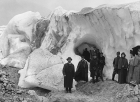
    Glaciers are on the frontier of the climate crisis. Their ongoing disappearance is one of its most visible effects. In this article, Christian Drury explores how tourists in the late nineteenth and early twentieth centuries viewed and understood glaciers, and what they contributed to the history of environmental thought...

    Click to view
  • What Have Historians Been Arguing About... the consequences of the industrial revolution

    Article

    The British industrial revolution stands out as a pivotal moment in human history. Its timing, causes and consequences have all been major topics of historical enquiry for well over one hundred years. Many of the great Victorian commentators – Engels, Dickens, Blake to name a few – who lived through...

    Click to view
  • Vera Ignatievna Giedroyc: her missions of mercy, 1899–1932

    Article

    Historical research takes place in many forms and in many locations. This research, which has been translated for us, introduces us to an heroic pioneering Ukrainian woman surgeon. During the Spring of 1932 in the Ukrainian city of Kiev, on a sunny day in March, a very small group of...

    Click to view
  • Real Lives: Anna Wessels Williams (1863–1954)

    Article

    Patrick J Pead writes about a truly remarkable woman whose contribution to advances in medicine deserves far wider recognition. Our series ‘Real Lives’ seeks to put the story of the ordinary person into our great historical narrative. We are all part of the rich fabric of the communities in which we live...

    Click to view
  • Glowing in the Dark

    Article

    The twentieth century celebrated many new technologies and just like many of those from the industrial revolution we now know them to be edged with danger and potential long-term damage. Here we learn about the effects that radium, bolstered by its advantages in war time, had on the civilian factory...

    Click to view
  • A (non-Western) history of versatility

    Article

    Waqās Ahmed broadens our perspective on where in history we might find polymaths, those who embody versatility of thought and action. While Western scholars might identify the likes of Leonardo da Vinci or Benjamin Franklin as the archetype of the polymath, they have in reality existed throughout history and across...

    Click to view
  • The amazing adventures of Pytheas the Greek

    Article

    Alf Wilkinson explores the achievements of Pytheas, the first person, as far as we know, to sail completely around the British Isles in around 325 BC. When we think of the Ancient Greeks we tend to think of warfare, drama, myths and legends, perhaps mathematics, medicine and science. What we...

    Click to view
  • One Giant Leap – 50 years since the Apollo 11 Moon landing

    2nd July 2019

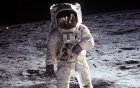
    “One small step for a man, one giant leap for mankind” is one of the most famous sentences of the 20th century, and it was about science and exploration not conflict – or was it? For centuries humanity has stared at the Moon and attributed to it portents of good...

    Click to view