Power

The accumulation of, the acceptance of, and the use of power are all explored in this section. The individual reigns of some monarchs are looked at such as those from the Tudor period, but so are other leaders, despotic and revolutionary. Contemporary issues of the use of power in a democracy are explored are more complex ideas around power through individual actions and movements in history.

Sort by: Date (Newest first) | Title A-Z
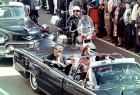
  • Ending Camelot: the assassination of John F Kennedy

    Article

    The murder of America’s thirty-fifth president is often regarded as one of the key events in the recent history of the United States. Numerous conspiracy theories have made it appear more complex, and more mysterious, than was in fact the case. No event in recent American history has been more comprehensively...

    Click to view
  • Ending the French Revolution

    Article

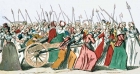
    Malcolm Crook discusses why it was so difficult to end the most famous revolution of the eighteenth century and why it led to bloodshed and absolutism.

    Click to view
  • Excluded by men? Joanna the Mad, patriarchy and a charge of insanity

    Article

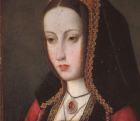
    Glyn Redworth re-appraises the life of an unfortunate queen. Joanna of Castile was a pretty child. She had an oval face and a long delicate nose. Her skin was felt to be attractively light in colour as was her hair. Fiercely intelligent, the basics of Latin came easily to her....

    Click to view
  • Faction in Tudor England

    Article

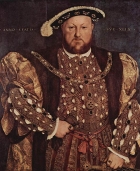
    'This wicked Tower must be fed with blood' - W. S. Gilbert's dialogue sums up the popular myth of Tudor England. This pamphlet looks at the reality, a society and politics necessarily divided into rival factions by the pulls of patronage, local loyalty and the implications of personal monarchy, and...

    Click to view
  • Fake news: Psy-war and propaganda in the Indonesian Genocide of 1965-66

    Article

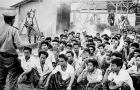
    Geoffrey Robinson explores a little-known episode of the Cold War where half a million people were killed and the Indonesian communist party was destroyed, aided and abetted by the major Western Powers. Amidst all the talk of fake news and Russian meddling in US politics, it is easy to lose...

    Click to view
  • Father of the Free French Navy: Thierry d’Argenlieu

    Article

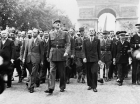
    Thierry d’Argenlieu played a crucial role in the French Resistance during World War Two, but he does not fit the mould of the typical resister. Adrian Smith brings to light d’Argenlieu’s wartime experiences, and follows his career after 1945 as High Commissioner in Indo-China and member of the Carmelite order...

    Click to view
  • Ffilm: Grym a Phrotest yng Nghymru – 1714 i 1785

    Article

    Ym Mhennod 9, mae Dr Eryn White (Prifysgol Aberystwyth) yn trafod pwy oedd mewn grym yng Nghymru ym 1714, y berthynas newidiol rhwng Cymru a'r Deyrnas Unedig ehangach a'r datblygiadau allweddol a ddigwyddodd yng Nghymru rhwng 1714-1785. Mae Dr White yn myfyrio ar ehangu cyflym print a llythrennedd yng Nghymru...

    Click to view
  • Film series: Power and Freedom in Britain and Ireland, 1714–2010

    30th October 2025

    From royal courts to radical protests, from industrial revolutions to global empires – this compelling new film series traces the dramatic evolution of power, rights, and freedom across three centuries of British and Irish history. We will trace Britain and Ireland’s transformation from 1714 to 2010, unpacking power struggles, social revolutions, and...

    Click to view
  • Film series: Tudor Royal Authority

    Article

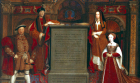
    In this film, Professor Sue Doran, Jesus College, University of Oxford, discusses provides an overview of how Tudor Royal Authority developed and evolved from the first Tudor King, Henry VII, to the final Tudor Queen, Elizabeth I.

    Click to view
  • Film: Brezhnev and Détente

    Article

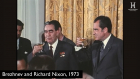
    In this film Dr Edwin Bacon blanks about the modernisation of the soviet union in the 1960s and 70s under Brezhnev, with some scholars predicting that as the East and West evolved, they would eventually converge as modern developed industrialised societies. The problem with convergence theory is that it didn’t...

    Click to view
  • Film: Brezhnev's agenda

    Article

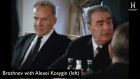
    In this film Dr Edwin Bacon talks about Brezhnev’s change in direction and approach after Khruschev, making collective leadership work and the Kosygin reforms. Whilst there were changes from the era of Khruschev, Brezhnev’s response to the Prague Spring in 1968 showed that some things had not changed. The events...

    Click to view
  • Film: Brezhnev's early life and career

    Article

    In this film Dr Edwin Bacon takes us through Brezhnev’s early life and career: his birth in Ukraine in 1906, the opportunities brought by the revolution, his role in the battle of Ukraine and his eventual arrival to the Politburo at the end of the 1950s. Dr Bacon looks at...

    Click to view
  • Film: Brezhnev's legacy

    Article

    In this film Dr Edwin Bacon looks back at Brezhnev’s 18 years and how is has been described as an era of stagnation, producing an appetite for change from younger leaders such as Mikail Gorbachev. Dr Bacon reflects that this was a period of relative peace, stability and predictability which...

    Click to view
  • Film: Domestic Politics and Tudor Royal Authority – discussion

    Article

    In this film Professor Sue Doran, Jesus College, University of Oxford and Professor Steven Gunn, Merton College, University of Oxford, discuss the impact that domestic politics and rebellion had on Tudor Royal Authority and the development of domestic policy. If you're unable to see the film below, please use the link for your Membership...

    Click to view
  • Film: Edward VI and Tudor Royal Authority

    Article

    In this film Professor Steven Gunn, Merton College, University of Oxford, looks at the reign of Edward VI and examines the impact his youth had to his authority, the importance of advisers in shaping his rule and the significance of religion and foreign relations in defining his legacy. If you're unable to...

    Click to view
  • Film: Elizabeth I and Tudor Royal Authority

    Article

    In this film, Professor Sue Doran, Jesus College, University of Oxford, looks at the two main challenges to Elizabeth I's authority: gender and religion. Professor Doran looks at the power of Elizabeth's personality, her relationship with her advisers plus the significance of religion and domestics politics to shaping her reign and...

    Click to view
  • Film: Foreign Relations and Tudor Royal Authority – discussion

    Article

    In this film Professor Sue Doran, Jesus College, University of Oxford and Professor Steven Gunn, Merton College, University of Oxford discuss the role foreign relations played in Tudor royal authority and the amount of power Tudor monarchs were able to exercise. The film will explore common threads and differences in foreign policy...

    Click to view
  • Film: From Khrushchev to Brezhnev

    Article

    In this film Dr Edwin Bacon reflects upon the instability of the Khrushchev era and how Brezhnev positioned himself as the perfect replacement for a Soviet Communist party desperate for stability in the wake of the Cuban missile crisis. Brezhnev would be the first amongst equals looking to move forward...

    Click to view
  • Film: Germany 1945-1991: Introduction

    Article

    Germany as a divided and defeated nation is explored through the lens of how the two new Germanys rebuilt their States politically and culturally. Professor Anna Saunders reflects on the different inequalities that existed between the two states and how stability was established between political leaders, even when political dissent...

    Click to view
  • Film: Henry VII and Tudor Royal Authority

    Article

    In this film Professor Steven Gunn, Merton College, University of Oxford, looks at the life and reign of Henry VII and examines the role and significance of religion, foreign relations, domestic politics and the nobility on Henry's establishment of the Tudor dynasty. If you're unable to see the film below, please use...

    Click to view