World

The modern world cannot be studied without examining the course, impact and legacy of two world wars, the resources in this section set out to look at both the First and Second World Wars in their global context. The section also includes the Cold War and its impact in Latin America, South-East Asia and parts of Africa. This period also sees the rise and fall of European imperialism and the changing nature of global politics and economics as technology brings different stories from so many parts of the world directly to us. Read more

Sort by: Date (Newest first) | Title A-Z
Show: All | Articles | Podcasts | Multipage Articles
  • Film: Key individuals in the African-American Civil Rights Movement

    Article

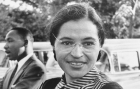
    The African-American Civil Rights Movement involved many significant individuals, some prominent and some less so. In this film, Professor Brian Ward and Professor Joe Street of Northumbria University look at the role, significance and legacy of three key figures in the movement: Martin Luther King, Jr, Malcolm X and Rosa...

    Click to view
  • Film: Khrushchev - After Stalin

    Article

    In this film, Dr Alexander Titov (Queen's University of Belfast), discusses the leading figures jockeying for power after Stalin died, the short period of collective leadership, growing calls for reform within the Soviet Union and how Khrushchev gradually sidelined all of his rivals on his way to becoming Premiere of...

    Click to view
  • Film: Khrushchev - Background

    Article

    In this film, Dr Alexander Titov (Queen's University of Belfast), provides a profile of Khrushchev’s background and personality and how these influenced his politics and ideas. Dr Titov takes us on a journey from Khrushchev's peasant beginnings in Kursk, his rapid rise in the communist party, his role in the purges, to...

    Click to view
  • Film: Khrushchev - De-Stalinization

    Article

    In this film, Dr Alexander Titov (Queen's University of Belfast), discusses how and why Khrushchev opened up discussions about Stalin and his legacy, the risk that people would blame the current leadership once the scale of repressions became known. Dr Titov examines the both the content of the secret speech (Stalin’s...

    Click to view
  • Film: Khrushchev - Downfall and Legacy

    Article

    In this film, Dr Alexander Titov (Queen's University of Belfast), discusses how Khruschev went from initially being a highly popular ‘man of the people’, to becoming an authoritarian, who alienated his colleagues through rudeness and constant unexplained policy shifts, and whose predilection for risk taking and gambles brought the world perilously...

    Click to view
  • Film: Khrushchev - Foreign Policy

    Article

    In this film, Dr Alexander Titov (Queen's University of Belfast), looks at the early thaw in relations between the Soviet Union and the West after the death of Stalin, the resolution of outstanding issues such as the Korean War, the division of Austria, and Khruschev's resetting of relations with China and...

    Click to view
  • Film: Lenin and the 1917 Revolutions

    Article

    You wait a lifetime for a revolution and then two come along at once! Such was 1917 in Russia. As the world seemed in chaos and Russia and the Russian people began to collapse, Lenin and the Bolsheviks saw their opportunity and overthrew the government to create the first communist...

    Click to view
  • Film: Lenin and the Russian Civil War

    Article

    Revolution is never simple. Lenin and the Bolsheviks quickly found that not everyone in Russia or outside of it approved of their new radical agenda. Russia was plunged into a civil war of devastating circumstances. How would its new leader manage and how much were the needs of the people...

    Click to view
  • Film: Lenin and the birth of Soviet Russia

    Article

    Having changed the course of Russian society Lenin now needed to secure his Bolshevik survival. Unlike his predecessor he saw no need to continue with the Imperialist policies of a war in Europe. Territory could be sacrificed for control, but would promises and rhetoric be enough to govern among people...

    Click to view
  • Film: Lenin's early thought

    Article

    As Lenin’s own political outlook and beliefs developed so did the European movements of Socialism and Communism. Groups emerged that wanted to radically change society and social structures. Lenin positioned himself as one of the leaders and crucially one of the thinkers behind these new ideas and movements.  Dr Lara...

    Click to view
  • Film: Lenin's legacy

    Article

    With his body was embalmed and building high statues were erected to him Lenin’s memory seemed secured for ever. Yet how did his memory and his actual legacy differ? Did he really set the course for a future better Russia, or were his ideas of revolution better on paper than...

    Click to view
  • Film: Lenin's origins

    Article

    Lenin was born Vladimir Ilyich Ulyanov in 1870. This film takes us through his middle-class origins, how he was radicalised by the world he saw around him, especially following the execution of his brother, and how the future politician and revolutionary developed amongst the extremes of Imperial Russian society. In...

    Click to view
  • Film: Lenin, the 1905 Russian Revolution and WWI

    Article

    The founders of Communism, Marx and Engels, had created a set of social structures and industrial developments that were believed necessary for Communism to be achieved. Imperial Russia did not fit these conditions and yet at the start of the twentieth century Russian revolutionaries were some of the most active...

    Click to view
  • Film: Rethinking the origins of the Cold War

    Article

    In this HA Virtual Branch talk Professor Richard Toye explores Churchill’s response to the USSR and how his actions during the early Cold War years intersected with his views of traditional Anglo-Russian tensions and the legacy of the ‘Great Game’. Richard Toye is Professor of Modern History at the University...

    Click to view
  • Film: Stalin & the Great Terror

    Article

    Why was the Soviet Union so violent in the 1930s? In this film, Professor James Harris (University of Leeds) looks at differing interpretations of the origins of the Great Terror; was it the story of one man trying to obtain total control, was it a result of collective frustration against...

    Click to view
  • Film: Stalin - Early Life

    Article

    Joseph Stalin was born Joseph Besarionis dze Jughashvili in 1878 into a poor family in Gori, Georgia, part of the then Russian Empire. Stalin attended the Tbilisi Spiritual Seminary while his own radicalism grew, before joining the Marxist Russian Social Democratic Labour Party. He edited the party's newspaper, Pravda, and raised funds for Vladimir Lenin's Bolshevik faction through...

    Click to view
  • Film: Stalin - Interpretations and Legacy

    Article

    In this film, Professor James Harris (University of Leeds) reflects upon how historical interpretations of Stalin have changed over time. Stalin’s legacy and influence continues to materialise in all subsequent Soviet and Russian administrations. The Man of Steel is used by politicians when they are looking for arguments to open...

    Click to view
  • Film: Stalin - Rise to Power

    Article

    In this film, Professor James Harris (University of Leeds) discusses how interpretations have changed over the years regarding Stalin’s rise to power, and his transformation from rural Georgian to the ‘Man of Steel’ – Stalin. For many years, western interpretations were strongly influenced by his rival Trotsky, who defined Stalin...

    Click to view
  • Film: Stalin - The Early Soviet Economy & the preparation for war

    Article

    In this film, Professor James Harris (University of Leeds) examines how the New Economic Policy transformed the Soviet economy after the civil war, and looks at Stalin’s central role in that recovery. Key during that period was Stalin’s dispute with Nikolai Bukharin and the Great Break, and the drive to...

    Click to view
  • Film: Stalin - World War II

    Article

    In this film, Professor James Harris (University of Leeds) examines Stalin and the Soviet preparations for global war. The reasons why Stalin agreed the Nazi-Soviet pact are explored as are Stalin’s response to invasion in 1941. Professor Harris addresses the impact the war had on the USSR and how that...

    Click to view