Europe

From the fall of Napoleon to Revolution in Russia and from the rise of Hitler to the fall of the Berlin Wall this period is one of major upheaval in Europe. We see the collapse of monarchies and empires and the changing status of women and working men. This is a time that witnesses the mass displacement of peoples and genocide on a scale never seen before it is also a time that sees changes in medicine and technology that make fundamental changes to our everyday lives. Read more

Sort by: Date (Newest first) | Title A-Z
Show: All | Articles | Podcasts | Multipage Articles
  • What is interesting about the Cold War?

    Article

    Almost 30 years after the end of the Cold War, diversity is suddenly galvanising the field of scholarly research into the Cold War. As the historian Federico Romero has argued, older, simpler interpretations ‘seem to be giving way to a looser understanding of the Cold War as an era that encompassed...

    Click to view
  • What is interesting about the interwar period?

    Article

    The years between the Armistice of November 1918 and the German attack on Poland in September 1939 were undoubtedly a period of massive transformations. Public appetite to learn about specific aspects of this era remains strong. The making of communist rule in revolutionary Russia, the tribulations of Weimar Germany, the rise...

    Click to view
  • When was the post-war?

    Article

    There is a peculiar tension at the heart of scholarship about the years and decades after the Second World War. On the one hand, the political developments following the breakdown of the war-time alliance between the United States and the Soviet Union have spawned an enormous literature, in parts as old...

    Click to view
  • Why was it so important to see Dunkirk as a triumph rather than a disaster in 1940?

    Article

    Karin Doull investigates the perceptions of the outcome of the Dunkirk evacuation within the contextual framework of the time at which it occurred. In May 1940 the British Expeditionary Force (BEF) and a proportion of the French First Army group had withdrawn, under heavy fighting to the port of Dunkirk on the...

    Click to view
  • Women and the French Revolution: the start of the modern feminist movement

    Article

    Luke Rimmo Loyi Lego explores the role of women in the French Revolution, and how their challenges to traditional gender roles laid the foundations for the modern feminist movement.  The study of the French Revolution is often restricted to its impact on the Enlightenment ideas of influential men such as Rousseau,...

    Click to view
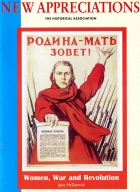
  • Women, War and Revolution

    Article

    On the surface, the period 1914 to 1945 seems to have encompassed massive changes in the position of women in Europe, in response to the demands of war and revolution. Yet historians have questioned the extent of the transformation, since the acquisition of the vote, as well as improvements in...

    Click to view
  • ‘Our March’: art and culture in the Russian Revolution

    Article

    Peter Waldron explores the role of art in communicating to the masses the ideas of politics and change in Bolshevik Russia.

    Click to view
  • ‘The Nazi Service’? The Prussian origins of the Luftwaffe

    Article

    The Luftwaffe had been a real achievement of Prussian military culture, but under poor Nazi leadership it degenerated into an ineffective fighting force, writes Stephen Graham.

    Click to view