Europe

From the fall of Napoleon to Revolution in Russia and from the rise of Hitler to the fall of the Berlin Wall this period is one of major upheaval in Europe. We see the collapse of monarchies and empires and the changing status of women and working men. This is a time that witnesses the mass displacement of peoples and genocide on a scale never seen before it is also a time that sees changes in medicine and technology that make fundamental changes to our everyday lives. Read more

Sort by: Date (Newest first) | Title A-Z
Show: All | Articles | Podcasts | Multipage Articles
  • The Uses of History in the Twenty First Century

    Article

    During the last century or so there has developed a new ‘public role’ for history: the past as personal history, a vital element in the nourishing of people in society. During the past decades a new perception of what history is has manifested itself on two levels: first a shift of...

    Click to view
  • The Versailles Peace Settlement

    Article

    This classic pamphlet takes you through the Paris Peace Conference and the 'German Question', Peacemaking and the Treaty of Versailles, Europe and the German question after Versailles.

    Click to view
  • The changing shapes of Europe’s twentieth century

    Article

    In this discussion of the twentieth century, Martin Conway considers the implications of linking notions of military conflict and division with the emergence of modernity. The idea of World War II as the distinct dividing line between the present and past, and the ways in which it began a time...

    Click to view
  • The initial impact of the Battle of Jutland on the people of Portsmouth

    Article

    This local study by Steve Doe draws together the human effects of what happened at the Battle of Jutland in June 1916 with accounts of how the families of those who fought in the battle and the wider local community dealt with the tragedy.

    Click to view
  • The peace treaties of 1919

    Article

    Over the last five years the Historical Association has run a regular feature in this journal about the First World War from some lesser-known perspectives. Its purpose has been to capture some of the stories not always told about that life-changing, society-transforming conflict. As the centenary of the Armistice has...

    Click to view
  • The rise and fall of Nauru

    Article

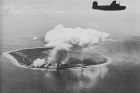
    Aadam Patel offers an insight into the complexities of the recent economic history of a remote Pacific island. Nauru is an isolated island located in the Pacific Ocean approximately 4,400km north-east from Australia and 1,300km north-east from the Solomon Islands. With an area of just below 21 squared kilometres, it is...

    Click to view
  • The spy who never spied

    Article

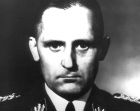
    Claire Hubbard-Hall takes us on a wartime journey across the Atlantic. On 30 June 1942, the Swedish-American liner SS Drottningholm docked in New York Harbour. As a diplomatic ship it had just completed its run from Lisbon (Portugal) to America. Standing at  538 feet long and 60 feet wide, painted white...

    Click to view
  • The throne and the fairy tellers

    Article

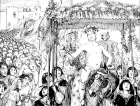
    Fairy tale princesses and mysterious castles are just part of the way that historically story tellers have been connected to royalty. In this article some of the most famous story tellers are discussed with their royal patronage and experiences. Hans Christian Andersen couldn’t believe his luck. In 1854, he was...

    Click to view
  • The world in 1913: friendly societies

    Article

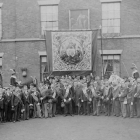
    Friendly societies were designed to help members to cope with the illness, death or unemployment of a household's breadwinner. Each month members, mostly men, paid into the society, often at a meeting in a pub and in return payments from the pooled funds were made to ill members and to...

    Click to view
  • To what extent was the failure of denazification in Germany 1945-48 a result of the apathy of the allies?

    Article

    To blame the failure of the denazification process in postwar Germany entirely on a vague and generalised concept such as apathy is simplistic and does not stand up to serious scrutiny. Denazification was one of the most ambitious attempts ever at provoking an artificial revolution; it is reasonable to assume...

    Click to view
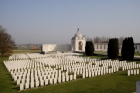
  • Tyne Cot Cemetery, near Ypres, Belgium

    Article

    My Favourite History Place: Tyne Cot Cemetery, near Ypres, Belgium  We can truly say that the whole circuit of the Earth is girdled with the graves of our dead. In the course of my pilgrimage, I have many times asked myself whether there can be more potent advocates of peace...

    Click to view
  • Verdun: the endless battle

    Article

    Most can agree that the battle of Verdun started 100 years ago, on 21 February 1916, when the Germans began attacking French positions north and east of the old fortress town on the Meuse river. Few can agree on when it ended. The Germans might draw a line under it...

    Click to view
  • Vichy France and the Jews

    Article

    Dr Julian Jackson examines the position and treatment of Jews in Occupied France. When in 1945 France came to try those who had ‘collaborated’ during the war, the fate of the Jews was not central. It was even possible for Xavier Vallat, Vichy’s Commissioner for Jewish Affairs, to defend himself...

    Click to view
  • Virtual Branch recording: Why has Monarchy survived in Europe?

    Article

    In the lead-up to the Queen's Platinum Jubilee, Dr Bob Morris joined the HA Virtual Branch in March 2022 to consider why the monarchy has survived in Europe.  Dr R. M. (Bob) Morris is a Senior Honorary Research Associate at the Constitution Unit, University College London. He was formerly a...

    Click to view
  • WWI and the flu pandemic

    Article

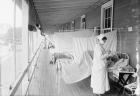
    In our continuing Aspects of War series Hugh Gault reveals that the flu pandemic, which began during the First World War, presented another danger that challenged people’s lives and relationships. Wounded in the neck on the first day of the battle of the Somme, 1 July 1916, Arthur Conan Doyle’s son Kingsley...

    Click to view
  • Waterloo's prizefight factor

    Article

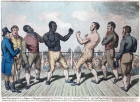
    Image: 'Pierce Egan celebrates the Boxiana touch as Napoleon is floored' David Snowdon examines the impact of the world of ‘pugilism' on the army during the Napoleonic Wars and looks at some famous boxers who perished in the battle. By 1815, one writer, and one sporting publication, had become synonymous with...

    Click to view
  • We will remember them: well, most of them

    Article

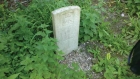
    Richard Broadhead provides a personal view on whether the mammoth task of the Commonwealth War Graves Commission can always be fulfilled, especially at a time of so many anniversaries.

    Click to view
  • Wellington's Soldiers in the Napoleonic Wars

    Article

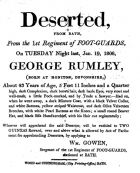
    Wellington's Soldiers in the Napoleonic Wars The war with France, which began in 1793, had moved to the Iberian Peninsula by 1808. This year is therefore the two-hundredth anniversary of the commencement of the Peninsular War campaigns. War on the Peninsula demanded huge resources of manpower in order to defeat...

    Click to view
  • What did ‘Mature Socialism’ mean for the Soviet Union?

    Article

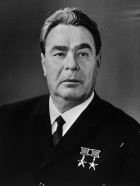
    David Shipp analyses the state of socialism in the Soviet Union, from Brezhnev to Chernenko. ‘What is he thinking of? Reform, reform. Who needs it, and who can understand it? We need to work better, that is the only problem.’ These reported words of Leonid Brezhnev epitomise the view of the period...

    Click to view
  • What is interesting about the world wars?

    Article

    In the past, the two world wars have been mainly studied as military history, focused on armies, campaigns and battles. Historians have concentrated on wars in Europe and in particular on the Western Front in 1914–18 and on the war with Nazi Germany in the west. This has given rise...

    Click to view