Europe

From the fall of Napoleon to Revolution in Russia and from the rise of Hitler to the fall of the Berlin Wall this period is one of major upheaval in Europe. We see the collapse of monarchies and empires and the changing status of women and working men. This is a time that witnesses the mass displacement of peoples and genocide on a scale never seen before it is also a time that sees changes in medicine and technology that make fundamental changes to our everyday lives. Read more

Sort by: Date (Newest first) | Title A-Z
Show: All | Articles | Podcasts | Multipage Articles
  • Real Lives: Surviving the War in the Soviet Union: recollections of a child deportee

    Article

    This 'Real Lives' piece is based on a series of interviews Annette Ormanczyk carried out in 2019 with Mrs Irena Persak, who was deported as a five-year-old child with her family in February 1940. As well as offering a fascinating personal account of life in the Soviet Union during the Second...

    Click to view
  • Real Lives: The Russian hermit of Cornwall’s caves

    Article

    Our series ‘Real Lives’ seeks to put the story of the ordinary person into our great historical narrative. We are all part of the rich fabric of the communities in which we live and we are affected to greater and lesser degrees by the big events that happen on a daily...

    Click to view
  • Recorded Webinar: Ukraine and the Soviet Politics of Empire

    Article

    Click to view
  • Recorded webinar: Mapping uncertainty - Holocaust Memorial Day 2025

    Article

    Click to view
  • Recorded webinar: Ordinary people - Holocaust Memorial Day 2023

    Article

    Click to view
  • Social Darwinism: the myth and its reinvention

    Article

    ‘Social Darwinism’ has been associated in academia and popular consciousness with negative concepts such as hyper-nationalism and eugenics. Geoffrey M. Hodgson challenges the notion that Social Darwinism or its proponents were ever well-defined. By tracing the use of ‘Social Darwinism’ across academic disciplines and globally over a long period, Hodgson...

    Click to view
  • St Helena: Napoleon's last island

    Article

    Paul Brunyee asks why Napoleon ended up on St Helena, and what life was like for him in exile there. On his return to Paris after Waterloo, Napoleon had no significant group of supporters left in Paris. He was stunned by his catastrophic defeat and knew he was being outmanoeuvred...

    Click to view
  • Strange Journey: the life of Dorothy Eckersley

    Article

    Meeting in Berlin Three days before the outbreak of the Second World War, William Joyce, the leader of the British Nazi group, the National Socialist League, was in Berlin. He and his wife, Margaret, had fled there fearing internment by the British government if war broke out. Yet as war...

    Click to view
  • TV: modern father of history?

    Article

    Bettany Hughes Norton Medlicott Medal Winner Lecture In 1991 I travelled to the BBC for a meeting with a senior television producer. It seemed to me that history just wasn't getting a fair crack of the whip. I talked animatedly about the on-screen discoveries that could be made and the...

    Click to view
  • Taking tea with Frau von Papen

    Article

    The Weimar Republic in its last days as seen and remembered by a five-year-old English boy. A long-standing member of the Historical Association remembers an experience from eighty years ago. As Mrs Merkel is well aware, the fear of inflation is deeply embedded in the German folk memory. Eighty years...

    Click to view
  • The 'Era of the Dictators' Reconsidered

    Article

    Kenneth Thomson reflects on major aspects of the ‘era of the dictators’ after the collapse of Soviet Communism and its satellite regimes. In 1939, on the eve of the Second World War, almost the whole of continental Europe was ruled by dictatorships of various political hues. Even countries, like France,...

    Click to view
  • The Battle of Waterloo: Sunday 18 June 1815

    Article

    John Morewood explores the events of 18 June 1815 in detail and asks just how accurate is our view of what happened on the field of Waterloo. Summary Waterloo is the most famous battle in a four-battle campaign fought from 15 June to 19 June 1815. On one side were...

    Click to view
  • The British Union of Fascists: the international dimension

    Article

    Fascism failed in Britain in the 1930s – Europe’s decade of the ‘Brown plague’. Unlike in many European countries, fascists in Britain were never a serious threat to the democratic order. This was not for want of trying, especially on the part of Sir Oswald Mosley and his British Union...

    Click to view
  • The British soldier in the Revolutionary and Napoleonic wars

    Article

    Scum of the earth – or fine fellows? Carole Divall asks whether the men of the British Army really were ‘the scum of the earth’, as often asserted, or willing soldiers who earned the respect of the French. ‘Soldiers were regarded as day labourers engaged in unsavoury business; a money...

    Click to view
  • The Centenary of the First World War: An unpopular view

    Article

    We are delighted to have an original article by Gary Sheffield in this edition of The Historian. Gary Sheffield is Professor of War Studies, University of Wolverhampton. He is a specialist on Britain at war 1914-45 and is one of Britain's foremost historians on the First World War. He has...

    Click to view
  • The Coming of War in 1939

    Article

    I. The Legacy of Versailles The Outbreak of a second world war on 1 September 1939 might have been expected to produce in due course a great controversy on ‘war guilt'. But there has been nothing comparable with the debate which took place during the 1920s on the 1914 issues. The...

    Click to view
  • The End of Germany’s Colonial Empire

    Article

    Daniel Steinbach asks why the loss of the German colonies in Africa was perceived as a powerful symbol of Germany’s deliberate humiliation at the end of the First World War. Famously, Germany’s first and last shots of the First World War were fired in Africa. From its beginning to its...

    Click to view
  • The Enlightenment

    Article

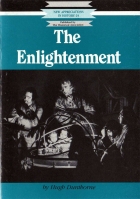
    Can a movement as varied and diffuse as the Enlightenment of the eighteenth century be contained within the covers of a short pamphlet? The problem would certainly have appealed to the intellectuals of that time. Generalists rather than specialists, citizens of the whole world of knowledge, they relished the challenge...

    Click to view
  • The German Revolution of 1918-19

    Article

    Simon Constantine examines the clashes between the Left and Right of Germany’s new Republic that helped to create the environment for future extremism and hatred.

    Click to view
  • The German prisoner-of-war camp in Dorchester

    Article

    Dave Martin investigates why there is a war memorial for German soldiers, ‘buried in a foreign field’, in a Dorset churchyard.

    Click to view