Britain & Ireland

What was it about industrialisation that led to the emergence of a woman’s movement in Victorian Britain? Why do we see so many people fighting for so many rights and liberties in this period and what are the origins of some of the issues we still campaign on today? This section includes our major series on Social and Political Change in the UK from 1800 to the present day. There are also articles and podcasts on the often violent relationship between England and Ireland during this period and England’s changing relationship with Scotland and Wales. Read more

Sort by: Date (Newest first) | Title A-Z
  • Landowners and their motives for change at the Suffolk village of Culford between 1793 and 1903

    Article

    Isabel Jones from Thomas Mills High School at Framlingham was the winner of the Young Historian Award for Local History [16-19] in 2006. The Director of the Young Historian Project, Trevor James, has edited her winning essay. It has been shortened and the footnotes removed, to enable it to fit...

    Click to view
  • Lloyd George & Gladstone

    Article

    Lloyd George, who died sixty years ago on 26 March 1945, grew up and began his Parliamentary career in Queen Victoria's reign. In taking up a major Welsh issue, disestablishment of the Church of Wales, he memorably clashed with William Ewart Gladstone, perhaps the greatest of all Liberal Prime Ministers....

    Click to view
  • Local Authority Housing

    Article

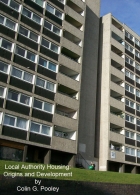
    Local authority housing has been a distinctive feature of the British housing system throughout the twentieth century. This pamphlet outlines the development of local authority housing in Britain from its origins in the late nineteenth century to the present day, focusing on the ways in which policy changes have affected...

    Click to view
  • Lord Palmerston

    Article

    Lord Palmerston (1784-1865) has long interested (and confused) historians. A man of contradictions and paradoxes, he seemed both to embody modern Victorian Britain, and yet at the same time stand as a potent symbol of what had been lost.

    Click to view
  • Losing sight of the bigger picture: public policy and the visual arts

    Article

    From the 1940s to the late twentieth century, the visual arts in England were promoted and encouraged in a variety of ways by politicians and other policymakers, at both national and local level. Recent decades have seen a marginalisation of the arts, particularly in education. In this article Pauline Wood...

    Click to view
  • Losing sight of the glory: five centuries of combat surgery

    Article

    Michael Crumplin traces developments in surgery that can be directly attributed to changes in the conduct of war. Little doubt exists that war accelerates and innovates medical care. Today, our armed services can rely upon sound medical treatment if they are sick or wounded, with survival rates of above 90%. This...

    Click to view
  • Louis, John, and William: the 'Dame Europa' pamphlets, 1870-1871

    Article

    The pamphlet printing industry in England received an unexpected boost in 1871 with the appearance of numerous works written, mainly, as commentaries, satires or allegories in Britain’s attitude regarding the Franco-Prussian War. The cause of this deluge was one particular tract, first issued on Salisbury in October 1870, whose purpose...

    Click to view
  • Magna Carta and the development of the British constitution

    Article

    Robert Blackburn explains why, 800 years on, Magna Carta still has relevance and meaning to us in Britain today. Magna Carta established the crucial idea that our rulers may not do whatever they like, but are subject to the law as agreed with the society over which they govern. In...

    Click to view
  • Making and breaking Britain’s national energy order

    Article

    British history flows through energy. Changes to fuel sources, technologies, workplace organisation and power along with government policy and ownership have been defining turning points in British economic history. In this article Ewan Gibbs traces the making, development and subsequent breaking of a national British energy order across the second half of...

    Click to view
  • Mapping a disability history perspective onto the history of the British Empire

    Article

    Disabled peoples could be found across the British Empire; at the same time, the process of colonisation could create forms of disability, while the concept of ‘disability’ became embedded in discourses of race and gender. In this article, Esme Cleall demonstrates how thinking about disability is essential to understanding the...

    Click to view
  • Marcus Morris and Eagle

    Article

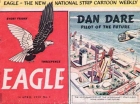
    Marcus Morris and Eagle: Approved reading for boys in the 1950s & 1960s The National Art Library of the Victoria and Albert Museum in London's South Kensington held an exhibition in the first five months of 2012 devoted entirely to British adventure comics of the  1950s and 1960s, many taken...

    Click to view
  • Medical aspects of the battle of Waterloo

    Article

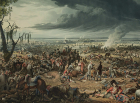
    Michael Crumplin explores the medical facilities of the British Army and asks how likely soldiers wounded at Waterloo were to survive. The road to Waterloo One of the very few benefits of conflict is the advancement of medical practice. The recent wars in Iraq and Afghanistanhave been dealing with relatively...

    Click to view
  • Memorial Oaks at Wolsingham School

    Article

    Our World War I commemorative series continues with Robert Hopkinson's introduction to what the Imperial War Museum believes is the oldest war memorial in Britain. Wolsingham School and Community College, in Weardale, County Durham, celebrated its 400th anniversary in 2014. As part of the celebrations, there was an exhibition, a...

    Click to view
  • Migration into the UK in the early twenty-first century

    Article

    Sam Scott and Lucy Clarke explore the data covering more recent migration to the United Kingdom, most especially from the EU. They discover that since 2000 migrant destinations have changed. No longer do migrants head exclusively to the big cities and industrial areas, but to rural areas, like Boston in...

    Click to view
  • Monty’s school: the benign side of Viscount Montgomery of Alamein

    Article

    Field-Marshal Montgomery has a reputation as a strong-willed battle-hardened leader, with a touch of the impetuous. Few know of his charitable side and yet in his later years this side was just as important to his activities. In this article we find out a bit more of this often simplistically...

    Click to view
  • Mountbatten in retirement: the abortive trip to rebel Rhodesia

    Article

    Adrian Smith investigates an abortive plan for the earl to intervene in Rhodesia's Unilateral Declaration of Independence. Earl Mountbatten of Burma boasted a unique CV: Chief of Combined Operations, Supreme Commander South-East Asia, Admiral of the Fleet and First Sea Lord, Chief of the Defence Staff, and Viceroy of India. Yet somehow...

    Click to view
  • My Favourite History Place: A Short History of Brill

    Article

    In this article Josephine Glover discusses the long history of her ‘favourite history place’, the Buckinghamshire village of Brill. She explains how there has been a human settlement there since Mesolithic times. Using various fragments of evidence, she pieces together the extent to which the village was important to early...

    Click to view
  • My Favourite History Place: Gladstone’s Library at Hawarden

    Article

    When I first visited Gladstone’s residential library in 1977 for a pre-university History degree reading week, I barely knew who Gladstone was. I had just come back from a holiday in Italy and the contrast between Florence and Hawarden, a Welsh border town, was startling. I came from the sunny remains...

    Click to view
  • My Favourite History Place: Keswick

    Article

    Adventure is a buzz word in the tourist trade and this old market town with under 5,000 residents advertises that it is the Lake District’s Adventure Capital. There is plenty to justify the title – the challenges of mountaineering on foot, bicycle or climbing-rope, swimming, canoeing, sailing, dragon-boat racing, hang-gliding and...

    Click to view
  • My Favourite History Place: Lord Street, Southport

    Article

    Trevor James introduces an international dimension to local history, revealing how a future French Emperor interpreted his affection for Southport’s Lord Street into the extensive redesign of Parisian streets.

    Click to view