Britain & Ireland

What was it about industrialisation that led to the emergence of a woman’s movement in Victorian Britain? Why do we see so many people fighting for so many rights and liberties in this period and what are the origins of some of the issues we still campaign on today? This section includes our major series on Social and Political Change in the UK from 1800 to the present day. There are also articles and podcasts on the often violent relationship between England and Ireland during this period and England’s changing relationship with Scotland and Wales. Read more

Sort by: Date (Newest first) | Title A-Z
  • Film: The Quest for the Lost of the First World War

    Article

    Historian Robert Sackville-West joined the HA Virtual Branch in November 2021 to talk about the topic of his book The Searchers: The Quest for the Lost of the First World War. By the end of the First World War, the whereabouts of more than half a million British soldiers were unknown. Most were presumed...

    Click to view
  • Film: “The Talk Should Not Be Broadcast”: Homosexuality and the BBC before 1967

    Article

    In the centenary year of the BBC, this Virtual Branch talk from Marcus Collins relates the strange tale of how the BBC did and did not broadcast about homosexuality in the 1950s and 1960s and what it tells us about sexuality, broadcasting and the origins of permissiveness in mid-twentieth century Britain.  Marcus Collins...

    Click to view
  • Filmed Interviews: The Women of Bletchley Park

    Multipage Article

    Bletchley Park was the most important of the top secret intelligence sites during the Second World War. The quiet Buckinghamshire village hosted 10,000 people dedicated to defeating the Nazis, 75% of those were women. In this podcast we are lucky enough to have some of those women talking about their...

    Click to view
  • Filmed Lecture: Medlicott Lecture 2022 by David Olusoga

    Article

    Professor David Olusoga is a revered TV historian, a writer and a practising academic at Manchester University. In 2022 he was the recipient of the Historical Association's annual Medlicott medal, awarded for outstanding contributions to history. The recipient of the medal provides the closing lecture of the HA's annual awards evening. Professor...

    Click to view
  • Finding Bad Bridget: the lives and crimes of Irish immigrant women in America

    Article

    From the early nineteenth century until the First World War, millions of Irish women emigrated to North America in search of better lives. Elaine Farrell and Leanne McCormick, co-leads for the AHRC-funded Bad Bridget research project, tell us how poverty, discrimination, isolation from family as well as greed and opportunism...

    Click to view
  • First Zeppelin shot down over Britain

    Article

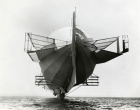
    In the First World War Britain suddenly became vulnerable to aerial attack. Alf Wilkinson records a memorable turning-point in the battle against the Zeppelin menace. On the night of the 2-3 September 1916 Lieutenant William Leefe Robinson became the first pilot to shoot down a Zeppelin raider over Britain. He...

    Click to view
  • Florence Nightingale and epidemics

    Article

    Richard Bates reveals how the expertise of Florence Nightingale is just as relevant now as it was in her own life-time. Late in 2020, the Merriam-Webster dictionary chose ‘pandemic’ as its word of the year, writing that, ‘it’s probably the word by which we’ll refer to this period [i.e. Covid-19...

    Click to view
  • Folkestone in World War One

    Article

    Grahame Jones contributes to our determination to explore the wider involvement of the community in responding to the challenges of the Great War, in this case two inspirational women who provided refreshments for soldiers en route through Folkestone harbour. A fading Edwardian resort and handy for that trip through the...

    Click to view
  • Football and British-Soviet Relations

    Article

    Following the recent ‘Euro 96’ championship, Jim Phillips looks at two earlier international football tours which had major political and ideological connotations. In November 1945 Moscow Dynamo became the first Soviet football team to visit Britain, playing in Cardiff, Glasgow and twice in London. With English, Welsh and Scottish crowds...

    Click to view
  • Forbidden friendships: taverns, nightclubs, bottle bars and emancipation

    Article

    The modern gay-rights movement has its origins in a 1960s New York ‘bottle bar’, but as Ben Jerrit explains, drinking establishments have been centres of gay culture and social resistance for centuries. 

    Click to view
  • Four faces of nursing and the First World War

    Article

    With the centenary approaching, article after article will appear on battles, the men who fought, those who refused, those that died, those who returned and those that made the decisions. There will be articles on the home front and the women that stepped into the men's shoes often to be...

    Click to view
  • From Bedfordshire to the Arctic Circle

    Article

    Travelling from the Western Front to fight former Allies in Russia is not the usual story of 1919 for a British ‘Tommy’.  Yet that was the story of some of those men still serving King and Country. On 9 January 1918 the supplement to The London Gazette, an official paper...

    Click to view
  • From Disraeli to Callaghan: Britain 1879 - 1979

    Article

    A previously unpublished survey of British history by A.J.P. Taylor. It is a characteristic piece, though marked by gloom about the then recent inflation. Introduced by Historical Association President Chris Wrigley.

    Click to view
  • From Sail to Steam

    Article

    From the time when primitive man first went adrift on a bundle of reeds or learnt to balance himself on a floating log, to the days where his descendants, no more than a few generations ago, raced scrambling aloft to trim the towering sails of a full-rigged ship, the skill...

    Click to view
  • From our branches: Were we quite mad? Establishing the East Sussex Branch

    Article

    John Oliphant gives us the lowdown on the Historical Association’s new East Sussex Branch, describing the tribulations faced by its committee before a lecture on Oliver Cromwell in September 2024 marked a successful start to the new academic year...

    Click to view
  • Gary Sheffield: Origins of the First World War

    Article

    Gary Sheffield, Professor of War studies, the University of Wolverhampton, is one of the UK's foremost historians on the First World War.  He is the author of numerous books and previously held posts at the University of Birmingham and the Royal Military Academy Sandhurst. In April 2014 he spoke at an HA event for teachers...

    Click to view
  • Gladstone and the London May Day Demonstrators, 1890

    Article

    One hundred and twenty years ago the advent of the first red May Days caused major concern across Europe. To general surprise, in 1890 and the next few years some of the largest rallies occurred in London. In Britain the main demonstration on the nearest Sunday to May Day passed...

    Click to view
  • Good Evening Sweetheart

    Article

    The talk given by Sue and Pete Mowforth to the Glasgow Branch, reading from a selection of their parents’ war-time letters, resulted in a flurry of media interest from the national press and radio, including an appearance on the BBC’s The One Show in February 2017. Olga and Cyril Mowforth married in June...

    Click to view
  • Grave matters

    Article

    Diana Laffin considers what study of the styles, planning and planting of Brookwood cemetery reveals about nineteenth century mindsets. Graves are serious sources for historians. There is nothing casual about the choices made at death: the size and design of the monument, the text on the stone, even the location...

    Click to view
  • Guy Fawkes in Manchester: The World of William Harrison Ainsworth

    Article

    Some of the most enduring myths in British history were created and perpetuated by novelists, despite the fact that the historical novel has long been relegated to the second division of the literary arts. Deeply unfashionable today, writers like Sir Walter Scott, Edward Bulwer Lytton and William Harrison Ainsworth were...

    Click to view