Britain & Ireland

The Tudors continue to fascinate and some of their story is told here along with the other dynasty of the period the Stuarts. Alongside those resources are the podcasts on the ideas that transformed British society during that period and created a United Kingdom for the first time. The industrial revolution is explored through poetry as well as technology. Religious collapse, change and diversity are all themes explored in this section. Read more

Sort by: Date (Newest first) | Title A-Z
  • Podcast: The doctor’s garden

    Article

    The late Georgian British garden was a place of botanic and agricultural enquiry as much as a place of pleasure and leisure. This talk will highlight this use of gardens by medical practitioners. As a group of men who had access to botanical training and, for those at the top...

    Click to view
  • Poetry of the Industrial Revolution in the West Midlands c.1730-1800

    Article

    There is a view that the poetry of the eighteenth century began with moralising neo-classical satire, that this was followed by insipid pastoral, and that the century closed with the advent of the Romantic. This view is simplistic. While at particular times particular types of poetry might have predominated (and...

    Click to view
  • Popular revolt and the rise of early modern states

    Article

    In the 1960s and 1970s, historians and sociologists who were not specialists in the Middle Ages constructed models of pre-industrial crowds and revolt to understand the distinctiveness of modern, post-French Revolutionary, Europe. Foremost among these scholars were George Rudé, a historian of eighteenth century England and France, and Charles Tilly,...

    Click to view
  • Power and Freedom in Britain and Ireland: 1714–2010

    30th October 2025

    From royal courts to radical protests, from industrial revolutions to global empires – this compelling new film series traces the dramatic evolution of power, rights, and freedom across three centuries of British and Irish history. We will trace Britain and Ireland’s transformation from 1714 to 2010, unpacking power struggles, social revolutions, and...

    Click to view
  • Presenting Naseby

    Article

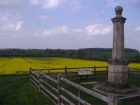
    The summer of 2007 saw the completion of new visitor facilities on and near the battlefield of Naseby. The two locations are the first to be created since the Cromwell Monument was finished in 1936 and they stand more than 5km (3 miles) apart, one of them 2km south-east of...

    Click to view
  • Private Lives of the Tudors

    Article

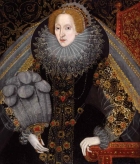
    Tracy Borman explores the distinction between the public and private lives of the Tudor monarchs. The Tudors were renowned for their public magnificence. Perhaps more than any royal dynasty in British history, they appreciated the importance of impressing their subjects with the splendour of their dress, courts and pageantry in order to reinforce their authority. Wherever...

    Click to view
  • Queen Anne

    Article

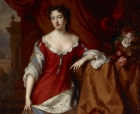
    In this pamphlet, James Anderson Winn, author of a recent biography of Queen Anne, recommends a new approach to historians writing about this successful and popular queen. Female, overweight, and reticent, Anne has long been underestimated. Her letters, however, show how well she understood the motives of her ministers, and...

    Click to view
  • Queen Anne

    Podcast

    In this podcast Lady Anne Somerset looks at the life, reputation and legacy of Queen Anne – the last of the Stuart monarchs, and the first sovereign of Great Britain. Anne was born on 6 February 1665 in London, the second daughter of James, Duke of York, brother of Charles II. Like many...

    Click to view
  • Radicalism and its Results, 1760-1837

    Article

    Radicalism with a large "R", unlike Conservatism with a large "C" and Liberalism with a large "L", is not a historical term of even proximate precision. There was never a Radical Party with a national organization, local associations, or a treasury. But there were, and there are, "Radicals", generally qualified...

    Click to view
  • Real Lives: Alice Daye: mother of the English book trade

    Article

    Our series ‘Real Lives’ seeks to put the story of the ordinary person into our great historical narrative. We are all part of the rich fabric of the communities in which we live and we are affected to greater and lesser degrees by the big events that happen on a daily...

    Click to view
  • Real Lives: the long life of Old Tom Parr

    Article

    In this article, Dexter Plato tells us about the real, or perhaps not so real, life of Old Tom Parr, who was supposedly born during the Wars of the Roses and died during a visit to the court of Charles I.

    Click to view
  • Recycling the Monastic building: The Dissolution in Southern England

    Article

    The dissolution of the monasteries was one of the most dramatic developments in English History. In 1536, the religious orders had owned about a fifth of the lands of England. Within four years the monasteries had been abolished and their possessions nationalised by Henry VIII. Within another ten years, most...

    Click to view
  • Regional Aspects of the Scottish Reformation

    Article

    Reformation Perspective In recent years studies of the Scottish Reformation have undergone a marked change. Religion is seldom advanced as the sole mainspring of the events of 1560 and explanations have been increasingly sought in political and economic terms. On the political side growing opposition to French influence within Scotland...

    Click to view
  • Reinventing the Charter: from Sir Edward Coke to 'freeborn John'

    Article

    When was Magna Carta launched on its modern career as a symbol of freedom and liberty? Justin Champion looks at the role of the sixteenth- and seventeenth-century lawyers and politicians in shaping how we see the Charter today. ‘For every person who knows what the contents of Magna Carta actually...

    Click to view
  • Religion and Party in Late Stuart England

    Article

    The second English Revolution of the seventeenth century, the Revolution of 1688, ushered in during the next twenty-five years a series of changes which were to be profoundly important to the ultimate development of the country. Most conspicuously, the reigns of William III and Anne released Englishmen - though not...

    Click to view
  • Religion and Politics 1559-1642

    Article

    It is a truism to say that religion and politics were inextricably mixed in the seventeenth century. "So natural" wrote Richard Hooker,"is the union of religion with Justice, that we may boldly deem there is neither where both are not" Sir John Eliot observed that in the House of Commons...

    Click to view
  • Religion and Science in the Eighteenth Century

    Article

    Much has been said about the clash between religion and science in Victorian times but there has been less research into the relationship between them in the eighteenth century. This article considers three Georgian clergymen who were also notable scientists – the Reverend William Stukeley, the pioneer of scientific field...

    Click to view
  • Royal Women: Queen Anne, Elizabeth I and Elizabeth II

    Multipage Article

    In June 2012 the Historical Association and Historic Royal Palaces joined forces to offer a fantastic CPD opportunity in line with the Queen's diamond jubilee. Two CPD events around the theme of Royal Women charted the private histories of queens of the past from within the walls of their palaces. What...

    Click to view
  • Schools of Vice: how a medical scandal led to the dismantling of Britain’s last prison hulks

    Article

    Hulks – former naval ships used as prisons for those convicted of serious crime and sentenced to transportation – were intended to be a temporary solution to a penal crisis caused by the American Revolutionary Wars. These ‘schools of vice’, or ‘floating hells’ lasted 80 years, casting a shadow over...

    Click to view
  • Scots Abroad in the Fifteenth Century

    Article

    (Historical Association Pamphlet, No. 124, 1942) Dunlop's research into the occupations and attitudes of Scots abroad during the 15th century uncovers some surprising revelations about all members of the Scottish ex-pat society. She particularly notes the ‘scurrilous' opinions of the French regarding Scotsmen's behaviour. While Scottish diplomatists and envoys tended...

    Click to view