Culture

The definitions of what is culture may change but the practice of understanding, and unpicking cultural history is an important dimension to understanding any historical period. In this section articles explore the way that definitions of culture have changed and how those changes have affected values and attitudes.  The impact of the written word on fashions and ideas and the role of historic movements such as the renaissance are all addressed in this section.

Sort by: Date (Newest first) | Title A-Z
Show: All | Articles | Podcasts | Multipage Articles
  • A (non-Western) history of versatility

    Article

    Waqās Ahmed broadens our perspective on where in history we might find polymaths, those who embody versatility of thought and action. While Western scholars might identify the likes of Leonardo da Vinci or Benjamin Franklin as the archetype of the polymath, they have in reality existed throughout history and across...

    Click to view
  • A European dimension to local history

    Article

    Trevor James raises the prospect of broadening our approaches to local history to take a wider European perspective. When Professor W. G. Hoskins published his The Making of the English Landscape in 1955, he taught us how to observe and understand the topography of our landscapes, urban and rural, and...

    Click to view
  • A cuisine fit for wartime: history and practices of Ukrainian cooking

    Article

    Olena Braichenko examines the most common dishes of Ukrainian cuisine, describing the culinary traditions of the indigenous people of Ukraine – the Crimean Tatars. She explains how the Soviet past influenced the gastronomic culture of Ukrainians and what peculiarities of Ukrainian culinary behaviour contribute to stability and survival in the...

    Click to view
  • A history of Choral Evensong: the birth of an English tradition

    Article

    The apogee of the native church music tradition, Evensong is a jewel born of the English Reformation, but how did it come to be, asks Tom Coxhead? Evensong is a miraculous success-story for the Anglican Church in an increasingly secular society. Midweek attendance at cathedrals, collegiate chapels, and larger churches...

    Click to view
  • A land without music?

    Article

    It is sometimes said that England was a ‘land without music’ in the eighteenth and nineteenth centuries – not so, according to David Fleming. ‘Between the age of Purcell and that of Elgar and Parry, we had to do without much musical life in our country.’ Or so wrote Simon...

    Click to view
  • A tale of two statues

    Article

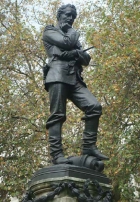
    Dave Martin relates how the statue of one of our imperial ‘heroes’ prompted a campaign to have it taken down while the statue of another imperial ‘hero’ prompted a fund-raising campaign for its repair. As the tide of Empire ebbed across the globe vestiges of British rule remained, some great,...

    Click to view
  • Ancient Athenian inscriptions in public and private UK collections

    Article

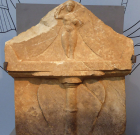
    Peter Liddel introduces us to a rich source of historical information and encourages us to make some purposeful visits to museums. From the seventeenth to the mid nineteenth century, travellers from the UK explored the Mediterranean lands of ancient civilisations in search of trophies that demonstrated the achievements of the classical world. Highly...

    Click to view
  • Anglo-Saxon women and power

    Article

    Elite Anglo-Saxon women played a powerful role in the religious affairs and politics of their day and were important patrons of learning and culture.

    Click to view
  • Archaeology on the edge

    Article

    Major archaeological projects can be complex affairs, in terms of their funding, governance and the wide range of historical and technological expertise they require. Here National Trust archaeologist Kathy Laws describes the intricacies and successes of a multi-organisational project at an Iron Age site in north Wales. The challenges of the...

    Click to view
  • Architecture within the reach of all

    Article

    Roisin Inglesby introduces us to the life and work of a lesser known member of the Arts and Crafts movement, Arthur Heygate  Mackmurdo, who helped to change the face of European architecture and interior design. Arthur Heygate Mackmurdo (1851–1942) may not be a household name, but he is arguably one of the most significant figures in British design...

    Click to view
  • Art and ecology

    Article

    Artworks and objects from the past provide us with a compelling record of human interaction with the natural world. In this article, art historians Carla Benzan and Samuel Shaw explain how they are using collections from galleries and museums to bring environmental history to new audiences and to increase awareness...

    Click to view
  • Blurred Lines: the ever-decreasing distinction between fiction and nonfiction

    Article

    Everyone who studies history would love to visit the past. Few of us would like to stay for long, I suspect – if unfamiliar viruses did not finish us off within days, the superstitious locals might – but a visit would be nice. The ability to do so would settle a...

    Click to view
  • Britain and Brittany: contact, myth and history in the early Middle Ages

    Article

    Fiona Edmonds evidences the enduring links between Brittany and Britain throughout the early Middle Ages. Every year many thousands of British holidaymakers travel to Brittany in search of beaches, bisque and bonhomie. As they board the ferry, they may notice that they are travelling from one Bretagne to another. The names...

    Click to view
  • Building new futures by rewriting the past: how operas have recreated history

    Article

    Simon Banks investigates how the past has been presented in European opera, revealing intriguing insights into the development of the modern world. The way a civilisation views its past shapes the way it acts in the present. Over the 400-year history of opera, opera plots have re-told, re-invented and re-evaluated...

    Click to view
  • Cartoons and the historian

    Article

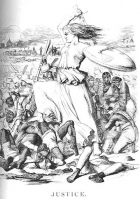
    Many historical books contain cartoons, but in most cases these are little more than a relief from the text, and do not make any point of substance which is not made elsewhere. Political cartoons should be regarded as much more than that. They are an important historical source which often...

    Click to view
  • Charles I in objects and architecture

    Article

    We asked some of Britain’s leading museums and archives what object in their collections best exemplifies the reign of Charles I and why. Join Alden Gregory, Jessica Evershed, Mike Webb, Denise Greany, Glyn Hughes and Kevin Winter as they discuss some prominent objects and places in their collections and the...

    Click to view
  • Connecting poetry, philosophy and landscapes in Ancient China

    Article

    It is unusual for historians to focus primarily on poetry to provide insights into the past societies they are studying. Here Nicholas Tyldesley explains the value of poetry to help us understand the ideas, values and some important historical events in Ancient China, with a particular focus on poets Li...

    Click to view
  • Cultural and historical heritage of Ukraine

    Article

    Olha Makliuk outlines the challenges faced by Ukraine as Russia tries to rewrite the narrative of Ukrainian sovereignty. Through a process of historical and cultural appropriation as well as the destruction of monuments, she explores how history has been weaponised by the Putin regime. Finally, she considers how the impact...

    Click to view
  • Digging the dirt on ‘The Dig’

    Article

    Laura Howarth, Archaeology and Engagement Manager at the National Trust property of Sutton Hoo, reflects on the discovery of the ship burial in 1939 and its portrayal in the 2021 film, The Dig. In a corner of Suffolk during the summer of 1939, an archaeological discovery was made at Sutton...

    Click to view
  • Does historical fiction matter for children?

    Article

    Can you remember a book from when you were young that took you to another place that was fascinating, intriguing and felt real but wasn’t Narnia? Quite often those books were historical fiction; sometimes they were more fiction than history and sometimes vice versa. While the Ladybird histories were some people’s...

    Click to view