Skip over navigation


Publication date: 31st July 2008 by Mary Mills

Teaching history through photographs in the internet and digital age

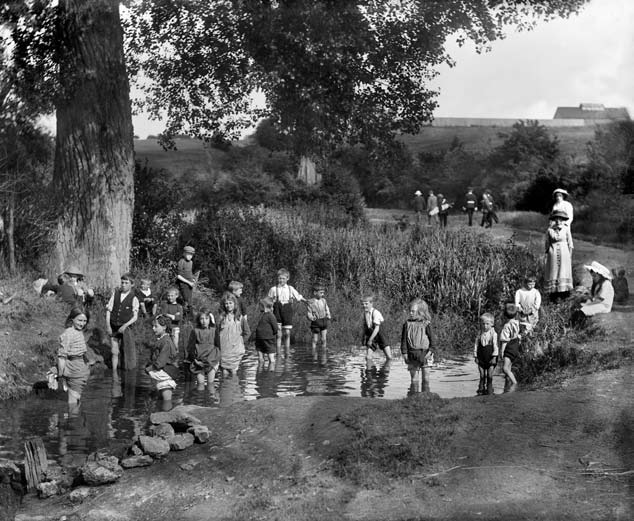
Barrack Lane, Cowley, Oxford 1914
Images such as the children in the stream allow pupils to reconstruct the
past for themselves and identify with people from the past, particularly
when they are close in age or from the same place. It is important that
pupils realise these are real people and not reconstructions.
• A sk pupils to consider what they think happened before the photograph
was taken and what may have happened next.
• A sk them to look closely at the clothing. Can they pick out rich and
poor children? What are the differences between them and who is
having more fun?
• What do they think the children were thinking and what can we learn
about their lives from the image. Were they just like us?
Ref. CC 71/00076 Reproduced by permission of English Heritage.NMR
Barrack Lane, Cowley, Oxford 1914 Images such as the children in the stream allow pupils to reconstruct the past for themselves and identify with people from the past, particularly when they are close in age or from the same place. It is important that pupils realise these are real people and not reconstructions. • A sk pupils to consider what they think happened before the photograph was taken and what may have happened next. • A sk them to look closely at the clothing. Can they pick out rich and poor children? What are the differences between them and who is having more fun? • What do they think the children were thinking and what can we learn about their lives from the image. Were they just like us? Ref. CC 71/00076 Reproduced by permission of English Heritage.NMR

Introduction

Images allow us to step back in time and ask important historical questions such as ‘Were the Victorians just like us?' Growing digitisation and the spread of the internet allow teachers and learners unprecedented access to historic images and provide a plethora of new ways to use them.

The power of images

Images are powerful. Take pupils into the centre of your local town or village to observe and record the scene in the morning and in the afternoon fill your interactive whiteboard with an image of that same scene taken 50, 100, possibly even 150 years ago. The questions and observations will flow naturally. What has changed? What is the same? What would we have seen, heard and smelled when the photograph was taken? What did we see, hear and smell this morning? When did that building disappear? Why was that building built? What did...


Available to HA Members

This resource is for HA Members.

If you are not already an HA Member please find out more about joining the HA.

Note: Full HA Membership is required, this resource is not available to users with Basic Website Access.

  • Primary Resources can be accessed by Primary History subscribers.
  • Secondary Resources can be accessed by Teaching History subscribers
  • General resources can be accessed by Historian subscribers.

Login Now